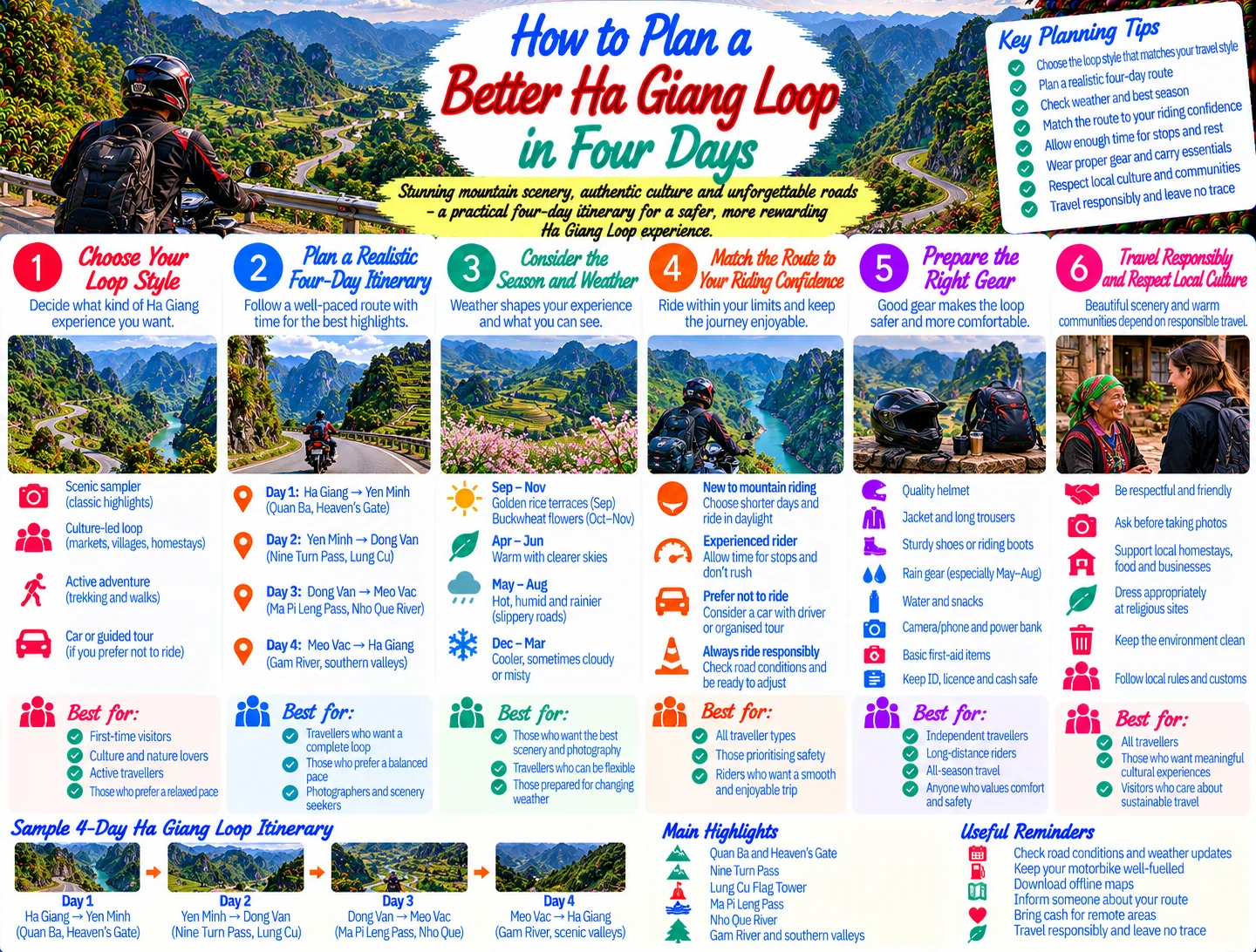
The Ha Giang Loop is often presented as a single dramatic motorbike journey, but the best experience comes from treating it as a mountain region rather than a checklist. Roads climb from Ha Giang City towards Quan Ba, Yen Minh, Dong Van and Meo Vac, while villages, markets, viewpoints and family-run homestays give the route its human character. This guide explains how to plan the Ha Giang Loop around your confidence, time and curiosity, so the journey feels purposeful instead of rushed.
What the Ha Giang Loop actually involves
The familiar loop links the northern districts of Quan Ba, Yen Minh, Dong Van and Meo Vac before returning towards Ha Giang City. Vietnam’s official tourism authority describes the area as a remote northern destination reached by road, with accommodation concentrated in the main towns and a landscape shaped by high passes, deep valleys and limestone mountains. That geography matters: distances on a map can look modest, but bends, weather, photo stops and slow traffic make each riding day longer than a lowland journey.
The route is also a cultural trip. Ha Giang is home to many ethnic communities, and the road passes through cultivated slopes, trading settlements and villages where daily life continues alongside tourism. The most rewarding itinerary leaves room to stop respectfully, eat locally and walk a short distance instead of viewing the province only through a helmet visor.
Before choosing a route, decide what you want most:
- Scenery: prioritise passes, valley viewpoints and unhurried stops.
- Culture: allow time for markets, local food, village walks and a homestay.
- Riding: choose shorter stages so concentration stays high on technical roads.
- Comfort: spend nights in the larger towns and use a car with a local driver if riding is not your strength.
For a broad introduction to the region, pair this guide with Ha Giang by Road: A Thoughtful Loop Through the Mountains. It is useful context, while the advice below focuses on making the loop fit real travellers rather than an idealised itinerary.
Choose a route that matches your riding ability
The classic circuit
A classic plan travels from Ha Giang City through Quan Ba and Yen Minh, continues to Dong Van, crosses the Ma Pi Leng area towards Meo Vac, and then returns by a different road or retraces part of the route. It gives first-time visitors the signature combination of karst scenery, high passes and northern market towns. The drawback is that many travellers try to compress it into too few days. A schedule that looks efficient on paper can leave no margin for rain, roadworks, a slow rider or a memorable local stop.
A slower, more flexible version
With extra time, make Dong Van or Meo Vac a base for walking and short explorations rather than changing accommodation every night. You can then pause at viewpoints without calculating whether a late arrival will affect dinner or check-in. This is especially valuable for small groups with mixed experience, camera equipment or children.
When not to ride yourself
Mountain scenery is not a reason to ignore road skills. If you have little experience on two wheels, are uncomfortable with steep drops, or cannot confidently control a motorbike on narrow bends, choose a car and local driver or a reputable easy-rider arrangement. A passenger can still enjoy the landscape and learn more from someone who knows the road, weather and communities. Do not assume an international licence, insurance policy or rental agreement automatically makes independent riding appropriate; check the requirements that apply to you before departure.
For wider planning principles, see Planning a Northern Vietnam Road Trip Responsibly. The same habits—realistic stages, vehicle checks and respect for local roads—matter even more in Ha Giang.
Build days around the landscape, not just distances
Start with the road character you want to experience. The approach from Ha Giang City towards Quan Ba introduces the limestone landscape gradually, with bends and elevated viewpoints. Further north, the terrain becomes more exposed and dramatic. The Dong Van Karst Plateau is not merely a scenic backdrop: it is a landscape of geological and cultural significance, and UNESCO explains that geoparks connect geological heritage with natural, cultural and community-based development.
That principle suggests a better rhythm for the loop. Instead of collecting every named viewpoint, choose two or three meaningful stops per day:
- one viewpoint where you can understand the shape of the valley;
- one town or village where you can eat, rest or speak with a host;
- one short walk that gets you away from traffic and lets you notice farms, walls and local architecture.
The Ma Pi Leng section is famous for its dramatic road and gorge views, but fame can create crowding at obvious pull-offs. Park only where it is safe and permitted, keep clear of traffic, and never step onto an edge for a photograph. In fog or rain, the view may disappear; the correct response is to slow down, not to chase a better angle.
Consider adding a walking-focused day if your group enjoys hiking. The Mountain Trekking & Hiking category has ideas for choosing trails by effort and conditions. Ha Giang rewards modest walks through villages and cultivated slopes, but footwear with grip and a guide’s local knowledge can make a major difference.
Decide when to go without chasing a single “best” month
Ha Giang changes character through the year. Vietnam Tourism highlights spring flowers, summer water in terraced fields, cooler autumn conditions and flower displays later in the year. Those seasonal patterns are useful for atmosphere, but they are not guarantees: weather varies, roads can be wet, and agricultural timing is not identical in every valley.
Spring
Spring can bring blossom colour and lively local events, with cooler mornings and changing mountain weather. Pack layers and expect visibility to shift quickly.
Summer
Summer landscapes may be intensely green, and rain can make the mountains feel especially atmospheric. Build in flexibility, protect phones and cameras, and avoid treating a weather warning as an inconvenience to push through.
Autumn
Autumn is popular for clearer-feeling days and harvest colours. Demand can be higher around attractive dates, so reserve accommodation early if you need a private room or a particular town.
Winter
Winter mornings can feel cold on a motorbike, especially at elevation. Visibility and road comfort matter more than chasing a forecast screenshot. Warm gloves, a windproof layer and an earlier start can improve the day.
Whenever you travel, check current conditions locally before committing to a pass. A host, driver or rental provider may know about conditions that do not appear in a generic weather app.
Sleep and eat in ways that strengthen the journey
Accommodation ranges from simple guesthouses to village homestays. A homestay is not a hotel with a rustic theme; it is a chance to share space with a local household, often around a communal meal. Ask about sleeping arrangements, bathrooms, dinner timing and transport before confirming. If you need privacy, say so clearly rather than arriving with assumptions.
Meals are part of the route’s identity. Try regional dishes when they are offered, but explain allergies and dietary limits before food is prepared. Eat enough at breakfast for a long road day, carry water, and keep a small supply of snacks for stretches between towns. Buying from small shops or eating at local establishments can distribute spending beyond the most photographed stops.
Be thoughtful with photographs. Ask before photographing people, homes, ceremonies or children. A smile is not the same as consent, and handing out sweets or money can encourage uncomfortable interactions. If someone invites you into a home or market activity, follow their lead and keep the exchange human rather than turning it into a performance for social media.
Pack for changing conditions and small problems
Pack light enough to handle your own luggage, but do not confuse minimalism with being unprepared. A useful Ha Giang kit includes:
- a warm mid-layer and waterproof outer layer;
- gloves, sun protection and sturdy shoes;
- basic medicines, personal prescriptions and blister care;
- offline maps, a charged power bank and a backup way to store important documents;
- a refillable bottle and a small dry bag for electronics;
- cash in smaller notes for places where card payments may not be practical;
- earplugs and a headlamp for simple homestay rooms.
Before riding, inspect tyres, brakes, lights, mirrors, horn and fuel. Photograph the vehicle and rental agreement at collection. Wear a properly fitted helmet, keep both hands available for control, and avoid riding after drinking. On descents, use a controlled speed rather than relying continuously on the brakes. Leave more space than you think you need, especially behind larger vehicles and around blind corners.
For general group decision-making, Outdoor Adventure Activities offers a useful way to compare challenge level, comfort and supervision. The right Ha Giang plan is the one your least confident traveller can enjoy safely.
Travel responsibly in a fragile mountain region
Responsible travel here is practical, not abstract. Keep rubbish with you until you find a proper bin, refill where safe, and avoid single-use packaging when alternatives are available. Do not remove rocks, plants or other natural materials from the geopark. Stay on established paths near homes and fields, and do not climb walls or enter buildings without permission.
Support local businesses directly: use local guides, eat at family-run places, buy crafts because you value them, and pay agreed prices without turning every interaction into a negotiation contest. Learn a simple greeting, dress with awareness in villages and religious spaces, and ask before joining a celebration. A few extra minutes of patience often reveal more than a hurried photograph.
Most importantly, do not let the loop’s reputation for adventure turn risk into entertainment. Slow down for animals, pedestrians, farm vehicles and road crews. If conditions deteriorate, change the plan. The mountains will still be there, while a cautious decision protects you, residents and other travellers.
A practical planning checklist
One week before departure, confirm your route, accommodation and transport approach. Check the weather trend, ask your host about road conditions, and tell someone at home where you expect to be. On the morning of each stage, review fuel, water, clothing and daylight. Keep the day’s destination realistic and identify a fallback town before leaving.
During the loop, measure success by how well the journey fits your group—not by how many kilometres you cover. Stop when a viewpoint is beautiful, but also stop when someone is tired. Leave time for a market conversation, a bowl of noodles, a short walk or an unplanned change of road. Those are often the moments that turn a famous route into a personal travel story.
Conclusion
Planning the Ha Giang Loop well means balancing iconic roads with local life, adventure with judgement, and ambition with enough time to look around. Choose transport honestly, allow generous riding days, prepare for changing weather, and treat the Dong Van landscape and its communities as more than scenery. With that approach, Ha Giang becomes not just a dramatic route, but a thoughtful northern Vietnam adventure.
JOIN THE CONVERSATION
Comments (0)
No comments yet. Be the first to share a thought.