A Northern Vietnam motorbike trip rewards riders who prepare for changing altitude, weather, road surfaces, and long stretches between services. The right packing list is not about carrying everything: it is about staying comfortable, visible, dry, and able to make sensible decisions when a mountain day takes longer than expected. This guide focuses on practical kit for independent riders and passengers travelling through destinations such as Ha Giang, Sa Pa, Mai Chau, and the northern highlands.
Start with the essentials before choosing extras
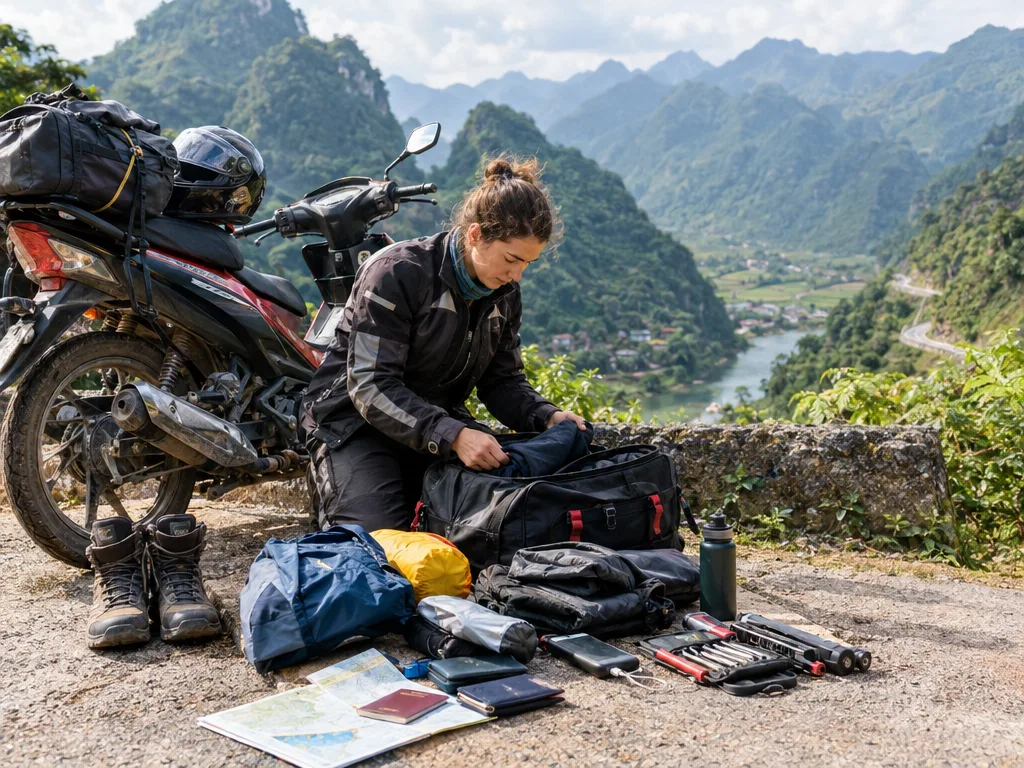
Pack around four priorities: personal documents, riding protection, weather flexibility, and basic self-sufficiency. Keep the items you cannot replace in a small waterproof pouch that stays with you rather than in a rear bag. That pouch should hold your passport, a copy stored separately, insurance details, emergency contacts, accommodation information, and any documents or permits your rental provider or local authorities require. Confirm the current requirements before departure; rules and rental policies can change, and a photocopy is not a substitute for carrying the original when an original is required.
Vietnam Tourism describes motorbikes as a convenient way to cover short distances and notes that long-distance riding is an option for travellers seeking scenery and adventure. The same guidance recommends wearing a helmet and taking care with unattended parking. Treat those basics as the foundation of the trip, not as optional details. Before leaving town, confirm who is responsible for the bike, what roadside support is available, and how to contact the rental company if the machine develops a problem.
- Passport, copies, insurance details, emergency contacts, and a small amount of cash.
- Phone, charging cable, power bank, and an offline copy of your route.
- Reusable water bottle, high-energy snacks, tissues, and hand sanitiser.
- Small headlamp or torch for arrivals after dark and unexpected roadside stops.
Choose riding gear for protection and ventilation
A helmet is the first non-negotiable item. If you are renting, inspect the helmet before accepting it: the shell should be intact, the strap should fasten securely, and the fit should not move when you turn your head. A helmet that is uncomfortable after ten minutes will be distracting after several hours. If you own a trusted helmet and can transport it easily, bringing it may be worthwhile, but do not let bulky luggage create a new riding problem.
Gloves protect against sun, wind, rain, and fatigue. Lightweight motorcycle gloves with a secure wrist closure are more useful than fashion gloves, while waterproof over-gloves can help in sustained rain. Wear covered shoes with a firm sole rather than sandals. Boots are useful for protection, but the best pair for a multi-day trip is one you can walk in during village stops. Long trousers and a long-sleeved base layer reduce sun exposure and minor abrasions. Add knee protection if you are experienced enough to wear it consistently without restricting movement.
Pack one visible outer layer
A bright or reflective vest, jacket panel, or rain shell makes you easier to see in changing light. Visibility matters at dawn, dusk, in mist, and when spray reduces contrast on wet roads. Avoid loose scarves, dangling straps, and open bags that can catch wind or interfere with controls. Keep spare straps tucked away and check that nothing can reach the chain, wheel, exhaust, or brake area.
Build a weather system, not a single outfit
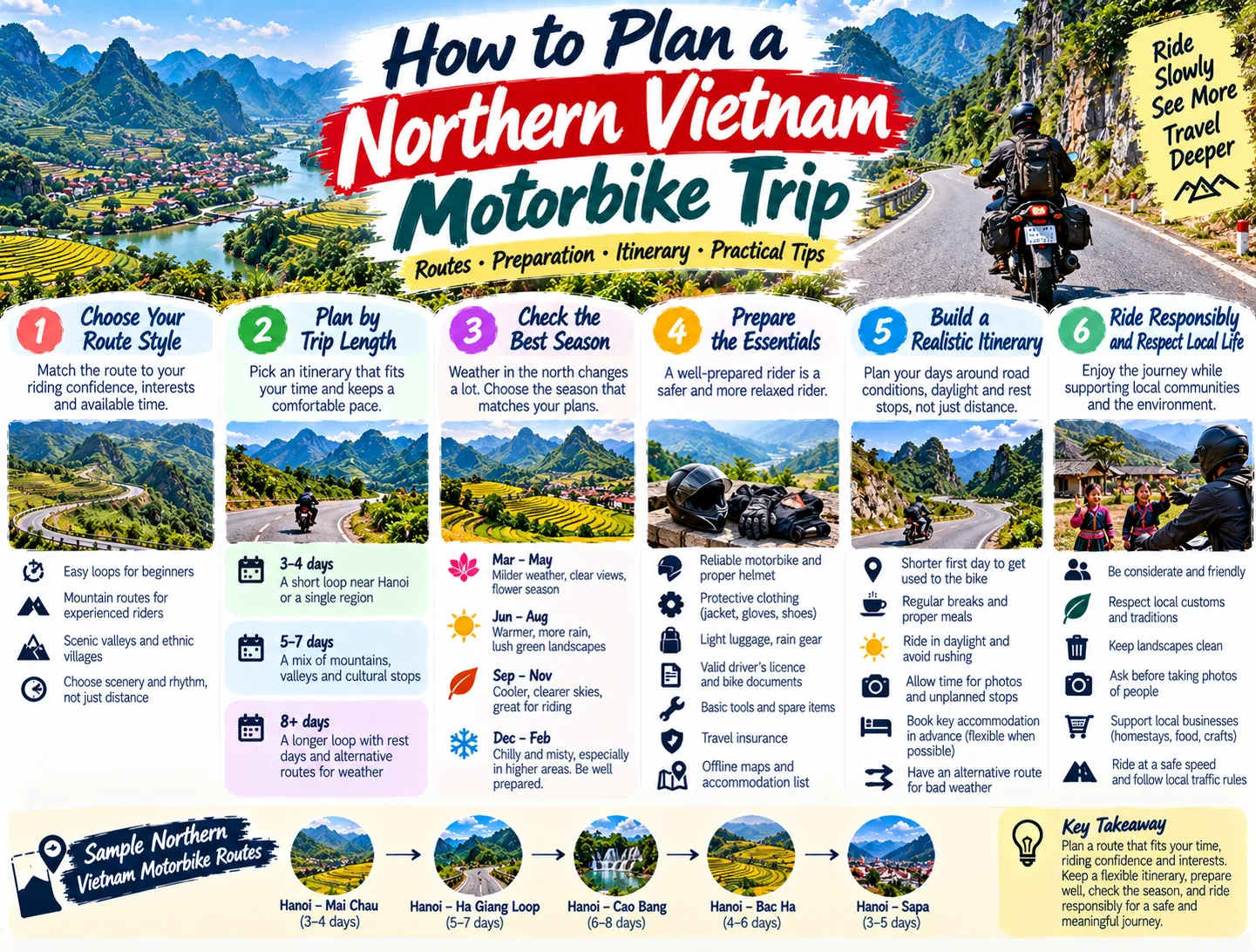
Northern Vietnam can shift from warm valleys to cool, misty mountain conditions in the same journey. The official Vietnam Tourism climate guide describes Sa Pa as chilly, misty, and cloudy from December to March, warmer and clearer from April to June, stormier and humid from June to August, and cooler and drier from September to November. Those broad patterns are more useful for packing layers than a promise of perfect weather. Mountain forecasts can change quickly, so leave room to adjust your route rather than treating the calendar as a guarantee.
Use a three-part system: a moisture-wicking base layer, a warm mid-layer, and a windproof or waterproof outer shell. A thin fleece or compact insulated jacket is easier to manage than one heavy coat. Pack a dedicated rain suit that fits over your riding clothes, including trousers and footwear. Test it before the trip; a jacket that is waterproof but difficult to put on beside the road is not practical when rain arrives suddenly.
- Base layers that dry overnight and do not become heavy when damp.
- Warm layer for high passes, early starts, and misty evenings.
- Rain jacket and trousers with room for riding gear underneath.
- Spare socks, quick-dry underwear, and a small plastic bag for wet items.
- Sun protection: glasses, sunscreen, lip balm, and a neck covering that cannot flap loose.
Make navigation resilient when the signal disappears
Do not make your whole trip depend on mobile data. Download offline maps before leaving reliable coverage, save your accommodation addresses in both English and Vietnamese where possible, and take a screenshot of the day’s route. A phone mount can be useful, but it should not become the only way you navigate. Keep the device protected from rain and vibration, and avoid handling it while moving.
Carry a charging cable that matches your phone, a power bank, and a compact wall charger. If you use a USB adapter on the bike, check that it is secure and protected from water. Bring a paper note with the names of your next stop, accommodation, and a trusted contact. This is especially helpful when pronunciation, spelling, or connectivity makes a phone search difficult.
Plan each day with a decision point
Before setting out, identify a realistic arrival point, one earlier fallback, and the latest time you will continue toward a pass or remote section. Save fuel stops and food opportunities when they appear rather than assuming the next settlement will be close. Vietnam Tourism warns that travellers can underestimate distances and the state of roads between destinations. In the mountains, a route that looks short on a map can take much longer because of bends, weather, traffic, photo stops, road works, or an unplanned detour.
Carry a compact repair and first-aid kit
Your kit should support small problems, not pretend to replace a mechanic. Ask the rental provider to show you the location of the tools, fuel tap, spare key, and any security features. Photograph the bike before departure and note existing damage. Learn how to check the tyres, lights, horn, mirrors, brakes, and fuel level. If the provider cannot explain what to do after a puncture or breakdown, ask what roadside assistance is available and save the number before leaving.
- Basic tyre or puncture support appropriate to the bike, if the rental provider recommends it.
- Small roll of strong tape, cable ties, elastic straps, and a multitool.
- Spare phone cable, charging backup, and a waterproof pouch for electronics.
- Personal medicines in their original packaging, plus any required prescription information.
- Plasters, antiseptic wipes, blister protection, oral rehydration supplies, and pain relief you already know is suitable for you.
- Insect repellent and sunscreen for stops away from the road.
Keep the first-aid kit easy to reach, not buried beneath clothing. Vietnam Tourism notes that rural travellers may be far from a pharmacy or hospital, so carrying personal medication and a modest self-care kit is sensible. This is preparation, not a reason to ride when ill or injured. Stop early when a problem is worsening, tell your travel companion or host, and seek professional help when needed.
Pack luggage that stays stable on mountain roads
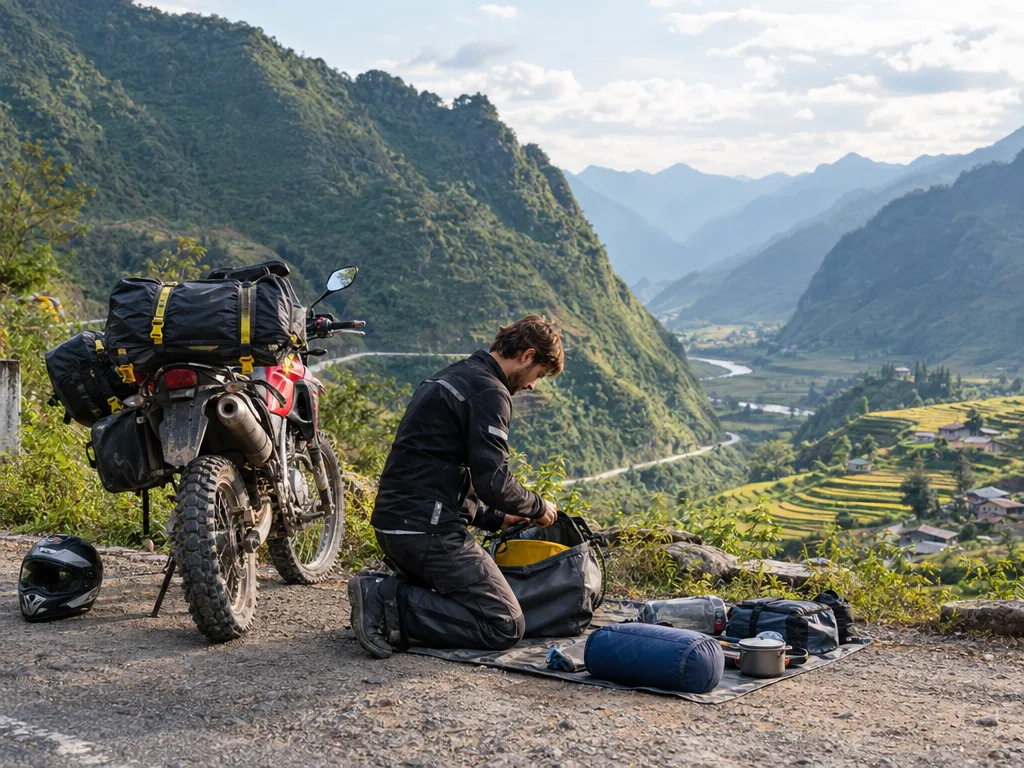
Soft, waterproof luggage is usually easier to secure than a hard suitcase. A small dry bag or top box can hold clothing, but the heaviest items should stay low and close to the bike’s centre. Use two independent straps, tuck away loose ends, and check the load after the first short section of riding. A backpack should be light; a heavy pack can increase fatigue and affect balance, especially for a passenger.
Separate your luggage into three groups: items needed during the day, items for the overnight stop, and items you hope not to use. Keep rain gear, water, documents, snacks, and a phone charger in the first group. Put spare clothes and toiletries in the second. Place repair and emergency items where they can be reached without emptying the bike. Use waterproof liners even when the outer bag claims to be waterproof; rain can enter through zips, seams, or an open flap during repeated stops.
Leave space for local stops
Village markets, family-run homestays, and small food stops are part of the pleasure of a northern road trip. Do not pack every compartment to its limit. Extra capacity makes it easier to buy a small local item without strapping a precarious bundle to the bike. It also gives you room to repack after a wet-weather change.
Use the checklist to make safer riding decisions
A good packing list cannot compensate for a route that is too ambitious. Match the day to your actual riding experience, not to the fastest estimate on a map. If you are tired, cold, soaked, or losing concentration, shorten the day. Do not chase a viewpoint after dark simply because it was on the original plan. A rest day, a local driver, or a different transport arrangement can be the safer choice when conditions exceed your experience.
Before every departure, run a two-minute check: helmet and gloves secure, phone charged, rain layer accessible, luggage tight, lights working, fuel sufficient, and route understood. During the ride, slow before bends and villages, leave space for other road users, and stop somewhere safe before taking photographs. Avoid carrying valuables openly in baskets or loose shoulder bags. Respect local communities by asking before photographing people, keeping noise low at homestays, and leaving natural areas as you found them.
A practical final packing list
- Documents: passport, copies, insurance, emergency details, and required riding paperwork.
- Protection: properly fitted helmet, gloves, covered shoes, long trousers, and visible outer layer.
- Weather: base layers, warm layer, waterproof shell, spare socks, sun protection, and dry bags.
- Navigation: offline maps, phone mount or protected device, power bank, charger, and paper backup.
- Wellbeing: water, snacks, personal medicine, first-aid basics, insect repellent, and sunscreen.
- Bike support: provider-approved tools, straps, puncture plan, spare key, and assistance number.
- Respect: modest clothing for community visits, reusable bottle, small rubbish bag, and patience.
The best Northern Vietnam motorbike packing list is deliberately compact. It helps you stay protected, make decisions earlier, and adapt when the mountains change the plan. Pack for the next practical problem, leave space for flexibility, and let a slower, safer day be part of the adventure.
JOIN THE CONVERSATION
Comments (0)
No comments yet. Be the first to share a thought.