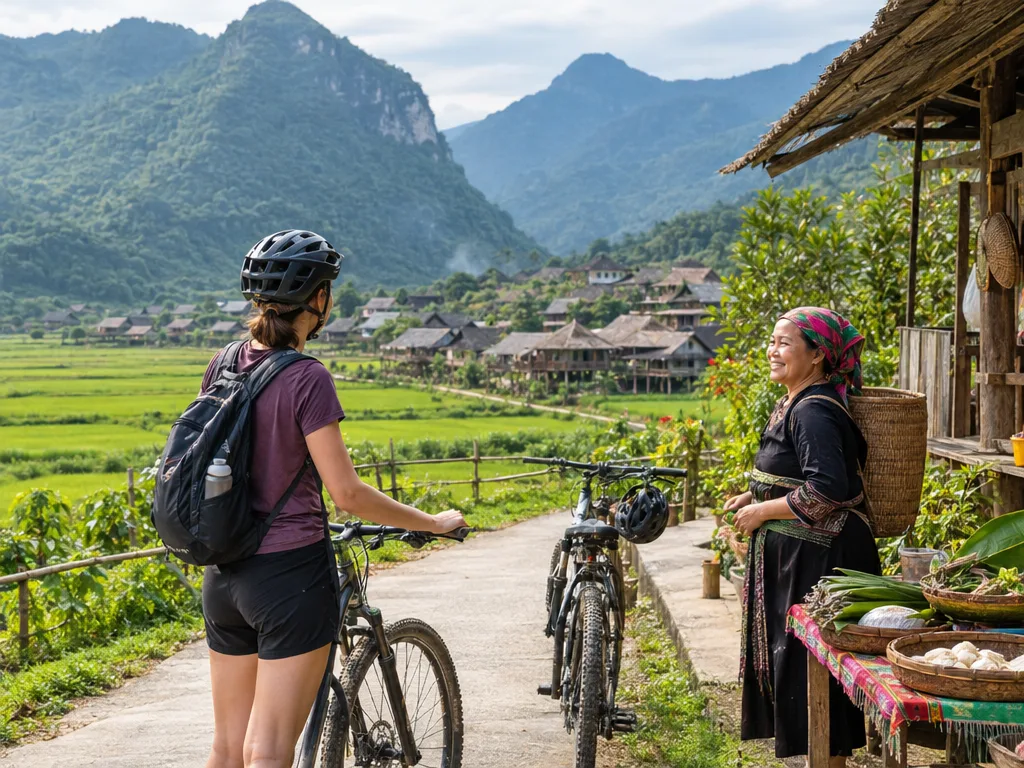
Mai Chau is close enough to reach from Ha Noi for a short escape, yet its valley of rice paddies, stilt houses and green mountain edges feels far removed from the capital. That makes one question especially useful when planning: should you visit Mai Chau as a day trip, or stay overnight? The better choice depends less on how many sights you can collect and more on the kind of experience you want. A day trip can work well for first-time visitors with limited time. An overnight stay gives you room for quiet walks, cycling, a homestay meal and a slower connection with village life.
This guide compares both options without treating one as universally best. It explains what fits into each format, how to shape a comfortable itinerary, when each choice makes sense, and how to travel respectfully in the valley.
Mai Chau day trip or overnight stay: the central choice
The official Vietnam Tourism guide describes Mai Chau as an easy nature-and-culture escape from Ha Noi, with the journey taking about three hours by road. That travel time is the main factor in the day-trip decision. A same-day visit can deliver the landscape and a taste of local life, but the day will contain a meaningful amount of road time. An overnight visit spreads the journey across two days and leaves more space for the valley itself.
Choose a day trip if you have a tightly limited schedule, prefer a simple introduction, or want to combine Mai Chau with a broader northern Vietnam itinerary. It suits travellers who are happy with a focused plan: arrive, explore by bicycle or on foot, eat a local meal, and return before the day becomes rushed.
Choose an overnight stay if you value quiet mornings, want to sleep in a stilt house, or would rather experience the valley after the main daytime movement has eased. Staying also makes it easier to include a longer village walk, a guided cultural visit, or an outdoor activity without turning every stop into a timed appointment.
What a realistic Mai Chau day trip can include
A good day trip should have one main activity and a small number of supporting stops. Trying to cover every village, viewpoint, market and nearby attraction can make the visit feel like a transfer exercise rather than an experience.
Morning arrival and valley orientation
Use the first part of the visit to get your bearings. The valley is best understood at a gentle pace: look across the paddy fields, notice the raised wooden houses, and follow quiet paths between settlements where access is appropriate. A short walk can be more rewarding than immediately searching for a long list of attractions.
Midday cycling or a guided village visit
Cycling is one of Mai Chau’s signature experiences because small roads and paths connect clusters of homes and fields. The official tourism guide notes that visitors can ride independently or hire a guide. A guide is particularly useful when you want to learn about a White Thai household, understand how a homestay works, or avoid treating a village as a photo backdrop.
If cycling is not comfortable for your group, choose walking or another locally arranged option instead. The aim is not to cover the greatest distance. It is to notice the landscape, travel at a considerate speed and leave enough energy for the return journey.
Lunch and a short cultural stop
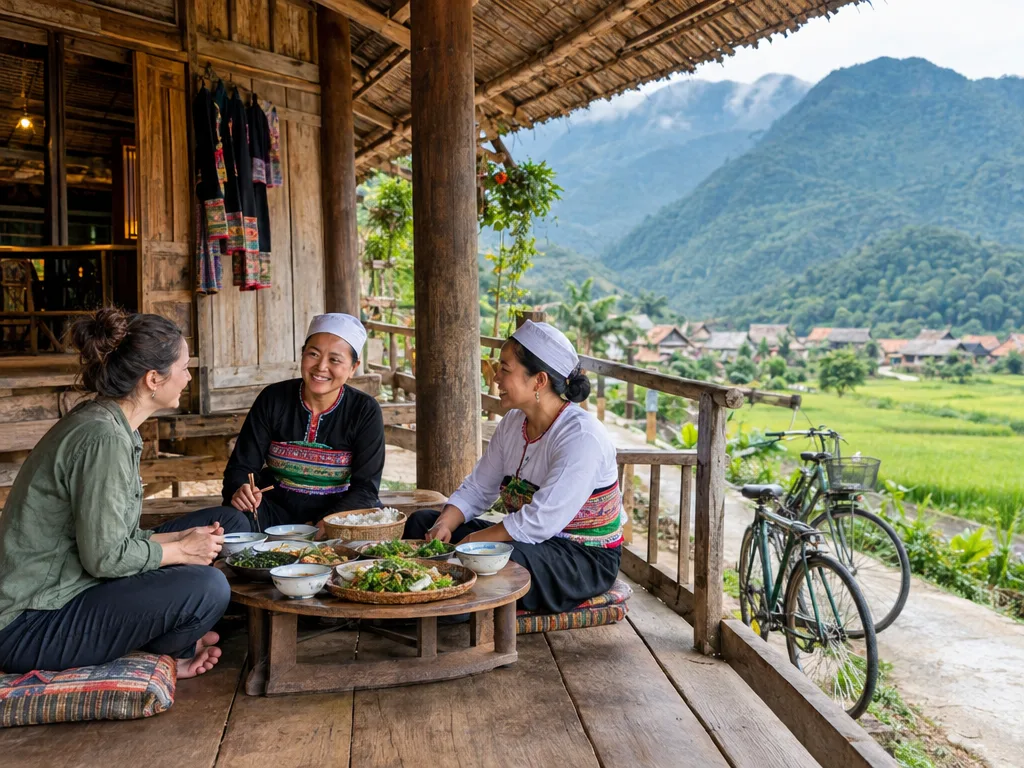
Make lunch part of the experience rather than a pause between activities. Homestays and local restaurants may serve home-style dishes associated with the area, including bamboo-tube grilled rice, grilled chicken, pork skewers and vegetables. Ask what is available on the day instead of expecting a fixed menu.
Textiles are another meaningful focus. Mai Chau is known for woven fabrics made by White Thai artisans, and some shops provide a chance to see looms or learn about the work behind the products. Buy only what you genuinely want, ask before photographing people or workshops, and treat bargaining as a light conversation rather than a contest.
Afternoon departure
Keep the final part of the day deliberately light. A last walk through the fields or a quiet drink can be more enjoyable than adding a distant stop. Leaving with a little margin is especially sensible on mountain roads, where weather, traffic and road conditions can affect the pace of a journey.
Why an overnight stay changes the experience
An overnight stay is not simply a longer version of a day trip. It changes the rhythm. You can arrive without immediately needing to begin a major activity, and you can use the next morning for the kind of gentle exploration that is difficult to fit into a return-day schedule.
Sleep in a stilt house or choose a lodge
Stilt-house homestays in Lac Village and Pom Coong Village are among the best-known ways to stay in Mai Chau. The official tourism material describes these homes as simple accommodation in raised houses, with open sleeping areas and shared facilities common in rustic stays. Other travellers may prefer a lodge or hotel with more privacy. Neither choice is automatically more authentic; the important questions are whether the stay is locally connected, comfortable for your group and respectful of the household hosting you.
Before booking, ask what is private or shared, how meals are arranged, whether the sleeping area is open-plan, and what quiet hours the household observes. These details prevent mismatched expectations and help you choose a stay that supports the experience you actually want.
Use the evening for food and performance, not a packed schedule
Mai Chau is associated with home-cooked meals and White Thai music and dance performances. If your homestay offers an evening programme, treat it as an invitation to participate respectfully, not as a staged obligation to consume. Ask whether photography is welcome, follow the host’s lead, and remember that traditional clothing and performance are part of a living culture rather than props for visitors.
An overnight stay also lets you eat at a more natural time. You can share a meal, learn what ingredients are local, and enjoy conversation without checking the clock for a return transfer.
Take a quiet morning walk or cycle
The morning is one of the strongest arguments for staying. Before the day’s activity schedule builds, paths through the valley can feel calm and spacious. Walk or cycle only where routes are open and safe, keep your voice low near homes, and do not enter fields, yards or buildings without permission. A short route taken attentively can reveal more than a long route taken in a hurry.
How to choose between one day and two
Use these questions to make the decision practical.
- How much time do you have? If Mai Chau is one small part of a larger trip, a day visit may be enough. If you can spare a night, the valley rewards the extra margin.
- What is your preferred pace? Fast-moving travellers may be satisfied with a focused day. Slow travellers, photographers and families often benefit from staying.
- Do you want culture or scenery first? Both formats offer each, but an overnight visit creates more time for conversation, food and a homestay setting.
- How does your group handle road travel? A same-day return means a longer overall day. Older travellers, young children and anyone who dislikes rushed transfers may find two days more comfortable.
- What is the weather doing? The Vietnam Tourism site highlights March to May and September to November as especially attractive periods, while also noting heavier rain from May to September. A flexible overnight plan can be easier to adjust than a tightly timed day trip.
Seasonal planning for a more comfortable visit
Mai Chau has a mild highland climate, but conditions change across the year. Spring can bring pleasant walking and cycling weather. From September to November, rice fields may turn golden and days can be cooler and clearer. During the wetter months, paths may be muddy and mountain travel can take more patience. These are planning considerations rather than guarantees, so check the forecast close to departure and keep footwear and layers adaptable.
For a day trip, weather matters because the plan has less room to absorb a delayed start or a sudden shower. For an overnight stay, you can replace a long cycle with a shorter walk, spend more time over lunch, or use the second morning if the first afternoon is wet. In either case, avoid building the whole visit around one viewpoint or one photograph.
Responsible ways to experience Mai Chau
The valley’s appeal comes from ordinary homes, working fields, local food and community traditions. Travel responsibly by treating those features as lived places, not attractions that exist solely for visitors.
- Ask permission before photographing residents, homes, looms, meals or performances.
- Stay on appropriate paths and do not walk through crops or private courtyards.
- Choose locally owned accommodation, guides and food providers where possible.
- Buy crafts because you value the work, and ask about materials and makers when that information matters to you.
- Carry reusable water and take rubbish with you when bins are not available.
- Keep noise low in villages, especially early and late in the day.
- Dress and behave with the same consideration you would show in someone else’s home.
These habits improve both a day trip and an overnight stay. They also make the visit more personal: a conversation with a host or guide often adds more understanding than another hurried stop.
Suggested itineraries for each travel style
A focused Mai Chau day trip
Travel from Ha Noi in the morning, settle into the valley, and spend the main part of the day cycling or walking with a local guide. Include a relaxed lunch and one cultural or craft-focused stop. Leave time for a final valley view before returning. This plan is best for travellers who want an introduction rather than a complete immersion.
A comfortable one-night Mai Chau escape
Arrive on the first day, check into a homestay or lodge, and take a short walk or cycle that does not leave you tired. Eat locally, join an evening performance only if it is offered in a respectful format, and sleep without an early rush. The following morning, explore a different village path, talk with your host, and depart after breakfast or a final light activity.
A slower two-night stay
Two nights create space for a longer cycling day, a guided village visit, and an optional outdoor excursion such as a trip toward Hoa Binh Reservoir or nearby Pu Luong, depending on conditions and local arrangements. Keep one part of the itinerary open. The value of Mai Chau is often found in the unplanned pauses between activities.
Final decision: choose the rhythm you want
A Mai Chau day trip is a sensible introduction when time is limited and your group wants a straightforward taste of valley scenery, cycling and local food. An overnight stay is the stronger choice when you want the destination’s quieter qualities: a stilt-house morning, a shared meal, a village walk and enough time to adapt to the weather.
Whichever format you choose, plan fewer activities than you think you need. Mai Chau works best when the rice fields, mountain air and community life are given room to set the pace.

JOIN THE CONVERSATION
Comments (0)
No comments yet. Be the first to share a thought.