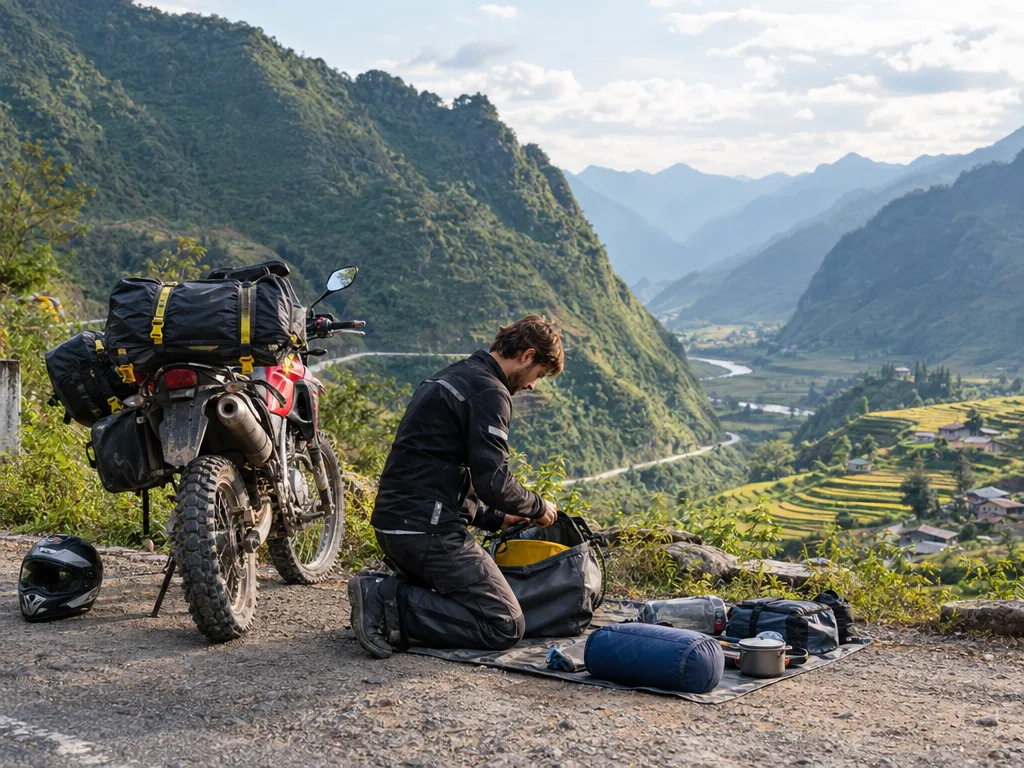
A Northern Vietnam motorbike trip is not won by covering the most kilometres. It is shaped by choosing a route that matches your riding experience, leaving room for mountain weather, and preparing for practical details that matter once you are away from major towns. A good packing list helps, but a good safety plan matters just as much.
This guide focuses on preparation: what to carry, what to check before riding, how to pace a road trip, and how to make sensible choices around Ha Giang, Dong Van, Mai Chau, and other northern mountain routes. It is designed for independent travellers and for riders working with a local rental company or guide.
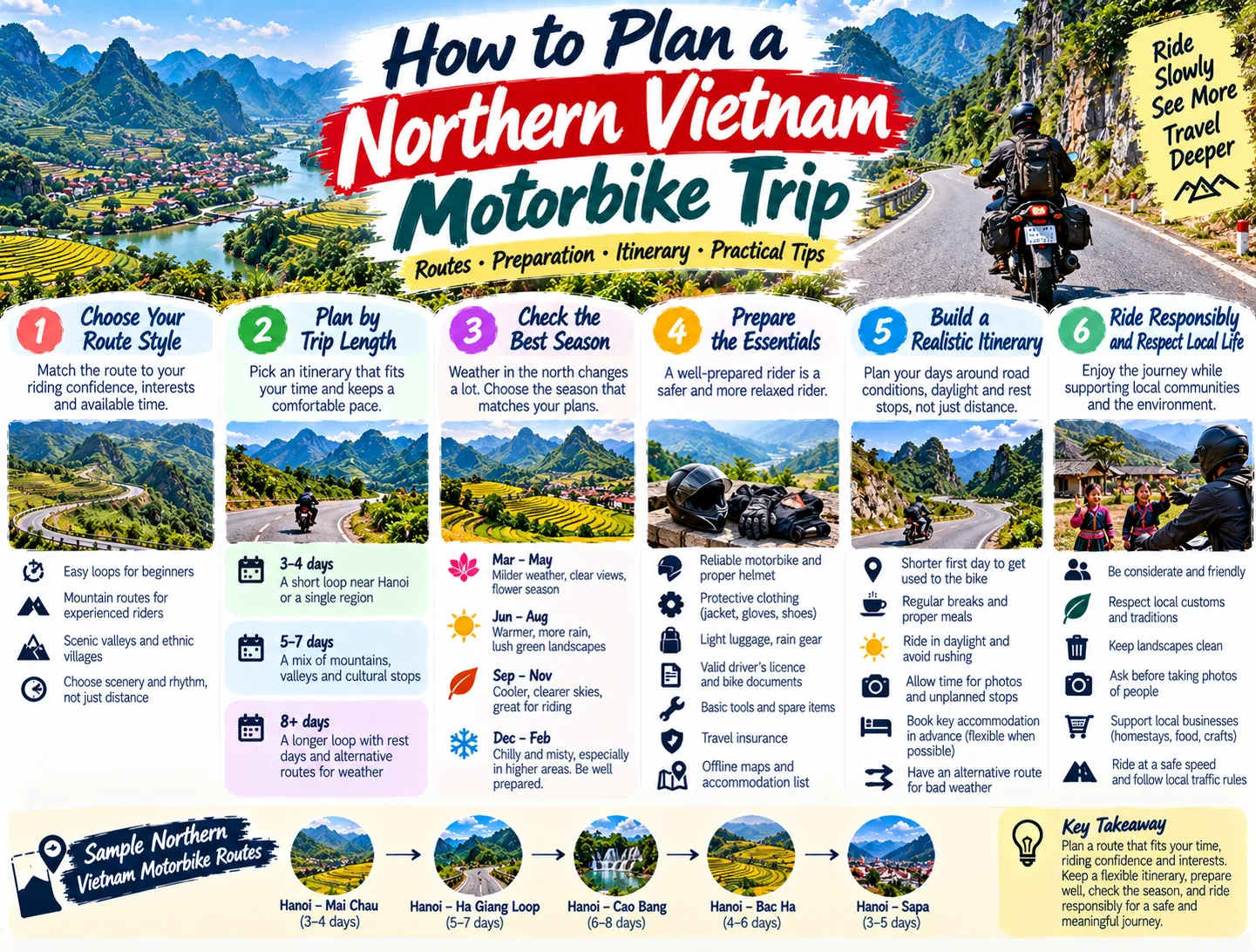
Start with the right Northern Vietnam motorbike trip
Before choosing luggage or a destination, decide what kind of riding day you actually want. Northern Vietnam offers valley roads, busy urban approaches, steep mountain passes, village lanes, and exposed viewpoints. These experiences are connected by roads, but they do not demand the same confidence or pace.
Match the route to your experience
- First-time riders should begin with a short, quiet test ride and consider a route with flexible overnight options rather than committing to a remote loop immediately.
- Confident riders should still allow extra time for bends, mixed traffic, livestock, construction, and changing surfaces.
- Groups with different abilities should plan around the least experienced rider, not the fastest person.
- Travellers without the correct legal documents or riding experience should choose a car, local driver, or reputable easy-rider arrangement instead of learning in the mountains.
The official Vietnam Tourism destination guide describes Ha Giang as a road-trip destination with dramatic mountain scenery, while also noting that roads can become wet and slippery during wetter months. That combination explains why route choice and weather planning belong at the centre of your itinerary.
Build a practical packing list
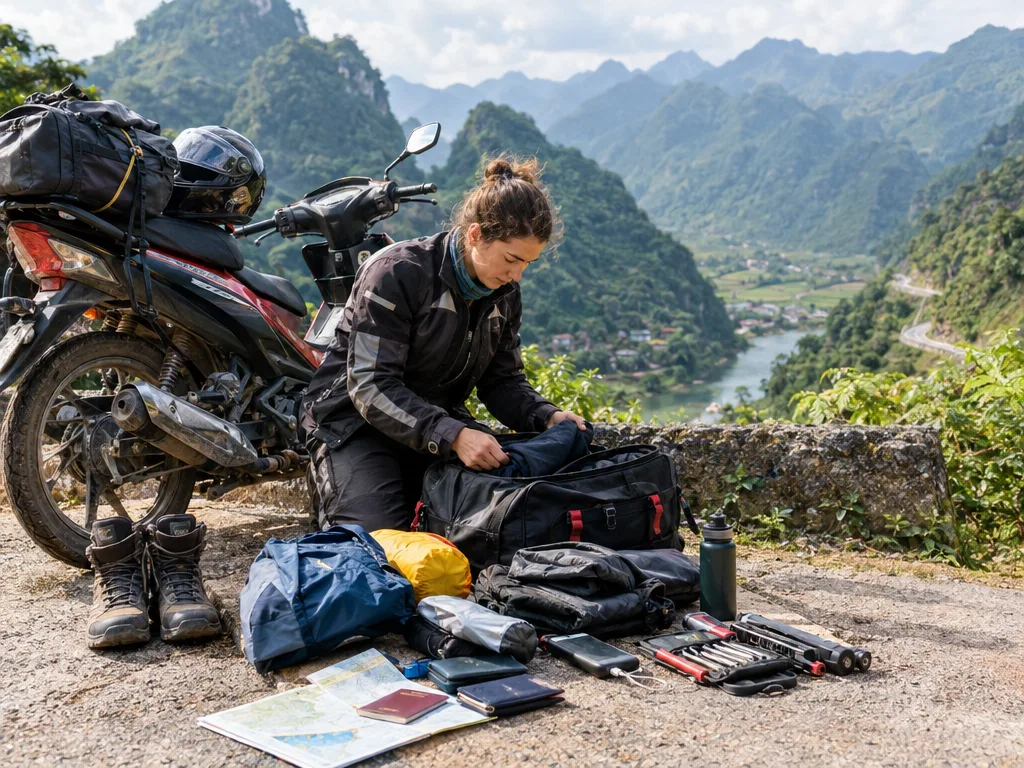
Pack for a day when conditions change, not for the photograph you hope to take. Mountain roads can feel warm in valleys and cool at exposed passes. A compact, waterproof system is more useful than a large bag filled with clothing you will not use.
Essential riding and personal gear
- A certified helmet that fits securely and is in sound condition.
- Gloves with grip for wet controls, plus a light waterproof layer over riding clothes.
- Long trousers, covered footwear, and clothing that protects skin from sun, dust, and minor scrapes.
- A small first-aid kit, personal medication, sunscreen, lip balm, and insect repellent.
- Eye protection or clear glasses for dust, rain, and insects.
- A phone with offline map access, charging cable, and power bank in a waterproof pouch.
- Copies of passport identification, visa or entry documents where relevant, insurance details, and emergency contacts.
Keep frequently used items reachable without unpacking the entire bike. Your rain layer, water, phone, and a repair contact should not be buried at the bottom of a dry bag.
Keep luggage light and stable
Use soft, compact luggage secured firmly. Heavy items should sit low and close to the centre of the bike. Avoid loose straps, dangling bags, or a top-heavy load that changes steering. Test the loaded bike before leaving town; a motorcycle that feels easy when empty may behave differently once it carries several days of clothing and equipment.
Inspect the bike before leaving
A few minutes of inspection can expose problems before they become a roadside breakdown. Ask the rental provider to explain the controls and point out the fuel tap, engine cut-off, lights, horn, storage points, and unusual sounds. Take clear photographs of existing damage before departure and agree how problems will be handled.
A simple pre-ride check
- Check tyres for visible damage and reasonable tread, and ask when pressure was last checked.
- Test both brakes at walking speed before joining traffic.
- Confirm that headlight, brake light, indicators, and horn work.
- Look for fluid leaks and make sure the chain appears lubricated and correctly tensioned.
- Check mirrors and make sure luggage cannot touch the wheel, chain, exhaust, or controls.
- Confirm the fuel situation and learn how far you can reasonably ride before the next reliable fuel stop.
You do not need a mechanical overhaul at the roadside. You do need to recognise a bike that is not ready for a mountain journey. If something feels wrong during the test ride, resolve it before departure rather than hoping it disappears.
Prepare the legal and insurance basics
Paperwork affects whether you can legally ride and whether insurance is likely to respond after an incident. Requirements can depend on nationality, licence, vehicle type, and the documents issued to you, so check current requirements with an official authority and your insurer before travelling.
For British travellers, the UK government’s Vietnam travel advice states that drivers need the 1968 version of the International Driving Permit together with the relevant UK driving licence, and that third-party insurance is required. Travellers from other countries should check their own government guidance and confirm that the licence category covers the motorcycle they intend to ride.
Read insurance exclusions. Some policies distinguish between riding as a passenger, riding a small scooter, riding a larger motorcycle, and riding without the required licence. Keep assistance numbers accessible offline. If an accident happens, cooperate with local authorities and contact your insurer promptly; do not assume a casual roadside agreement resolves every legal or financial consequence.
Do not leave your passport as a deposit
Government travel advice also warns travellers not to hand over a passport as security for a rental or other arrangement. Carry a lawful copy for routine identification where appropriate, keep the original secure, and ask the rental company for a documented deposit process that does not require surrendering your passport.
Plan riding days around daylight and weather
Mountain travel rewards an early start and a flexible finish. Build your day around daylight, stops, and the possibility that a short-looking section takes much longer than expected. A map line does not show every pause for livestock, roadworks, photographs, food, weather, or fatigue.
Use a conservative daily rhythm
- Leave time for a slow first hour while your body and attention settle into the road.
- Take regular breaks before you feel exhausted, especially in heat or rain.
- Choose a realistic overnight base before afternoon becomes stressful.
- Keep a flexible day or shorter alternative in the overall itinerary.
- Tell someone your intended route and update them when plans change.
The official tourism guide identifies September to November as a strong period for Ha Giang scenery, while also describing a cool mountain climate and wetter, slippery roads from May to August. These are planning signals, not promises about a particular day. Check the forecast shortly before each ride and be willing to delay a pass, shorten a loop, or stay in a town when conditions are poor.
Know when to turn around
Turnaround decisions are good judgement, not failure. Reconsider when visibility drops, rain makes the surface difficult to read, a rider is fatigued, a bike develops a fault, or the group is separating on a remote section. A viewpoint or planned overnight stop is never more important than getting everyone to a safe place.
Ride mountain roads defensively
Traffic can be busy and unpredictable near towns and junctions. On rural roads, hazards may include blind corners, buses, farm vehicles, animals, loose gravel, water across the road, and people entering the carriageway. Reduce speed before bends, keep a visible line, and leave space to react.
Never ride after drinking. The UK government’s travel advice describes drink-driving as a serious offence in Vietnam and warns that even alcohol in your system can lead to penalties. Treat the rule as absolute. If your group wants to drink, finish riding for the day first.
Wear available safety gear, stay on established routes, and avoid showing off for photographs. Stop fully in a safe place before taking pictures. On narrow roads, be considerate near homes, markets, livestock, and pedestrians. A quiet throttle and patient approach are part of responsible travel.
Choose support for difficult sections
Independent travel does not mean refusing help. A local guide, mechanic, driver, or easy rider can add knowledge when the route is remote, weather is uncertain, or your group has mixed experience. Ask how the operator handles breakdowns, weather changes, medical issues, and route alterations before paying.
Government advice on outdoor adventure in Vietnam highlights dangerous terrain, remote areas, flooding, swollen rivers, and landslides, especially in the rainy season. It recommends reputable operators, safety equipment, weather checks, suitable insurance, and sharing your itinerary. These recommendations are equally relevant to a self-guided motorbike trip: your plan must still work when the road does not.
Questions to ask a rental company or guide
- What motorcycle is appropriate for my experience and route?
- What support is available if the bike breaks down outside a town?
- How are weather-related route changes handled?
- What documents and insurance must I provide?
- Which sections should a cautious rider avoid in poor conditions?
- How will the group communicate if riders become separated?
Travel respectfully through mountain communities
A road trip passes through places where people live and work; it is not a moving theme park. Slow down near homes, ask before photographing people, and avoid blocking narrow lanes while taking pictures. Dress appropriately at cultural or religious sites and follow local instructions.
Choose accommodation and food stops that treat hosts fairly, carry reusable water storage where practical, and take rubbish with you when bins are unavailable. Do not buy protected wildlife, plants, or animal products. If a route feels crowded or a viewpoint is becoming damaged, move on rather than adding pressure.
Responsible riding also means respecting noise. Mountain scenery is best experienced without unnecessary revving, loud music, or aggressive overtaking. The memory you leave with a community matters as much as the photographs you bring home.
A final checklist before setting off
- Route, weather, daylight, and a shorter backup plan checked.
- Licence, insurance, identification copies, and emergency contacts accessible.
- Helmet, gloves, covered clothing, rain layer, water, and phone power ready.
- Tyres, brakes, lights, mirrors, chain, luggage, and fuel checked.
- Accommodation or a sensible stopping area identified for the next night.
- A friend, guide, or family member knows the route and expected timing.
- Everyone agrees that turning back is acceptable.
A well-prepared Northern Vietnam motorbike trip leaves room for curiosity without relying on luck. Pack lightly, ride within your limits, watch the weather, and treat every pass as part of a living landscape rather than a challenge to conquer.
JOIN THE CONVERSATION
Comments (0)
No comments yet. Be the first to share a thought.