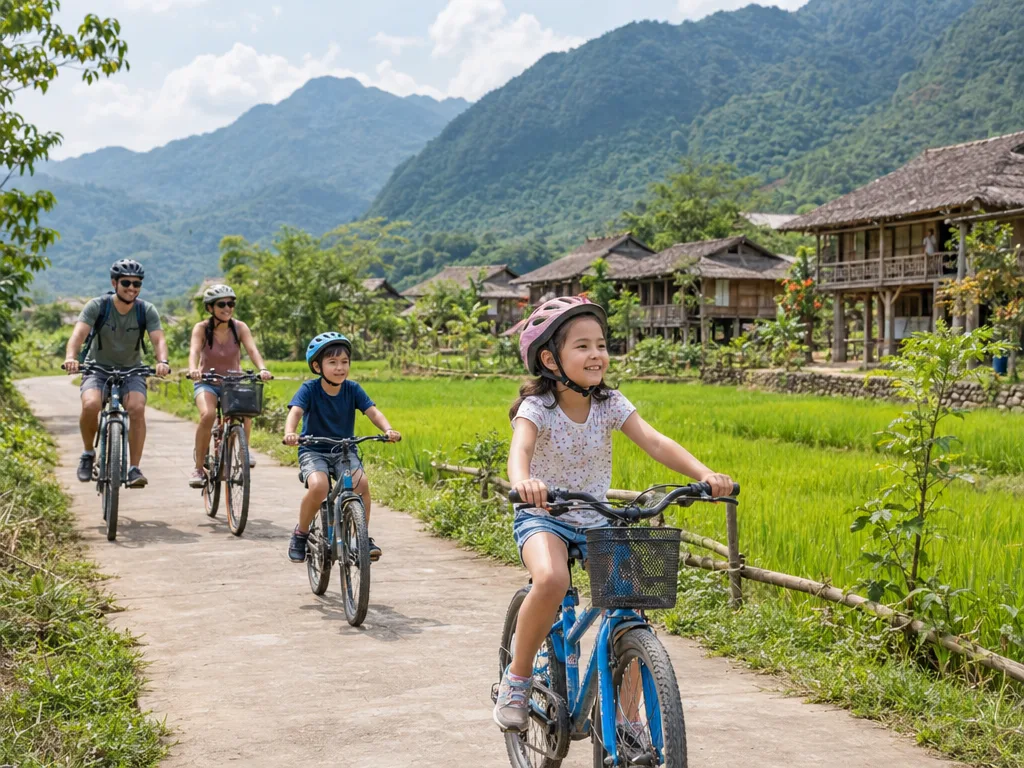
Mai Chau with kids can be one of the gentlest ways to introduce a family to northern Vietnam. The valley combines open rice fields, quiet lanes, stilt-house homestays, short walks and everyday village life without requiring a packed adventure schedule. The best family plan is not to collect every possible stop. It is to choose a comfortable base, keep transfers simple, leave room for weather, and treat the valley as a place to notice small details together.
This guide focuses on practical family travel: how to choose a pace, what to do with younger children, how to approach cycling and walking, what a homestay involves, and how to visit respectfully. Distances and activity times below are planning suggestions rather than fixed schedules, because local conditions, road surfaces and weather can change.
Why Mai Chau Works for a Family Trip
Mai Chau has a useful contrast for families. The valley floor feels more open and manageable than a high mountain itinerary, while the surrounding hills provide scenery and a sense of discovery. The area is associated with White Thai communities, rice cultivation and elevated stilt houses. That combination gives children something to see and ask about without needing a formal attraction every hour.
A family visit can also be active without being intense. A short cycle between villages, a walk along field paths, a meal at a homestay and time watching daily routines may be more rewarding than a long checklist. Parents can build the day around one main outing and one unstructured period. This keeps tiredness from turning a promising trip into a negotiation.
- Choose a base where children can rest easily between activities.
- Use mornings for cycling or walking, when energy and light are usually better.
- Keep one flexible block each day for rain, naps, reading or spontaneous village time.
- Explain that homes, farms and working paths are lived-in places, not open-air exhibits.
How to Choose the Right Family Pace
The right itinerary depends less on age labels than on your group’s habits. A toddler may enjoy a shaded garden and a slow walk, while an older child may want a longer cycle or a viewpoint. Ask what your children can do comfortably at home for two or three hours, then reduce the ambition slightly for heat, unfamiliar food and uneven ground.
For toddlers and preschoolers
Plan around shade, snacks and predictable rest. Choose short loops close to the homestay rather than a distant route that leaves no easy way back. A carrier can be more useful than a stroller on rough paths, steps and compacted earth. Keep a change of clothes available if the day includes fields, streams or sudden rain.
For school-age children
Give the day a simple mission: look for irrigation channels, learn a few food names, spot different house materials, or sketch the landscape. Children often engage more deeply when they have a role. Let them help choose between a cycle and a walk, but make the return point clear before setting out.
For teenagers
Older children may appreciate a longer ride, photography, cooking, weaving demonstrations or a chance to learn about local architecture. Balance independence with clear boundaries around traffic, water and private property. A teenager who is trusted with a small responsibility is more likely to stay engaged than one who is simply carried through an adult itinerary.
Family-Friendly Things to Do in Mai Chau
Mai Chau’s appeal is its everyday scale. You do not need an expensive activity programme to fill a meaningful day. Pick experiences that allow children to move, pause and ask questions.
Cycle the valley lanes
Cycling is a natural family activity when the route is short and the equipment fits. For younger children, consider a child seat, trailer or a vehicle-supported option rather than assuming every child can ride independently. Check brakes, helmets and saddle height before leaving. Stay alert at junctions and on shared roads, even when a lane feels quiet.
Make the ride about observation rather than speed. Stop where the group can stand safely, and avoid blocking entrances, farm work or narrow paths. A short out-and-back route is easier to manage than a loop with an uncertain finish. If the weather turns hot or wet, return early; the ride will be more memorable if it ends before everyone is exhausted.
Walk between villages and fields
Short walks can reveal more than a hurried transfer. Choose a route with a clear turnaround point and expect mud, stones, steps or narrow bridges depending on conditions. Children should wear shoes that can get dirty and carry water in a small day pack. Avoid treating planted fields as shortcuts. Use established paths and ask before entering a yard, garden or building.
Stay in or visit a stilt house
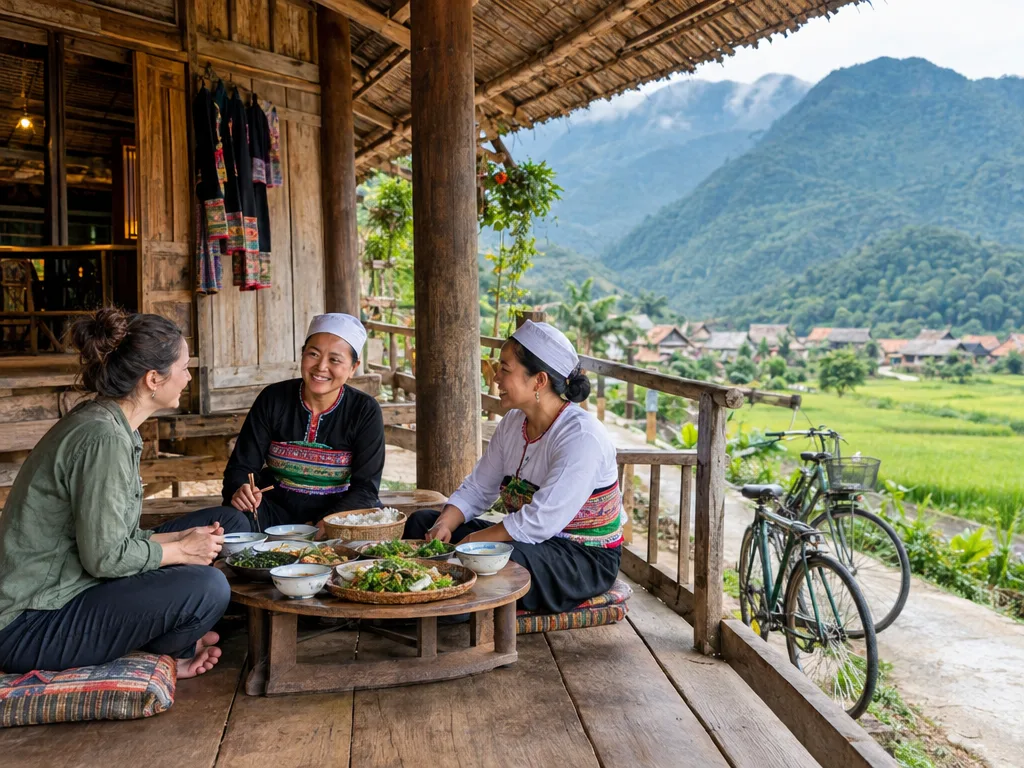
A stilt-house homestay can make the landscape feel personal. The architecture reflects local materials and practical responses to terrain and water, while the shared meal creates a natural moment for cultural exchange. Before booking, ask how sleeping arrangements, bathrooms, stairs, meals and quiet hours work for your family. Families may prefer a private sleeping area even when common spaces are shared.
Make food part of the experience
Family meals work best when expectations are clear. Tell your host about allergies and strong dislikes before food is prepared, and carry familiar snacks for the gap between meals. Invite children to notice herbs, textures and cooking methods without turning the meal into a test. If a dish is unfamiliar, a small taste is enough; respect for local food includes accepting that not every flavour will suit every child.
Planning a Comfortable Two-Day Outline
A two-day stay is long enough to settle in without demanding a complex route. Use the outline as a framework, not a timetable.
- Arrival day: Travel to the valley, check in, eat, and take a short orientation walk near the accommodation. Let children recover from the journey before adding a cycle.
- First morning: Choose one gentle cycling or walking route. Stop for water and a snack, then return for lunch and downtime.
- First afternoon: Keep the plan light. A homestay activity, a quiet village walk or time in the garden is enough. Rain may make this the best time for conversation and games.
- Second morning: Repeat the activity the family liked most, or choose a slightly longer route if everyone is rested. Do not lengthen the day simply because the map makes it look possible.
- Departure: Leave time for breakfast, packing and a final look around. A calm departure is kinder than squeezing in one last distant stop.
If you have three days, add depth rather than distance. Repeat a favourite lane at a different time of day, spend longer with your hosts, or include a rest period. Families often remember the unplanned moments more clearly than the extra attraction added to the itinerary.
What to Pack for Mai Chau with Kids
Pack for flexibility rather than for a technical expedition. Lightweight layers help when the day begins cool and becomes warm. Bring comfortable shoes with a secure sole, sun protection, insect repellent, refillable water bottles and a small first-aid kit. A compact rain layer is useful because showers can disrupt cycling and field walks quickly.
- One change of clothes in the day bag for each child.
- Snacks that are familiar and easy to share without creating excess packaging.
- Hand-cleaning supplies for stops where facilities are limited.
- A small torch if returning after dark, while avoiding unnecessary night wandering.
- Any regular medicines, stored securely and labelled for the adults responsible.
- Entertainment for transfer time, but not so much that children miss the landscape.
Do not overpack specialist gear unless your family genuinely uses it. Bulky luggage makes transfers and homestay stairs harder. Soft bags are often easier to manage than rigid cases, and a small day pack should be light enough for the child carrying it.
Homestay Etiquette and Cultural Respect
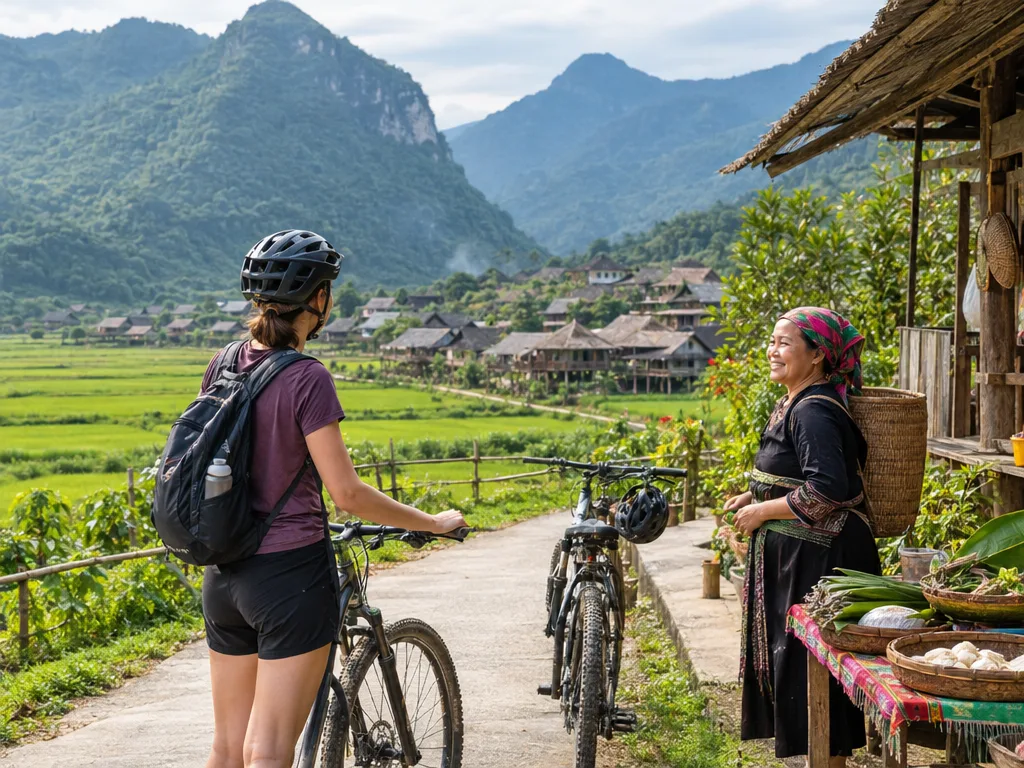
Mai Chau is not a theme park. Many of the scenes that visitors value are part of people’s homes, work and community life. Explain this to children in simple language before the visit. Ask permission before photographing people, especially children, and do not enter a house, altar area, kitchen or private yard without an invitation.
Dress comfortably but respectfully, particularly when visiting homes or community spaces. Follow the host’s guidance about footwear, sleeping areas and meal customs. Keep voices low at night and avoid turning shared spaces into a play area after other guests or residents have gone to rest.
Responsible travel also includes spending choices. Use local guides, homestays, food providers and craft sellers where they offer a genuine service, and pay agreed amounts clearly. Carry rubbish out when bins are not available. Do not handle textiles, tools, animals or household objects without asking. These small habits help children understand that travel is a relationship, not only consumption.
Weather, Safety and Backup Plans
Mai Chau’s lowland valley and surrounding hills can feel different within the same day. Heat, humidity, rain and slippery ground affect how far a family can comfortably walk or cycle. Check the forecast close to departure, but keep a decision rule: if visibility, road conditions or energy levels deteriorate, shorten the route.
Adults should manage the risks that children may not notice. Keep children away from moving traffic, deep water, unprotected drops, cooking fires and unfamiliar animals. On bicycles, ride at the child’s pace and regroup at safe, visible points. On foot, keep the group together where paths narrow or cross roads. Ask local hosts about conditions rather than relying only on a map.
Have a rainy-day version of the trip. This might mean a longer meal, a craft or cooking experience arranged through the homestay, a book, or a short walk when the shower eases. The goal is not to defeat the weather. It is to keep the day comfortable and meaningful.
How to Make the Trip Better for Everyone
Give children context before they arrive: Mai Chau is a valley where people live and work, and the quietest moments may be the most interesting. During the trip, let them ask questions, but teach them to observe first and interrupt less. A guide or host can explain details that a family would otherwise miss, while parents can make sure the pace remains suitable.
For adults, the best improvement is usually subtraction. Remove one transfer, one ambitious loop and one unnecessary booking. Keep enough time to sit outside, watch the light change over the fields and share a meal without checking the next departure. This is where Mai Chau differs from a checklist destination: the experience grows when the schedule leaves space around it.
Final Takeaway
Mai Chau with kids works when the family treats the valley as a place to live slowly for a few days. Choose a comfortable base, plan one main activity at a time, prepare for uneven paths and changing weather, and introduce local homes and traditions with care. Cycling, short walks, shared meals and a thoughtful homestay can create a richer family adventure than a rushed list of sights.
JOIN THE CONVERSATION
Comments (0)
No comments yet. Be the first to share a thought.