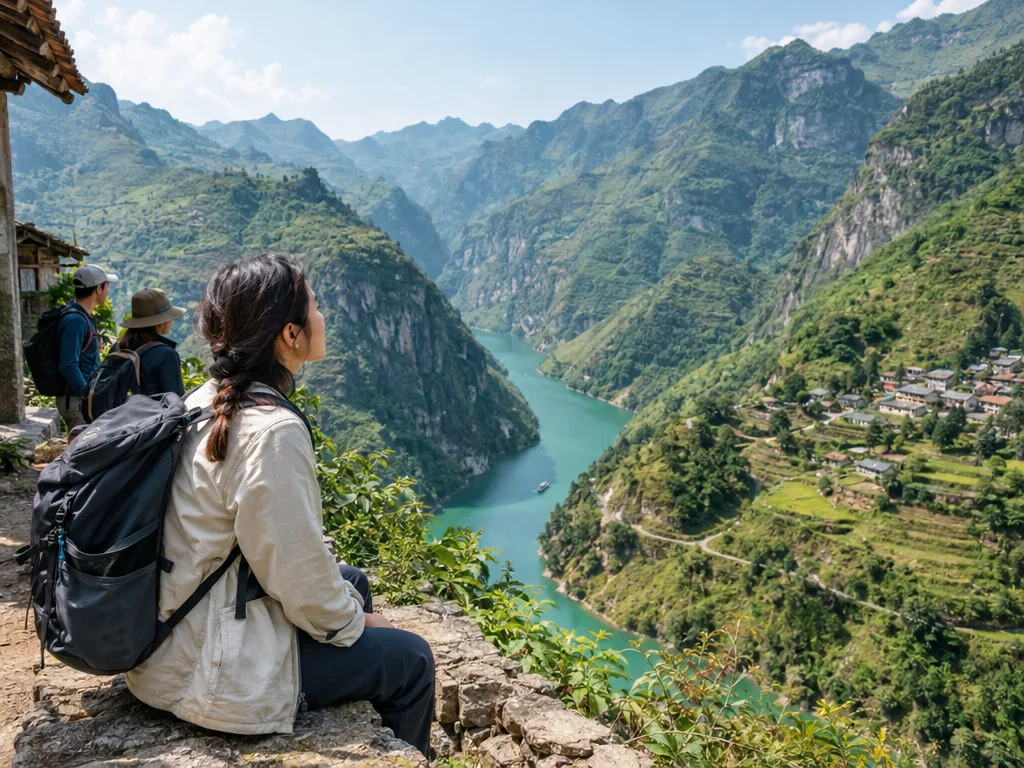
Ha Giang is often presented as a motorbike adventure, but the landscape is not reserved for confident riders. A slower, supported trip can still include limestone valleys, high passes, village markets, local food, and the cultural depth of the Dong Van Karst Plateau. The key is to choose transport that removes pressure from the road, then build an itinerary around fewer bases and longer stops.
What “Ha Giang without a motorbike” really means
This approach is not one fixed tour. It can mean travelling by private car with a local driver, joining a small-group road trip, hiring a local rider-guide while you ride as a passenger, or combining road transfers with short walks. Each option keeps you close to the scenery while avoiding the need to manage steep curves, unfamiliar traffic, weather, and navigation at the same time.
Vietnam Tourism describes Ha Giang as a remote northern province reached by road, with accommodation concentrated around Ha Giang City, Dong Van, and Meo Vac. That geography matters. This is not a destination where you can replace every road section with a frequent train or urban bus. Instead, plan a supported road journey and use your energy for viewpoints, village visits, food, and walks.
Choose the experience before choosing the vehicle
- For comfort and flexibility, choose a private car and driver.
- For company and a clearer budget, consider a small-group tour.
- For the classic open-road feeling without driving, travel as a passenger with a trusted local rider.
- For a quieter trip, use transfers between a few bases and add short walks rather than chasing every viewpoint.
How to shape a comfortable Ha Giang itinerary
A useful first decision is whether Ha Giang is the main purpose of your northern Vietnam trip or one stop within a larger journey. If it is the main purpose, allow enough time for the road to feel like part of the experience. A rushed schedule turns every scenic stop into a negotiation with the clock.
A practical outline is to begin in Ha Giang City, continue north through Quan Ba and Yen Minh, spend time around Dong Van, cross the dramatic landscape toward Meo Vac, and return by a route that suits your transport provider. The exact sequence should remain flexible. Rain, fog, road works, fatigue, and local events can make a shorter day the better day.
A sample slow-travel rhythm
- Arrival day: reach Ha Giang City, confirm the vehicle and meeting time, and keep the evening simple.
- Scenic transfer: travel toward the northern districts with stops for viewpoints, lunch, and short walks.
- Base day: stay around Dong Van or nearby villages and explore without packing every landmark into one loop.
- High-pass day: cross the landscape toward Meo Vac, allowing time for photos and a pause away from the vehicle.
- Return day: leave a buffer for the journey back rather than booking a same-day onward connection too tightly.
Where to focus your time
Ha Giang rewards a route built around landscapes rather than a checklist. Quan Ba is a natural early introduction to the limestone scenery, while the road toward Yen Minh gives the journey a changing rhythm of valleys, forest, and higher viewpoints. These are good places to ask for a short stop and a walk, not simply a photograph through a window.
Dong Van works well as a base because it places you near several of the region’s best-known cultural and landscape experiences. Vietnam Tourism highlights the Vuong Family’s Residence, local markets, and the route toward Lung Cu among the places visitors may explore. Treat these as options to discuss with your driver or guide, not obligations to complete in one day.
The stretch toward Meo Vac and Ma Pi Leng Pass is the part many travellers imagine when they picture the Ha Giang Loop. From a passenger seat, the priority is to stop safely at viewpoints and give yourself time to absorb the scale of the valleys. A short walk may be more memorable than adding another hour of road.
Build in one unplanned pause
Leave at least one block of time with no named attraction attached to it. It may become a market visit, a village conversation, a tea stop, or simply a quiet view. This is especially valuable on a supported trip because your driver can suggest a local stop that does not appear in a standard itinerary.
Transport choices and questions to ask
When comparing options, do not judge only by the vehicle. Ask who drives, how long the provider has operated in the region, how the itinerary changes in poor weather, and whether the trip is private or shared. A good arrangement should make it clear what is included without promising that mountain roads will behave like city roads.
If you are travelling with children, older relatives, or anyone who dislikes winding roads, discuss the seating arrangement and break pattern before booking. A vehicle with room to move, a driver who welcomes questions, and a plan that avoids unnecessary late arrivals can make the difference between merely completing the route and enjoying it.
- Is the driver experienced on the northern mountain route?
- Will the vehicle be available for the whole journey or only between set points?
- How much flexibility is available for photo stops, walks, and an earlier finish?
- What happens if rain, fog, construction, or fatigue changes the plan?
- Are accommodation areas and meal stops confirmed, or are they suggestions?
- Can the provider explain local etiquette for villages, markets, and photography?
For a passenger motorbike arrangement, clarify the safety setup before departure. Ask about helmets, luggage, rain protection, passenger comfort, and the expected length of riding each day. If the answer feels rushed or vague, choose a different provider. You are buying judgment and local experience as much as transport.
Walking and cultural experiences beyond the road
Not riding does not mean sitting in a vehicle all day. Add movement in small, realistic doses. A village lane, a short path near a viewpoint, a market visit, or a walk around an old town can give the journey texture without turning it into a strenuous trek.
Dong Van Karst Plateau is presented by Vietnam Tourism as a UNESCO Global Geopark with hiking opportunities, mountain scenery, and communities with distinct cultural traditions. That makes a local guide particularly useful: they can help you choose a walk that fits the weather, footwear, daylight, and your interest in scenery or village life.
Respectful village and market visits
Ask before photographing people, homes, religious objects, or private work. Buy directly when appropriate, but do not treat a market as a performance staged for visitors. Dress practically, keep your voice low around homes, and follow your guide’s advice about where to stand and when to move on. A slower itinerary creates more room for respectful interaction because you are not racing to the next stop.
What to pack for a supported mountain journey
Pack for changing conditions rather than a single forecast. Mountain weather can shift across elevations, and a passenger or car-based journey still involves getting out beside roads, walking on uneven ground, and waiting at viewpoints. Lightweight layers are more useful than one heavy item.
- Comfortable shoes with reliable grip for short walks.
- A light waterproof layer and a warm layer for exposed viewpoints.
- Sun protection, a refillable water bottle, and small personal medicines.
- A compact day bag so luggage can stay in the main vehicle.
- Cash in suitable amounts for small stops, while avoiding assumptions about card access outside larger towns.
- A phone power bank and offline copies of key contact details.
Vietnam Tourism notes that resources become more limited outside Ha Giang, and recommends carrying enough cash because ATMs are scarce. Treat that as a planning reminder rather than a reason to carry more money than you need. Keep valuables secure and confirm your provider’s emergency contact process before leaving the city.
Safety decisions that improve the whole trip
The safest itinerary is usually the one with enough daylight, recovery time, and room to change. Mountain roads can include tight curves, steep drops, construction, animals, and changing visibility. A professional driver or rider-guide should choose a pace that fits conditions, not one that tries to satisfy an unrealistic timetable.
Keep the first road day moderate. Use it to learn how your body responds to winding roads, especially if you are prone to motion sickness. Sit where you can see the road, look toward the direction of travel, and tell the driver early if you need a pause. Regular breaks are easier to arrange before discomfort becomes severe.
Do not plan a demanding walk immediately after the longest transfer. Likewise, avoid booking a tight onward connection on the return day. A buffer protects the trip from ordinary mountain delays and gives your provider room to make a sensible decision when conditions change.
How to choose the right version of the trip
Choose a private car if you value control over stops, need a quieter pace, or are travelling with family or friends. Choose a small group if you enjoy shared meals and conversation and can accept a less flexible schedule. Choose a passenger motorbike if the feeling of the road is central to your trip and you are comfortable with exposure to weather and motion.
Whichever format you choose, look for a plan that names the experience, not just the distance. “Drive until late afternoon” tells you little. “Travel north, stop for two viewpoints, take a short village walk, and arrive before dark” is easier to assess and easier to adjust.
Final planning checklist
- Decide whether you want comfort, social travel, or the open-road feeling as the main priority.
- Use a local provider who explains the route, driver, vehicle, and contingency plan clearly.
- Keep the itinerary to a few meaningful bases instead of collecting every possible stop.
- Schedule daylight travel, regular breaks, and at least one unplanned pause.
- Pack layers, grippy shoes, water, cash, and offline contact details.
- Ask before photographing people and let local guidance shape village visits.
- Keep the return day flexible enough for ordinary mountain delays.
Ha Giang without a motorbike can still be an adventurous journey. By treating the road as a landscape experience rather than a driving challenge, you make room for better conversations, safer decisions, and longer looks at the mountains. Choose support that matches your comfort level, slow the itinerary down, and let the region reveal itself between the famous viewpoints.
JOIN THE CONVERSATION
Comments (0)
No comments yet. Be the first to share a thought.