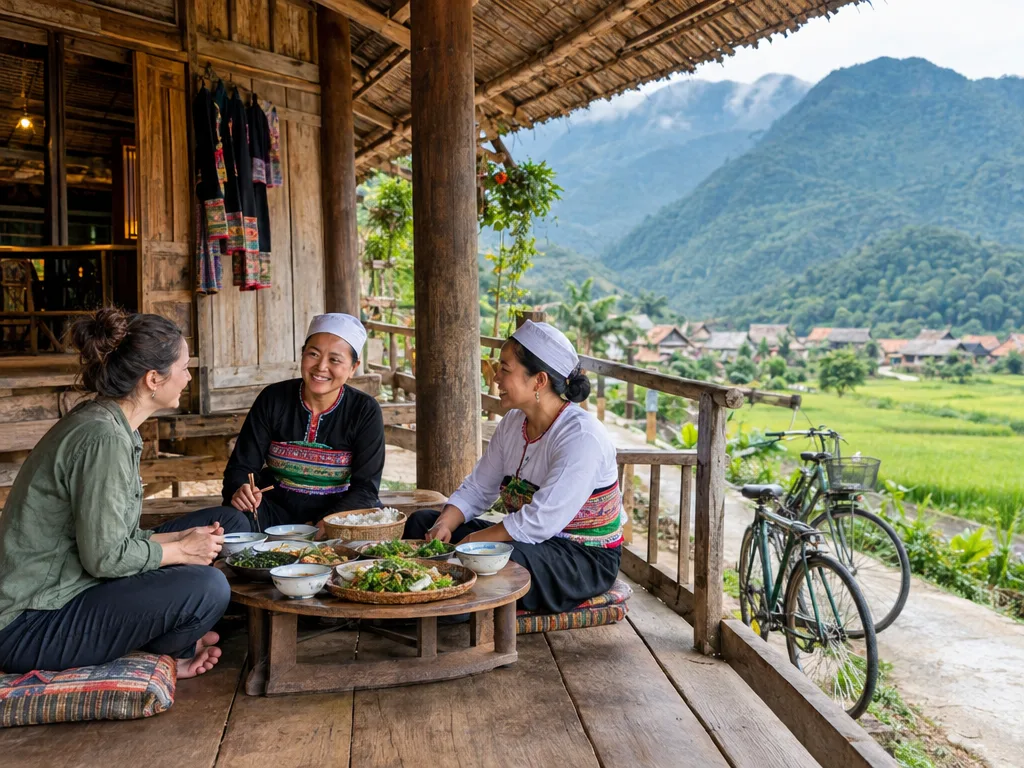
A Mai Chau homestay can turn a short valley visit into a more grounded experience: you wake above the fields, eat a home-cooked dinner, and step onto quiet village paths instead of treating the destination as a passing viewpoint. The important choice is not simply finding the cheapest room. It is matching the kind of stilt-house stay, location, comfort, and host interaction to the trip you actually want.
This guide explains how to choose a Mai Chau homestay, what to expect in Lac and Pom Coong villages, how to plan meals and activities, and how to stay respectfully in a White Thai community. It is written for travellers who want local atmosphere without giving up practical preparation.
What makes a Mai Chau homestay different?
Many Mai Chau homestays are arranged in traditional-style wooden stilt houses. Guest sleeping areas may be open-plan, raised above the ground, and separated from the family’s living space by screens or simple partitions. This creates a communal atmosphere that differs from a private hotel room. You may hear other guests, village activity, rain on the roof, or early-morning farm life.
The appeal is closeness to the valley. Official Vietnam tourism guidance describes Mai Chau as a rural destination of paddy fields, mountain scenery, stilt-house villages, home cooking, textiles, cycling, and gentle walks. A homestay gives those elements a natural base rather than requiring a tightly scheduled sightseeing day.
- Choose it for atmosphere, village access, and shared meals.
- Expect simpler facilities than a conventional hotel unless you book a boutique farm stay or lodge.
- Ask in advance about private rooms, bathrooms, hot water, fans, air conditioning, and bedding.
- View the stay as a hosted cultural experience, not as a guaranteed performance or staged attraction.
Which Mai Chau village should you choose?
Lac Village
Lac Village is the best-known base for first-time visitors who want an easy introduction to Mai Chau homestays. Its stilt houses, craft activity, restaurants, and tour services make it convenient for a short stay. You can usually combine a night in a homestay with a cycle through the valley, an evening meal, and a walk without spending much time arranging transport between separate locations.
The trade-off is that familiar places can feel busier, especially at popular travel times. If you want a quieter room, ask where it sits within the village and whether it faces a main path, performance area, restaurant, or rice field.
Pom Coong Village
Pom Coong is another established stilt-house area and can suit travellers who want a village setting while remaining close to Mai Chau’s main valley activities. Compare individual properties rather than assuming every homestay has the same character. Some focus on group dinners and cultural programmes; others are better suited to a quiet overnight stay.
Beyond the two familiar bases
For a more private or nature-focused experience, look at stays outside the central village cluster, including small lodges and farm-style properties in the wider valley. These can offer more space and views, but may make spontaneous cycling, evening walks, or local dining less convenient. Confirm the exact location and transport arrangement before booking.
How to match a homestay to your comfort level
“Homestay” covers a wide range of accommodation. At one end is a rustic shared sleeping floor with mosquito nets and shared bathrooms. At the other are private rooms, enclosed bathrooms, polished interiors, gardens, and resort-style facilities while retaining local architectural references. Neither is automatically better; the right choice depends on what you want to notice and what you need to rest well.
For a first homestay experience
Choose a property with clear photos, recent guest information, a private or semi-private room option, and a host who can explain meals and activities in advance. A smaller step into local accommodation is often more enjoyable than booking the most rustic option simply because it sounds authentic.
For families or light sleepers
Ask about room layout, stairs, bathroom access, noise, and whether children or groups are commonly hosted. A private room near the edge of the property may be more comfortable than a central dormitory-style area. Families should also confirm whether the path from the parking area is suitable for luggage and younger children.
For couples seeking atmosphere
Prioritise a balcony, terrace, garden, or field-facing position, but treat the view as a bonus rather than a promise. Valley weather changes quickly, and mist or cloud may be part of the experience. A good host, clean bedding, and a calm location matter more than a dramatic photograph.
What should you check before booking?
Read the description as a practical checklist rather than relying on the word “homestay.” Contact the property if an important detail is missing. Accommodation standards vary, and a short message can prevent an uncomfortable surprise.
- Sleeping arrangement: Is it a private room, family room, or shared stilt-house floor?
- Bathroom: Is the bathroom private or shared, attached or outside the sleeping area?
- Climate control: Does the room have a fan, air conditioning, heating, or only natural ventilation?
- Access: Are there stairs, uneven paths, or a long walk from the vehicle?
- Meals: Is breakfast included, and can the kitchen accommodate allergies or dietary restrictions?
- Transport: Can the host help arrange a transfer, and where will you be dropped off?
- Activities: Are bicycles available, and are guides or valley walks arranged separately?
- Payment: What is included in the quoted rate, and what should be paid directly for meals or activities?
Do not assume that a property’s online listing reflects today’s facilities. Ask for the current arrangement, especially if you need reliable internet, accessible bathrooms, quiet hours, or a specific type of bed.
How to plan meals at a Mai Chau homestay
Food is often one of the most memorable parts of staying with a local host. Official tourism information highlights home-cooked meals and local dishes such as cơm lam, grilled chicken, pork skewers, and greens. Menus can change with the household, season, and number of guests, so consider the meal a local introduction rather than a fixed restaurant order.
Tell the host about allergies, vegetarian preferences, seafood restrictions, or foods you cannot eat before dinner is prepared. Be specific about cross-contamination if it matters. If you are travelling with children, ask what mild dishes will be available. Carry a small snack for the journey, but leave room to try the meal offered by the household.
Shared dinners can be social. Wait until the host indicates where to sit, accept small portions first, and use the meal as an opportunity to ask about ingredients. If rice wine or another drink is offered, a polite refusal is fine. Avoid turning local food into a challenge; curiosity and respect make the experience better for everyone.
Best activities to combine with your stay
Cycle the valley
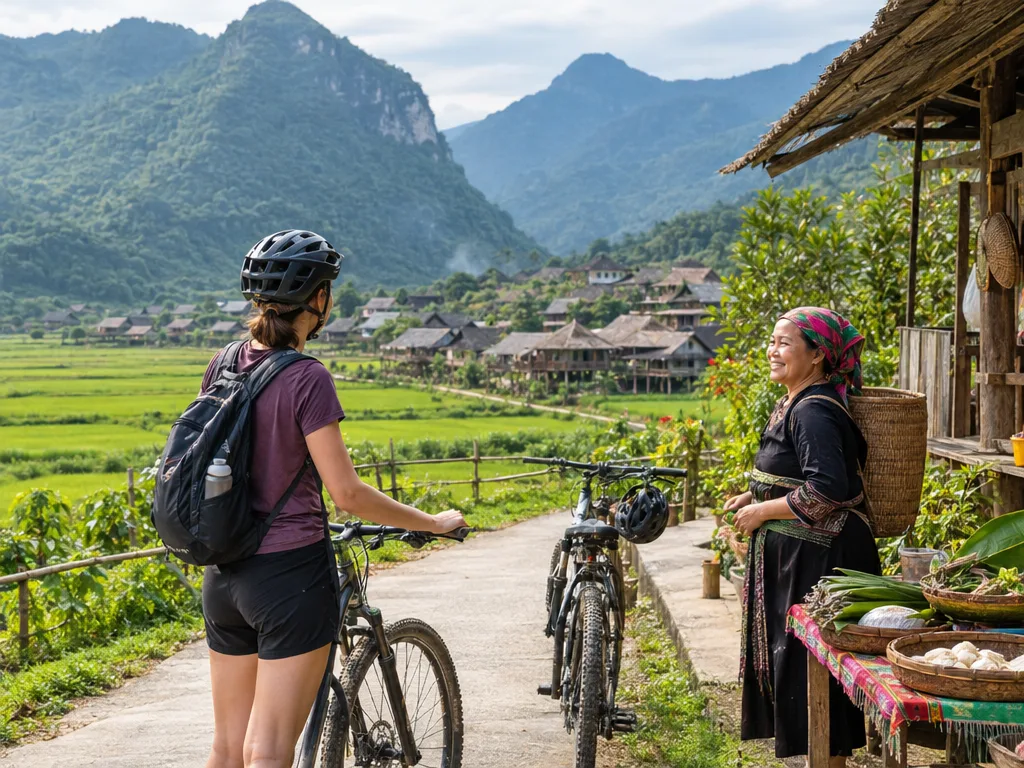
Cycling is the classic companion to a Mai Chau homestay. Quiet paths connect villages, fields, gardens, and stilt houses, and a bicycle allows you to stop when the light or landscape changes. Official guidance notes that travellers can ride independently or hire a guide. Choose the option that fits your navigation confidence and interest in local introductions.
Ride slowly near homes, animals, children, and farm vehicles. Keep your route flexible rather than trying to collect every village in one afternoon. Early morning and late afternoon can be pleasant, but check conditions with your host before setting out.
Walk through the surrounding villages
A short walk can be more rewarding than a long checklist. Follow public paths, stay at a respectful distance from homes, and ask before photographing people, looms, ceremonies, or private courtyards. A local guide can explain which routes are appropriate and help you avoid entering spaces that only look public.
Try a wider outdoor day
Travellers with more time can ask about nearby caves, waterfalls, Hoa Binh Reservoir outings, or a longer trek toward Pu Luong. These are separate excursions, not automatic inclusions in a homestay. Confirm travel time, weather suitability, equipment, and the return plan before committing to a full-day activity.
When is the best time to stay?
Mai Chau works in several seasons, but the experience changes. Vietnam’s official tourism site identifies March to May as a pleasant period and September to November as a popular time when rice fields can turn golden and days are often cooler. It also notes heavier rain from May to September. Treat these as planning patterns, not guarantees: mountain weather can change within a day.
During rainy periods, choose accommodation with covered walkways, allow extra time for road transfers, and keep footwear and electronics protected. In cooler or misty conditions, bring a light layer even when the daytime forecast looks mild. Around harvest periods, scenery may be especially attractive, but demand and local activity can also be higher.
The best date is the one that gives you enough time to slow down. An overnight stay is useful; two nights usually make it easier to combine cycling, a village walk, and an unhurried meal without turning the valley into a transfer stop.
How to be a respectful homestay guest
A homestay is a commercial arrangement, but it is also someone’s home or family livelihood. Ask before entering private rooms, kitchens, gardens, or worship spaces. Keep voices low at night, dress thoughtfully in shared areas, and follow the host’s guidance about shoes, waste, and photography.
- Pay for meals, guides, bicycles, and crafts through the agreed channel.
- Buy locally made textiles because you value the work, not because you expect an extreme bargain.
- Use refillable water where safe and reduce single-use packaging.
- Do not photograph people, children, or household activities without permission.
- Leave paths, fields, streams, and village spaces as you found them.
- Support hosts who explain where money goes and who employ local staff fairly.
Responsible travel also means managing expectations. A White Thai community is not a backdrop, and a cultural performance is not permission to treat residents as scenery. Be present, listen, and let the visit remain a real exchange rather than a staged search for perfect photographs.
A simple one-night Mai Chau homestay plan
Arrive with enough daylight to settle in, confirm dinner, and take a short walk near the village. Use the late afternoon for an easy cycle or a host-recommended route. Return before dark if you are unfamiliar with the paths, then enjoy dinner without adding another transfer.
On the next morning, walk or cycle before breakfast if conditions are comfortable. After eating, spend time on one focused activity: a longer loop, a craft visit arranged with permission, or a quiet view across the fields. Depart with extra road time rather than squeezing in a final distant stop.
For two nights, keep the second day flexible. This allows you to change plans for rain, rest after travel, or accept a useful recommendation from your host. The strength of a Mai Chau homestay is not the number of activities completed; it is the quality of the time spent in the valley.
Final decision checklist
Before booking, ask yourself five questions: Do I want rustic communal atmosphere or private comfort? Is the village location convenient for my plans? Have I confirmed the bathroom and sleeping arrangement? Can the host support my food and transport needs? Am I willing to follow local etiquette and accept a slower rhythm?
If the answers line up, a Mai Chau homestay can be an excellent base for cycling, village walks, local food, and quiet mountain scenery. Choose the property for the experience it can genuinely provide, prepare for simple differences from a hotel, and leave enough space in your itinerary to let the valley unfold.

JOIN THE CONVERSATION
Comments (0)
No comments yet. Be the first to share a thought.