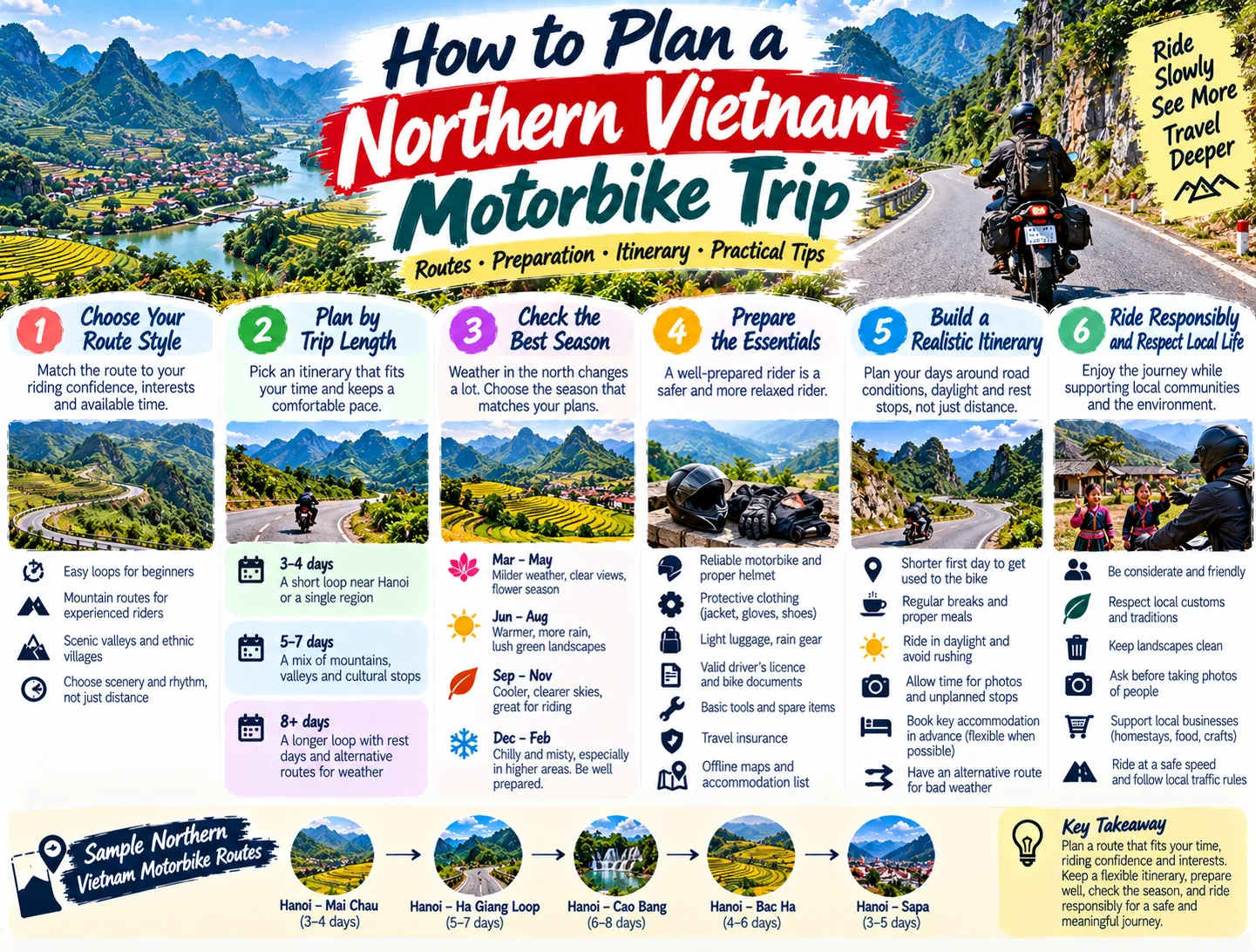
A northern Vietnam motorbike trip is most rewarding when the route matches your riding confidence, available time, and tolerance for changing weather. Instead of treating every mountain road as a challenge to conquer, plan a trip that gives you space to ride slowly, stop often, and change course when conditions are not comfortable. This guide helps you choose a practical route style, prepare for the road, and build a flexible itinerary without turning the journey into a race.
Start with the right northern Vietnam route
The best northern Vietnam motorbike route is not one fixed line on a map. It is a route that fits the kind of day you want to have. A first-time rider may prefer a short loop from Hanoi with straightforward accommodation and frequent services. A confident rider with more days may want a mountain circuit with longer climbs, quieter valleys, and more remote overnight stops. Both can be excellent trips if the distance, road surface, and weather are treated honestly.
Vietnam’s official tourism authority describes motorbikes as a convenient way to travel short distances and notes that long-distance riding can offer adventure and views. It also cautions novice motorists to be careful and observe local driving patterns. That is a useful starting principle: choose scenery and rhythm before chasing the most famous pass.
For broad orientation, read Planning a Northern Vietnam Road Trip Responsibly before you commit to a route. Then use this guide to make the plan more specific to your riding ability and trip length.
Choose your trip by riding confidence
New or returning riders
If you have little experience on a motorbike, begin with a lower-pressure itinerary. Keep the first riding day short, leave Hanoi after the busiest urban traffic has eased, and use a base where you can spend two nights rather than packing every night into the schedule. A route through accessible valleys or a smaller town is usually easier to manage than a remote mountain circuit with limited alternatives.
Do not make your first practice session the day you cross a high pass. Spend time learning the bike’s brakes, clutch, indicators, mirrors, luggage balance, and fuel gauge on quiet streets. If the machine feels too tall, heavy, or unfamiliar, change it before leaving. A motorcycle that is technically powerful but physically tiring is a poor match for a long day of bends.
Confident riders
Experienced riders can plan a more ambitious loop, but confidence should not become a reason to compress the itinerary. Mountain roads require attention even when traffic is light. Build in daylight, weather, and rest margins rather than calculating the route only by distance. Your map may show a short connection; the actual day can include slow vehicles, steep sections, roadworks, village traffic, photo stops, and unplanned detours.
Keep one easy day after a demanding riding day. It gives you time to check the bike, explore on foot, or recover if rain changes the plan. A flexible trip often feels more adventurous than a tightly timed one because you can stop when a landscape deserves your attention.
Match the route to the time you have
Three to four days
For a short trip, choose one compact area rather than trying to collect several northern destinations. A loop from Hanoi toward a nearby mountain or valley region can work well when you want a taste of rural roads without spending most of the trip in transit. Treat the outward and return journeys as part of the experience, not as empty transfers, and keep the final day particularly conservative if you need to return a bike or catch onward transport.
Short trips benefit from two practical decisions: use a base for at least two nights, and avoid a route that depends on reaching one exact guesthouse before dark. Save a few alternatives in your phone and write down the address of your accommodation in case the signal is weak.
Five to seven days
A week allows a more satisfying loop with a mix of mountain roads, valley stops, and rest time. You can divide the trip into an arrival day, two or three riding stages, a slower exploration day, and a return stage. That structure gives you room to shorten a stage when the weather turns or extend a stay when a town feels worth exploring.
Use the official tourism authority’s regional guidance as a seasonal lens rather than a promise. Northern destinations such as Sa Pa are cooler than much of the country, with chilly and misty conditions from December to March, clearer and warmer conditions in spring, and cooler, drier weather in autumn. The practical implication is simple: your packing and route choice should change with the season, even when the map does not.
Eight days or more
With more time, resist the temptation to add every famous destination. Instead, create a main route and a weather-friendly alternative. You might plan a highland section for clear days and a lower, more sheltered valley option if mist or rain reduces visibility. Longer trips also make it easier to spend time away from the bike: walking through a village area, visiting a market, or taking a rest day can add more meaning than another long transfer.
Build a route around road rhythm
Think in riding blocks rather than a single daily mileage target. A useful day has a calm start, a first stop before fatigue becomes a problem, a proper meal break, and enough daylight for the final section. Mountain riding is mentally demanding because every bend asks you to read the road, traffic, and changing gradients. The number of hours you can ride safely may matter more than the number of kilometres shown by a route planner.
Keep the first day short enough to learn the bike and local traffic flow.
Place scenic stops where you can pull fully off the road, not on a blind bend.
Plan fuel and food stops before entering a remote section.
Use a paper note or offline map backup for the route, accommodation, and emergency contacts.
Leave a daylight buffer instead of scheduling an arrival at sunset.
When you want a break from riding, connect the trip with other kinds of activity. The site’s Mountain Trekking & Hiking category can help you add a short walk, while Mai Chau Valley Experiences offers a useful planning direction for travellers who prefer a slower valley stop. These are ways to vary the pace.
Prepare for weather, light, and visibility
Weather is one of the main reasons to keep a northern Vietnam itinerary flexible. The official climate guide describes northern conditions as varied: Hanoi can be hot and humid in summer, while Sa Pa can be chilly, misty, and cloudy in winter. It also highlights clearer periods in spring and autumn for some northern destinations. These patterns are planning guidance, not a guarantee for your exact departure date.
Before setting out, check the local forecast and look at the sky, road surface, and visibility rather than relying only on the calendar. Mist can make a beautiful road feel completely different. Rain can reduce grip, hide potholes, and make luggage protection more important. If you cannot see the next sequence of bends clearly, slow down or stop in a safe place; a missed viewpoint is better than an avoidable risk.
Pack layers that work when wet, a waterproof cover for luggage, gloves with secure grip, and a way to keep your phone usable without exposing it to rain. Carry drinking water and a small personal medical kit. Vietnam Tourism advises travellers to prepare for heat, sun exposure, dehydration, and limited access to pharmacies in rural areas. For a motorbike trip, that means starting hydrated, protecting your skin, and carrying any prescribed medicine you need rather than assuming it will be available along the route.
Choose and check the motorbike carefully
Rental quality matters more than engine size. Ask to see the bike in daylight and check the tyres, brakes, lights, indicators, horn, mirrors, chain, luggage rack, and visible leaks. Test the steering and make sure the seat position allows you to place your feet confidently when stopped. Photograph existing scratches and agree clearly on what is included in the rental arrangement before leaving.
Ask the rental provider which roads the bike is suitable for, what happens if it develops a problem, and whether replacement support is available in the area you plan to visit. Do not treat a verbal promise as a complete plan: save the provider’s contact details and keep the rental agreement accessible. If you are not comfortable assessing a mechanical issue, arrange a local inspection before departure.
Vietnam Tourism advises never leaving a motorbike unattended, always wearing a helmet, and checking the ticket number when parking. Those simple habits belong in your daily routine. Secure the bike at night, keep valuables out of open baskets, and avoid loading luggage so heavily that it changes the steering or blocks the lights.
Ride with a lower-stress safety system
Responsible riding is a series of small decisions. Wear proper protective clothing even when the morning feels warm. Keep both hands available, avoid riding when exhausted, and never let a scenic stop force you into a dangerous roadside position. If travelling with a partner, agree on a lead-and-follow system, a meeting point if separated, and a simple signal for stopping.
The official health and safety guidance recommends travel insurance and notes that rural areas may be far from a pharmacy or hospital. It also advises carrying a medical letter for conditions or allergies that need particular attention. Add your emergency information to your phone and tell your accommodation where you are heading when taking a more remote ride.
Protect your belongings as well as your body. Vietnam Tourism warns that drive-by snatchings can occur and advises riders to keep bags in the seat compartment or secured at the front rather than hanging loosely from a shoulder or basket. Keep your phone away when moving, stop fully before checking navigation, and do not allow a photograph to become an unplanned roadside hazard.
For a wider approach to choosing activities that fit your group’s comfort level, see Choosing an Outdoor Adventure That Suits Your Group. You can also browse Outdoor Adventure Activities when you want to balance riding with a non-motorbike experience.
Pack for independence without overpacking
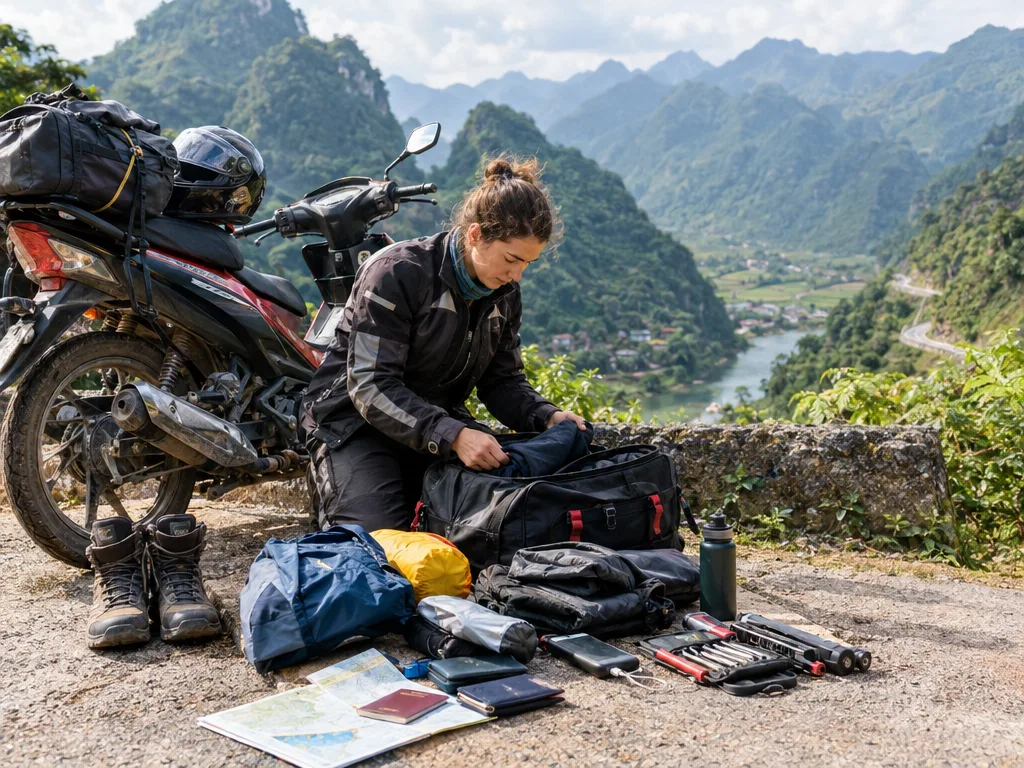
A useful riding kit is compact and easy to reach. Include rain protection, sun protection, a refillable water bottle, basic first-aid supplies, prescription medicine, a spare phone charging option, offline navigation, and a small amount of cash stored separately. Pack clothing in waterproof bags inside the main luggage, not only under an outer cover.
Keep documents and rental information in a protected pouch. Confirm the licence, insurance, and rental requirements that apply to your nationality and the vehicle before you ride; rules and enforcement can change, and the rental shop is not a substitute for checking official requirements. If you are unsure whether you are legally permitted to ride, resolve that question before collecting the bike.
Pack one warm layer even when the forecast looks hot in Hanoi. Northern mountain areas can feel much cooler, and wet riding creates additional chill. Choose shoes that stay secure on the foot, and keep a dry change of clothes available for the evening rather than burying it beneath everything else.
Use a flexible itinerary, not a rigid challenge
Write your plan in three levels: must-see, nice-to-see, and optional. The must-see list should be short. The nice-to-see list can absorb a late start or a slower road. Optional stops are the first things to remove when rain, fatigue, or road conditions make the day longer than expected.
Each evening, check the next day’s weather, road confidence, fuel situation, and accommodation. If any two of those look uncertain, shorten the stage. That is not failure; it is how a road trip stays enjoyable. If you want more ideas for combining major landscapes with lower-impact choices, read How to Visit Northern Vietnam’s Wild Places with Care.
Conclusion: make the ride fit the journey
The strongest northern Vietnam motorbike trip is not the one with the longest route or the most dramatic photograph. It is the one where the bike suits you, the daily stages leave room for attention, and the itinerary can bend when weather or energy changes. Choose one clear route style, prepare for cooler and wetter mountain conditions, check the motorcycle carefully, and keep enough time to stop. With those foundations in place, the road becomes a way to experience northern Vietnam rather than a test you have to pass.
JOIN THE CONVERSATION
Comments (0)
No comments yet. Be the first to share a thought.