A Northern Vietnam motorbike trip is less about collecting kilometres than learning how to move through a changing mountain landscape. One hour can take you from a busy town to limestone passes, terraced valleys, market roads, and villages where the pace is set by weather and farming. The most rewarding road trips leave room for those changes. Instead of racing between pins on a map, choose a route that matches your riding experience, build in daylight, and treat local communities and the landscape as part of the journey.
This guide explains how to plan motorbike routes in Northern Vietnam, from choosing a first loop to handling steep roads, uncertain weather, and practical stops. It complements our broader guide to planning a Northern Vietnam road trip responsibly while focusing on the decisions that matter most when you are actually riding.
Choose the right Northern Vietnam motorbike route
There is no single best route for every rider. The right choice depends on whether you want dramatic passes, quiet rural lanes, cultural stops, or a manageable introduction to mountain riding. Start with the shape of the trip rather than a famous destination.
For a first mountain ride
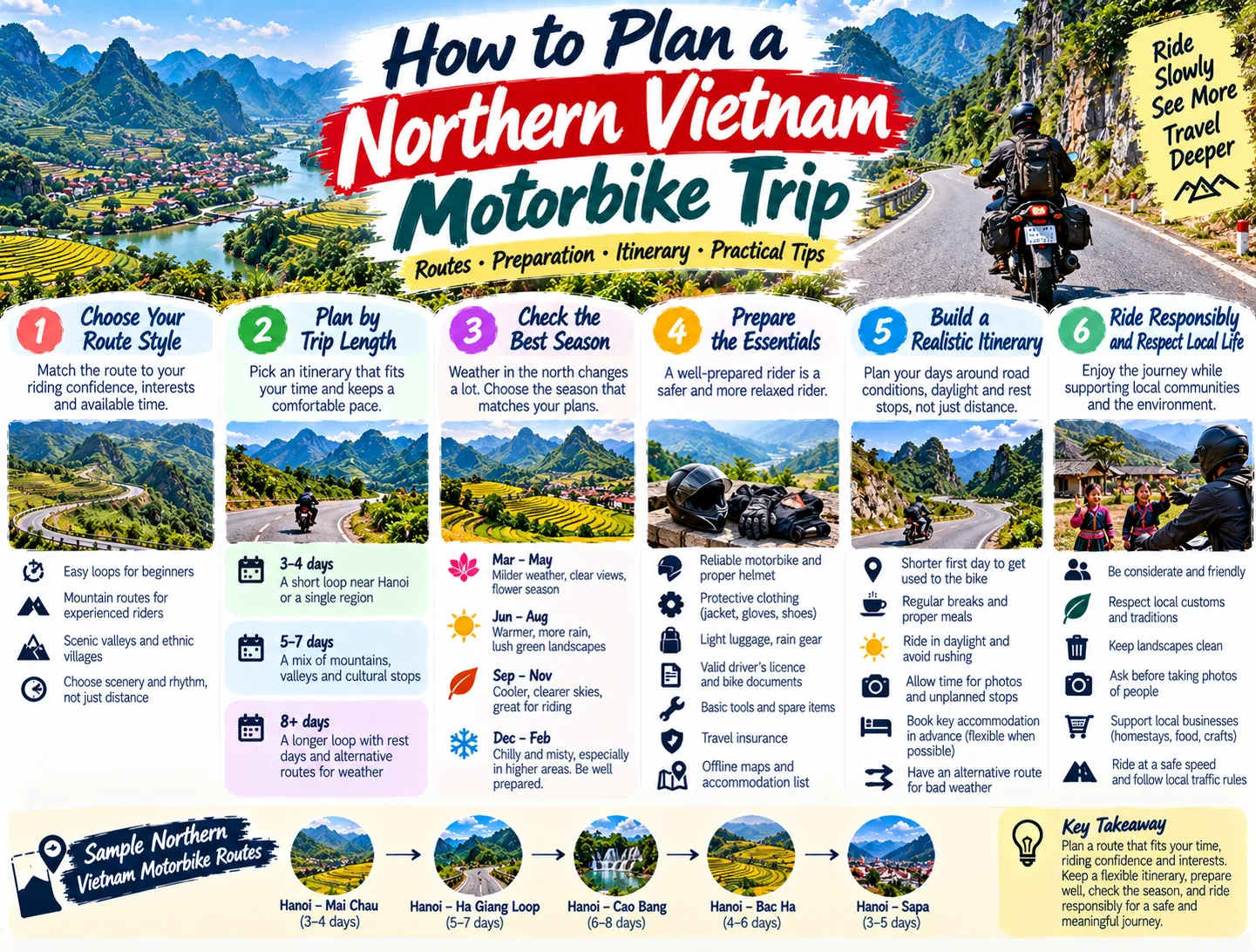
A shorter loop around the Mai Chau area can be a gentler introduction. Roads still rise and fall, but the journey can be designed around valley scenery, villages, and shorter riding days. This is useful if your group includes a new rider, a passenger, or someone who prefers time for walking and photography. Our Mai Chau Valley Experiences section is a natural companion when you want to combine a road journey with slower time in the valley.
For the classic highland challenge
The Ha Giang region is the obvious choice for riders seeking a more intense mountain road trip. Vietnam’s official tourism site describes the area as best experienced on two wheels and highlights the road toward Dong Van, Quan Ba Pass, Ma Pi Leng Pass, the Nho Que River, and the Dong Van Karst Plateau. A route here is visually spectacular, but it is also more demanding: bends are tighter, gradients are stronger, and weather can change the character of a road quickly. Use the dedicated Ha Giang Adventures category to compare the riding experience with walking and cultural stops.
For a mixed adventure itinerary
If riding is only one part of your holiday, connect a road section with trekking, nature, or a town stay rather than adding more distance. Northern Vietnam rewards short detours on foot. You can use our guides to choosing a safer, more enjoyable mountain-trail day and Pu Luong nature escapes to plan breaks that do not feel like wasted riding time.
Build a route around riding conditions, not map distance
Online maps make mountain routes look deceptively simple. A line between two towns may include slow vehicles, blind bends, road works, wet surfaces, livestock, or a pass that demands concentration for much longer than expected. Plan by riding time and energy. A route that looks short on a screen may occupy most of a day once you include fuel, meals, viewpoints, navigation checks, and weather pauses.
Keep each day legible. Choose one main destination and two or three optional stops. If you reach the first stop late, remove the optional stops rather than riding faster. This approach is particularly important on the Ha Giang loop, where the appeal lies in the road itself and not simply in arriving at the next town. Leave enough light to find accommodation and inspect the final section of road comfortably.
- Use a paper or offline map as a backup to phone navigation.
- Mark fuel opportunities before leaving a larger town.
- Save your accommodation address in Vietnamese as well as English.
- Tell someone your broad route and expected arrival area.
- Keep one flexible day for weather, repairs, or a slower detour.
Do not assume that a road labelled as a main route will feel like a wide highway. In the mountains, a route can be important locally while still being narrow, winding, and exposed. Ask your rental provider or a local host about the condition of the exact road you plan to use that day; current local knowledge is more useful than an old blog timetable.
Prepare for mountain roads before leaving town
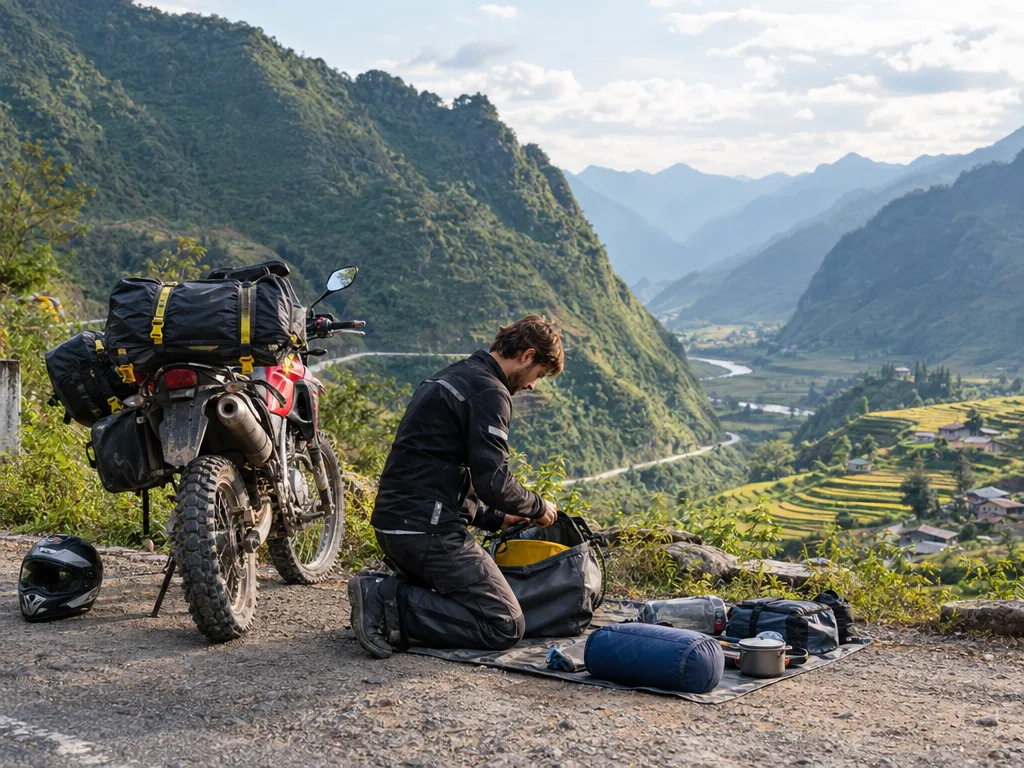
Preparation is not about carrying every possible item. It is about making small failures manageable. Before departure, check the tyres, brakes, lights, mirrors, horn, chain, fuel level, and visible leaks. Ask how to start the bike, where the documents are, and what to do if the machine develops a problem. Take photographs of the bike before riding away and clarify the return process in writing.
Ride within your legal and practical limits
Only ride a motorbike you are legally permitted and practically qualified to ride. An international driving permit may be relevant, but requirements can depend on the licence category and local enforcement; verify the current rules before travelling and carry the documents you are expected to show. Do not treat a rental agreement as proof that you are licensed. If you are not confident on a manual bike, steep hairpins and loose surfaces are a poor place to learn.
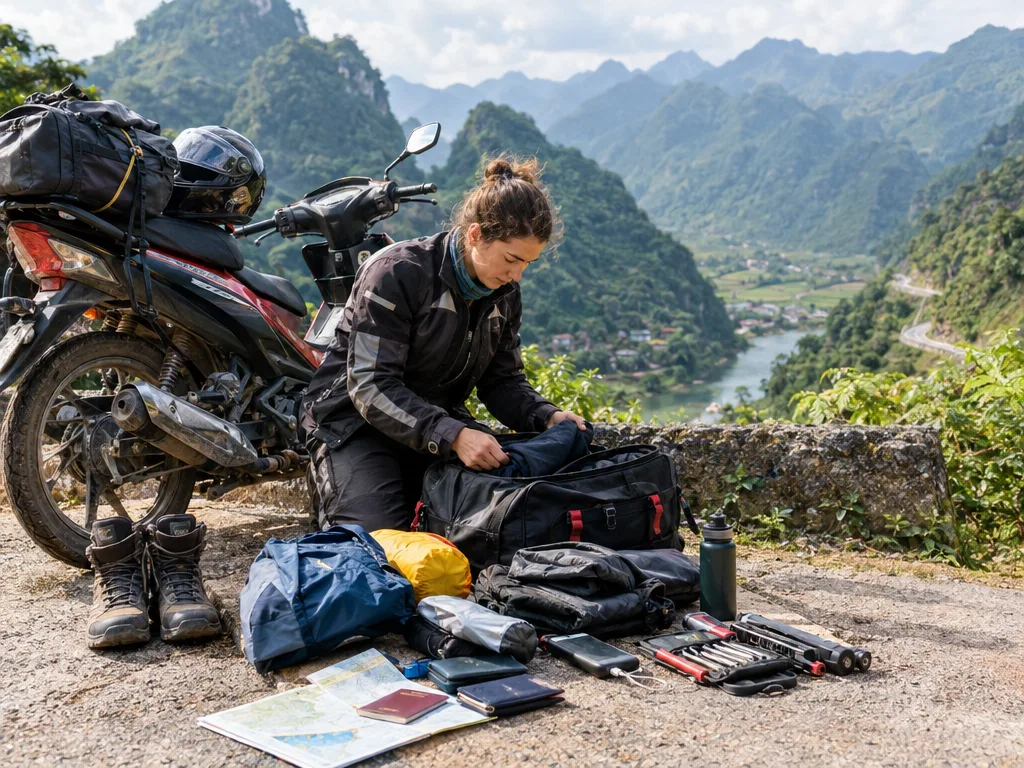
Helmets should fit properly and stay fastened. Wear covered shoes, long trousers, gloves, and layers that can handle both sun and cool air. A lightweight waterproof layer is more useful than relying on a plastic poncho that can flap near moving parts. Pack drinking water, a small first-aid kit, a power bank, and a dry bag for your phone and documents.
Know when not to ride
Rain changes braking distance, visibility, grip, and the condition of unsealed edges. Vietnam Tourism notes that mountain roads can be wet and slippery from May through August, while September to November is promoted for cooler scenery, golden rice, and buckwheat flowers in the northern highlands. These are useful planning signals, not guarantees. A clear-season forecast does not remove the need to reassess conditions each morning.
Pause or shorten the day if cloud hides the road, water is running across the surface, you are tired, or the bike feels unstable. A guesthouse night is cheaper than forcing a pass in poor visibility. If a local driver, host, or road worker advises against a section, ask what has changed and take the warning seriously.
Ride the passes with patience and visibility
Mountain riding is a sequence of decisions. Slow before a bend, not halfway through it. Stay far enough from the centre line to leave room for vehicles approaching from the other direction, and expect larger vehicles to use more space than you would. Horns may be used as a practical warning on bends, but they do not replace looking, slowing, and leaving an escape route.
Do not stop on a blind corner for photographs. Pull fully into a visible lay-by or a wide, safe shoulder, and keep the road clear for local traffic. At viewpoints, park without blocking homes, farm access, or passing vehicles. The famous view is not improved by making someone else brake suddenly.
Spacing matters in a group. The leader should wait at planned junctions rather than assuming everyone can follow at the same speed. The last rider should know the route and have a way to contact the group. Avoid bunching on narrow bends, and never pressure a slower rider to catch up. A calm group is safer and more enjoyable than a fast one.
Make villages, markets, and viewpoints part of the route
A motorbike road trip becomes richer when the stops are not just fuel and photographs. Market days, weaving villages, homestays, small food stalls, and farm paths reveal how the landscape is lived in. Vietnam Tourism points to places such as Sa Phin’s H’Mong King Palace and Lung Cu as possible additions around the northern highlands. Treat them as meaningful visits rather than boxes to tick: allow time to arrive respectfully and understand what you are seeing.
Ask before photographing people, homes, ceremonies, or children. Buy food or a small item when you stop at a family-run stall instead of treating a village as a free backdrop. Keep your voice and music low near homes and religious or community spaces. If a path appears to cross private farmland, ask before walking or riding along it.
For more context on low-impact travel, read how to visit Northern Vietnam’s wild places with care. The same principles apply on the roadside: carry rubbish out, avoid single-use plastic where possible, and leave water sources and viewpoints clean.
Plan fuel, food, money, and communication
Services become less predictable as roads enter remote districts. Fuel up whenever the tank is comfortably below full in a larger town, especially before a long pass or remote valley. Small roadside fuel sellers may be available, but do not build a day around finding one at a precise hour. Carry modest cash in Vietnamese dong for meals, parking, homestays, and small purchases; card and mobile coverage can vary away from towns.
Food stops can also shape the day. Eat before you become exhausted, and keep a simple snack available for a delayed arrival. If you have allergies or dietary restrictions, prepare a short translated explanation and confirm ingredients patiently. Local hosts can often help you find a practical meal, but they cannot solve a problem you have not explained.
Download maps before leaving reliable coverage. Share your accommodation location with a travel companion, and save emergency contacts and your rental provider’s number offline. A small phrase list for directions, fuel, punctures, rain, and “please slow down” is more valuable than assuming translation software will work on every mountain road.
Choose a responsible pace for the whole journey
The strongest Northern Vietnam motorbike itineraries are not necessarily the longest. A responsible pace gives money and attention to local businesses, leaves daylight for unexpected delays, and protects the experience from becoming a personal endurance test. It also makes room for the people who live beside the road. Follow local restrictions, do not enter closed areas, and avoid riding aggressively through villages or wildlife habitats.
Use your route to spread benefits beyond one famous pass. Stay locally where it suits your plans, eat at independent places, and consider a guide or mechanic when their knowledge improves safety rather than simply adding cost. If a road is damaged, a trail is muddy, or a viewpoint is crowded, adapt. A good trip is measured by what you notice and how safely you return, not by how many kilometres you can claim.
Final checklist for a Northern Vietnam road trip
- Choose a route that matches your licence, bike skills, and passengers.
- Check the bike and photograph its condition before departure.
- Plan by daylight and riding effort, not only by kilometres.
- Carry offline navigation, water, layers, cash, and document copies.
- Reassess weather and road conditions every morning.
- Slow before bends, leave space, and never stop on blind corners.
- Ask permission for photographs and respect homes, farms, and sacred places.
- Keep a flexible day for delays, repairs, and better local advice.
A motorbike trip through Northern Vietnam is at its best when the route remains open to real conditions. Choose fewer, better riding days; stop often enough to understand the landscape; and let safety, courtesy, and curiosity guide the journey. That is how a demanding mountain road becomes a memorable adventure rather than a race against the map.
JOIN THE CONVERSATION
Comments (0)
No comments yet. Be the first to share a thought.