Mai Chau is at its best when you slow down. The valley is close enough to reach from Hanoi by road in about three hours, yet its small villages, rice paddies, stilt houses, and surrounding green mountains create a very different rhythm. The most rewarding Mai Chau valley experiences are not a race through viewpoints. They are simple, active days built around cycling quiet lanes, walking between villages, eating a home-cooked meal, and spending enough time in one place to notice how the landscape changes.
This practical two-day guide is for travelers who want more than a quick photo stop. It explains how to shape a Mai Chau itinerary, where cycling and walking fit, what a homestay is really like, how to approach White Thai culture respectfully, and how to leave room for weather and local life. For a wider planning framework, see this first-timer’s guide to Northern Vietnam adventures before you finalize your route.
What makes Mai Chau worth two days?
Mai Chau’s appeal comes from the combination of access and atmosphere. Official Vietnam Tourism guidance describes a valley of ethnic minority villages among paddy fields and mountains, with Lac and Pom Coong noted as established homestay villages. That mix makes the destination especially suitable for travelers who want nature and culture without committing to a demanding mountain expedition.
A day trip can show you the broad outline, but an overnight stay changes the experience. Early morning is quieter, the light is softer, and village lanes are easier to enjoy before the hottest part of the day. Staying overnight also gives you time to eat with local hosts rather than treating the valley as a roadside stop.
Think of Mai Chau as a base for gentle outdoor exploration:
- Cycle between villages and rice fields on narrow local roads.
- Walk short stretches with time for photographs, coffee, and conversation.
- Stay in a stilt-house homestay or a small lodge with a rural setting.
- Try regional dishes and observe how meals are shared.
- Add a longer trek, a cave, a waterfall, or Hoa Binh Lake only if the conditions and your energy allow.
The result is a calm form of adventure. You get movement and scenery, but the schedule does not have to dominate the place.
When to plan your Mai Chau itinerary
For clear days and comfortable activity, March to May is a strong window. September to November is also attractive, and Vietnam Tourism specifically highlights the harvest season from September to November, when rice paddies can turn golden and temperatures are often pleasant. The valley has a mild highland climate, with cooler or misty mornings and heavier rain possible from May through September.
Those seasonal patterns matter more than chasing a single “perfect” month. In the wet season, paths may be muddy and a cycling loop may take longer. In the hotter months, begin outdoor activities early and protect time for shade and rest. During harvest, fields may look especially dramatic, but working farmland is still working farmland: stay on public paths and ask before entering a field or photographing people at close range.
Pack for flexibility rather than for a technical expedition. Bring breathable clothing, a light rain layer, sun protection, secure footwear for uneven paths, and a small day bag. A dry bag or waterproof phone pouch is useful in rainy weather. If you plan to cycle, confirm the bike’s brakes, tires, saddle height, and lights before leaving the homestay.
Day one: arrive, settle in, and explore by bicycle
Morning travel from Hanoi
The journey from Hanoi takes about three hours by road, according to the national tourism authority. Options include a private car, a shuttle van, a bus from My Dinh, or a motorbike for confident riders. Leave enough time for traffic and a proper break; an arrival that is technically early but physically rushed makes the first afternoon less enjoyable.
The road through Hoa Binh leads toward the mountains, and the approach to the valley is part of the experience. If you are driving, keep the final section conservative rather than trying to make up time. A responsible road-trip mindset is covered in this guide to planning a Northern Vietnam road trip.
Afternoon cycling loop
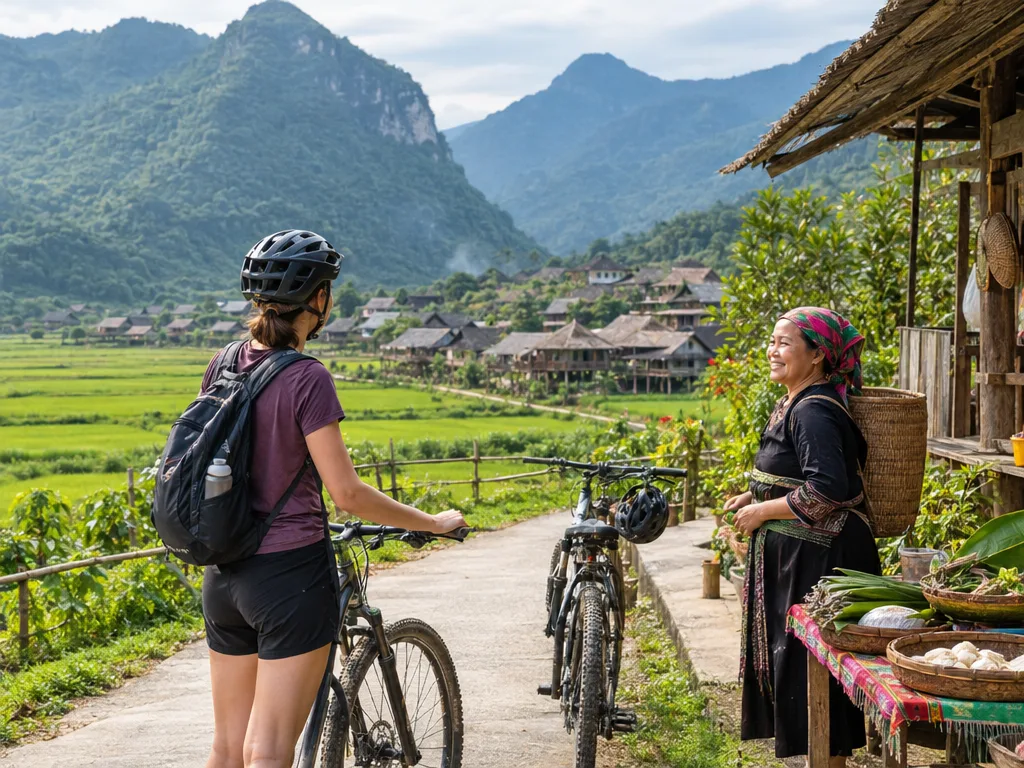
After checking in, start with a modest ride rather than an ambitious circuit. Ask your host which lanes are currently comfortable and whether any route is affected by rain or farm work. The most satisfying cycling in Mai Chau is often on quiet ribbons between clusters of stilt houses and rice paddies, not on a route measured by distance.
Ride slowly enough to yield to pedestrians, livestock, farm vehicles, and children. Stop at the edge of a village rather than blocking a doorway. If you meet a local family, a smile and a greeting are better than immediately raising a camera. A guide can add context by introducing a household, explaining local customs, and helping with communication; independent cycling works well when you prefer a quiet, self-directed afternoon.
Plan a few deliberate pauses:
- A shaded village lane where you can watch daily activity without intruding.
- A viewpoint or open stretch beside the paddies, reached by a public path.
- A small café or drink stop for Vietnamese coffee and a reset.
- A weaving or craft shop where you can ask about the work before browsing.
If cycling is not comfortable for you, do not treat that as a reason to skip the valley. The official tourism guide notes that electric carts can be an alternative, and a walking route through one or two villages can be just as rewarding.
Evening food and performance
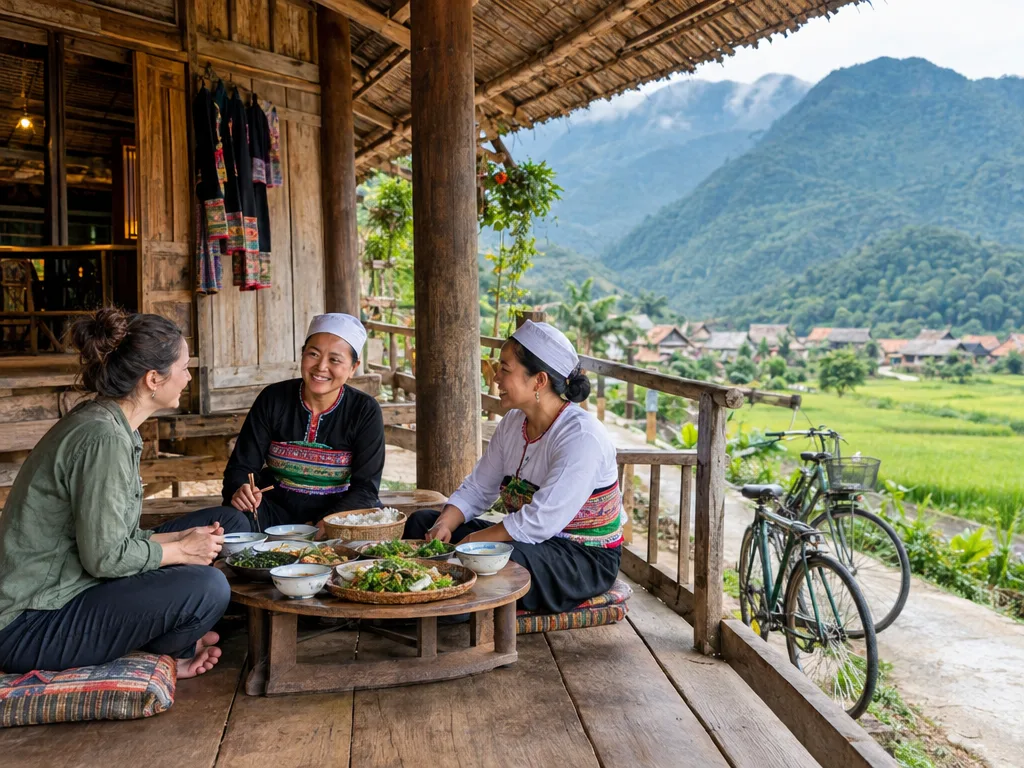
Return before dark, wash off the road dust, and make dinner part of the experience. Commonly described local dishes include cơm lam, rice grilled in bamboo, along with grilled chicken, pork skewers, and stir-fried greens. Menus vary by host and season, so ask what is fresh rather than expecting every dish to appear every night.
Some homestays arrange White Thai music and dance after dinner. Treat a performance as a cultural welcome, not as a private show staged solely for visitors. Watch attentively, avoid climbing onto performance spaces, and ask before taking close-up photographs. If you buy woven textiles, value the labor and the maker’s time; gentle, respectful bargaining may be normal, but pushing for the lowest possible price is not the point.
Day two: walk deeper or add a wider adventure
Start with a village walk
Use the early morning for a short walk while the valley is cool and quiet. This is a good time to notice details that disappear during a busy itinerary: gardens, cooking fires, birds, irrigation channels, and the changing light on the mountains. Keep your route simple and return for breakfast rather than turning every walk into a long trek.
For travelers who want a more structured outing, ask a local guide about a half-day walk suited to current ground conditions. Difficulty depends on the route, recent rain, heat, and footwear, not just on the distance listed in a brochure. Our advice on making a mountain-trail day safer and more enjoyable is useful if you are extending beyond the valley floor.
Choose one add-on, not all of them
Mai Chau can be a base for a longer excursion, but stacking too many activities weakens the trip. Vietnam Tourism highlights kayaking on Hoa Binh Lake and full-day trekking in nearby Pu Luong Nature Reserve as possible outdoor additions. You could also ask local accommodation providers about nearby caves or waterfalls, but confirm the route, transport, weather, and walking conditions before committing.
Choose the add-on that matches your group:
- Choose a longer trek if everyone enjoys uneven ground and a full active day.
- Choose Hoa Binh Lake if you prefer water, views, and a guided activity.
- Choose a short village walk if the group includes mixed fitness levels.
- Choose extra cycling if the weather is good and you want to stay close to your host community.
If Pu Luong is your next destination, compare the landscapes rather than trying to “complete” both in a single rushed day. The site’s gentle nature escape in Pu Luong offers useful context, while the Pu Luong Nature Escapes category can help you plan a separate stay.
Where to stay: homestay, lodge, or hotel?
A stilt-house homestay is the most direct way to experience village life. Lac and Pom Coong are the two villages most often associated with this style of accommodation in official tourism guidance. Expect a simple setting, shared or basic facilities in some properties, and an open sleeping area rather than the privacy and soundproofing of a city hotel.
That simplicity is part of the appeal, but it is worth checking details before arrival. Ask about bathroom arrangements, mosquito protection, fan or air-conditioning availability, dinner timing, bicycle condition, and whether late arrival is practical. A lodge or hotel may suit travelers who need more privacy or reliable quiet, while a homestay is better for people who want communal meals and a closer connection to the village setting.
Whichever you choose, keep noise low at night, use water thoughtfully, and follow the host’s guidance about shoes, shared spaces, and waste. Bring earplugs if you are a light sleeper, especially in a rural building where roosters, dogs, and early-morning activity are normal.
How to experience local culture with care
Mai Chau is not a theme park. Its rice fields, homes, weaving, meals, and performances are part of living communities. The best visitor behavior is practical and unshowy: ask permission, pay fairly, avoid entering homes or fields without an invitation, and do not turn children into photo subjects without a parent’s consent.
Learn a few basic Vietnamese greetings, listen when a host explains a custom, and accept that not every moment needs to be documented. When buying crafts, ask who made the item and whether the purchase supports a local maker or social enterprise. When eating, try what is offered while explaining allergies or dietary restrictions clearly in advance.
For more ideas about choosing activities that fit different ages and energy levels, see how to choose an outdoor adventure for your group. The same principle applies in Mai Chau: a thoughtful pace usually creates better encounters than an overloaded checklist.
A simple planning checklist
- Reserve accommodation early for weekends or harvest-season travel, then reconfirm arrival arrangements.
- Ask the host about current cycling and walking routes, weather, and guide availability.
- Carry cash for small purchases, but do not assume every service accepts the same payment method.
- Bring rain protection, sun protection, insect protection, and footwear that can handle wet ground.
- Check the bike before riding and wear a helmet whenever one is available and suitable.
- Build in unscheduled time for meals, weather changes, and slow village exploration.
- Leave no litter and keep plastic use low, particularly around waterways and fields.
For category-specific inspiration, browse the Mai Chau Valley Experiences category alongside the wider Mountain Trekking & Hiking category.
Conclusion: choose presence over pace
The strongest Mai Chau valley experiences are built from ordinary moments: a bicycle rolling between rice paddies, tea in a stilt house, a generous dinner, a quiet morning walk, or a conversation made possible by a local guide. Two days give you enough time to combine active exploration with genuine rest without turning the valley into a checklist.
Arrive with a flexible plan, choose one or two activities that suit your group, and let local conditions shape the day. That approach produces a more comfortable trip for you and a more respectful visit for the communities that make Mai Chau memorable.

JOIN THE CONVERSATION
Comments (0)
No comments yet. Be the first to share a thought.