Mai Chau is at its best when you slow down enough to notice the details: bicycles on narrow valley lanes, stilt houses beside rice fields, mountain light changing across the day, and meals prepared in homes rather than hurried restaurants. This practical Mai Chau Valley itinerary is designed for travelers who want active experiences without turning the valley into a checklist. It explains how to choose a base, plan cycling and walking, add a trek or lake outing, travel considerately, and shape two or three days around the season and your energy.
What makes Mai Chau different from a quick countryside stop?
Mai Chau is a rural valley in northern Vietnam where small communities and cultivated fields sit within a mountain landscape. The appeal is not one single viewpoint. It is the combination of everyday scenery and gentle movement: walking between villages, cycling past paddies, staying in a stilt house, trying regional food, and learning how local families present their culture to visitors.
Vietnam’s National Authority of Tourism describes the valley as an accessible escape from Hanoi, with White Thai villages, rice fields, homestays, cycling paths, woven textiles, and home-cooked meals. That mix makes Mai Chau especially suitable for a first active rural trip or for travelers who want a softer contrast after a demanding route elsewhere in the north.
The right mindset matters. Treat the valley as a lived-in place, not an outdoor theme park. Ask before photographing people or entering a home, keep voices low around houses, and buy crafts because you value the work rather than because you expect a bargain. These small choices make the experience more rewarding for everyone.
How many days should you spend in Mai Chau?
One night: a taste of the valley
One night works if Mai Chau is part of a wider northern Vietnam journey. Arrive early enough to settle in, take a short walk or cycle before sunset, eat at your homestay, and leave time for an unhurried breakfast. This is enough to see the character of the valley, but not enough for a full outdoor program.
Two nights: the best balance for most travelers
Two nights give you one arrival day, one flexible activity day, and a departure morning. You can combine a village cycling loop with a walk, textile shopping, a local meal, or a guided visit to a household. If the weather changes, you still have room to replace a longer outing with a shorter one.
Three nights: add depth rather than speed
Choose three nights if you want a more active Mai Chau experience. Use the extra day for a longer trek, a guided countryside route, or an excursion toward Hoa Binh Lake or nearby Pu Luong. Build in recovery time instead of trying to fit every option into one morning. Travelers comparing different activity levels may also find the advice in Choosing an Outdoor Adventure That Suits Your Group useful before committing to a demanding day.
Where to stay for a more immersive experience
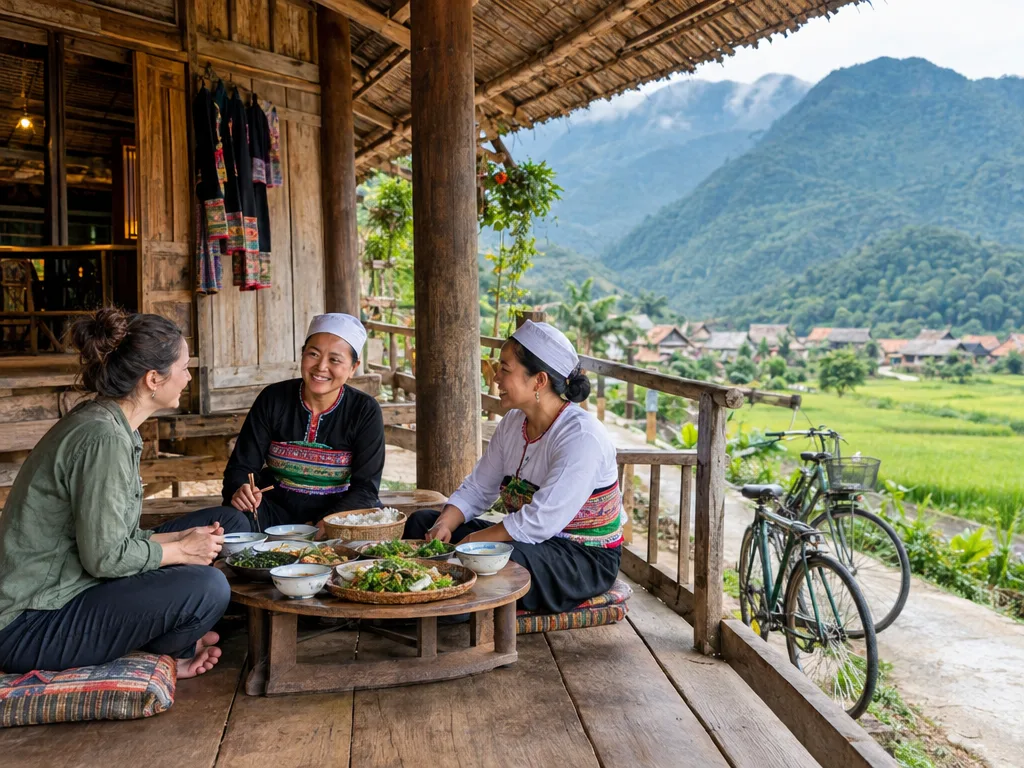
Lac Village and Pom Coong Village are the best-known bases for a Mai Chau homestay. Official tourism guidance highlights their stilt-house accommodation and the chance to stay with White Thai families. A homestay can be simple: sleeping areas may be open-plan, bathrooms may be shared, and the atmosphere is usually more communal than hotel-like. That simplicity is part of the experience, but check the facilities before booking if privacy or accessibility is important.
Choose your location according to the pace you want. A village base is convenient for early walks, cycling, and evening meals, while a lodge outside the main cluster may offer more quiet and views across the fields. Whichever you choose, ask whether bicycles, guides, transfers, and meals are arranged directly by the property. Confirm what is included rather than assuming every homestay offers the same service.
For a wider perspective on enjoying northern villages respectfully, read Mai Chau Valley at Walking Pace. It pairs naturally with this itinerary because the most memorable parts of a stay often happen between scheduled activities.
Planning cycling and walking in the valley
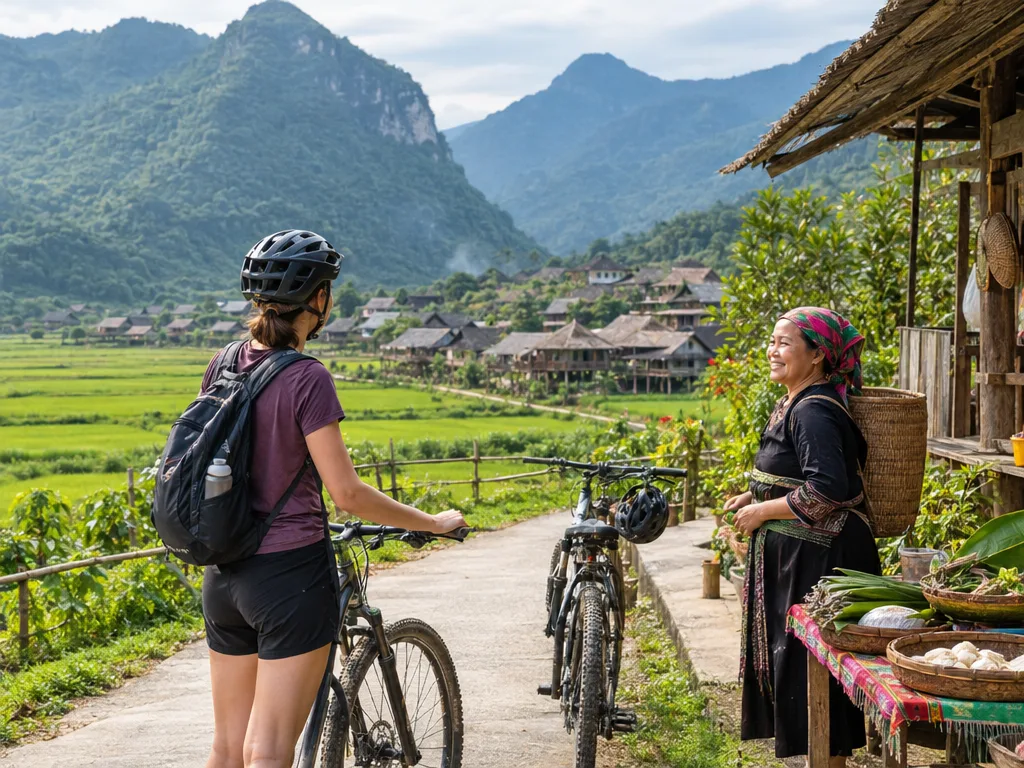
Cycling is one of the most practical Mai Chau activities because it covers more ground than walking while keeping you close to the landscape. Vietnam Tourism recommends riding the quiet paths connecting villages, stilt houses, and rice paddies. Some travelers cycle independently; others prefer a local guide who can explain village life and introduce them to a household.
A sensible half-day cycling plan
- Start in the cooler part of the morning and carry water.
- Ride slowly enough to respond to walkers, animals, children, and farm traffic.
- Use the route as a way to observe, not as a race between photo stops.
- Leave time for a village visit, a drink, or a conversation arranged by your host.
- Return before you are exhausted if you plan an evening meal or cultural performance.
Electric carts are an alternative for travelers who cannot cycle, and a guided walk can be just as rewarding on the smaller lanes. For more general trail preparation, the site’s Mountain Trekking & Hiking category offers useful context on footwear, pacing, weather, and route choice.
Do not assume that a narrow path is a private attraction. Avoid blocking entrances, stepping into planted fields, or cycling through active work areas without permission. The rice landscape changes with the agricultural calendar, so the scenery may be green, recently harvested, or partly flooded depending on when you visit.
Building an active two-day Mai Chau itinerary
Day one: arrive, orient yourself, and settle into village life
Travel from Hanoi takes about three hours by road according to Vietnam Tourism, so an early departure leaves useful time in the valley. After checking in, take a gentle orientation walk around your village. Notice where bicycles can be rented, where your host serves meals, and which lanes feel comfortable for an independent stroll.
In the late afternoon, choose a short cycling loop rather than a long expedition. This lets you check the road surface, understand local traffic, and see how the light falls across the fields. Return for dinner and, if your host offers one, a traditional music or dance performance. Watch attentively and avoid treating the performers as a backdrop for constant phone use.
Day two: cycle first, then choose your afternoon
Spend the morning on a longer valley ride or a guided village route. A guide is particularly useful if you want cultural context rather than only directions. Ask about the people and places you visit, and follow the guide’s advice about where photographs and visits are appropriate.
In the afternoon, choose one main addition: a walk through quieter lanes, a craft-focused visit, a nearby cave or waterfall arranged by your host, or a more ambitious trek. Keeping one main activity prevents the day from becoming a transfer schedule. Finish with a meal that includes local specialties and make notes about ingredients if you have allergies or dietary restrictions.
Day three: a wider landscape or a slow departure
If you have a third night, use the day for an outing toward Hoa Binh Lake or neighboring Pu Luong, subject to current local arrangements and weather. Vietnam Tourism presents kayaking on the reservoir and trekking in Pu Luong as options from the Mai Chau area, but the practical details depend on your host or operator. Confirm distance, start time, equipment, and return transport before paying.
If you prefer less logistics, stay in the valley. A second cycling route, a weaving demonstration, or a long breakfast followed by a walk can reveal more than another rushed excursion. This slower option is especially sensible after a motorbike journey or a multi-day trek.
Food, textiles, and cultural experiences to seek out
A Mai Chau homestay is often as much about the table as the bed. Official tourism material mentions cơm lam, rice cooked in bamboo, along with grilled native chicken, pork skewers, and stir-fried greens. Ask your host what is seasonal and how dishes are served. Sharing a meal is a chance to learn, not a reason to demand a fixed menu of familiar foods.
Textiles are another central part of the valley experience. Look for woven fabrics and, where available, a loom demonstration. If you buy, ask who made the item and how it should be cared for. Bargaining may be part of local commerce, but keep it proportionate; a small saving is not worth turning skilled work into a contest.
Evening performances can be enjoyable when they are presented as a community cultural experience rather than a private spectacle. Follow the host’s guidance about timing, seating, participation, and photography. A respectful guest is more likely to be welcomed into conversations and ordinary moments that no itinerary can guarantee.
Choosing a trek or outdoor add-on
Mai Chau is gentler than some of northern Vietnam’s high mountain destinations, but that does not mean every route is effortless. Ask about distance, elevation, shade, stream crossings, surfaces, and the possibility of changing weather. A route described as a walk by one traveler may feel like a strenuous hike to another.
For a short outing, choose a village-to-village walk with a clear return plan. For a longer day, use a local guide and confirm whether food, water, transport, and any required equipment are included. If you are adding Pu Luong or Hoa Binh Lake, treat it as a separate excursion rather than assuming it is a quick detour.
The site’s Outdoor Adventure Activities category can help you compare activity styles, while A Safer, More Enjoyable Day on a Mountain Trail is a useful reminder to match footwear, water, weather planning, and pace to the route you actually book.
When to visit and what to pack
Vietnam Tourism identifies March to May as a pleasant period and September to November as a strong choice, when rice paddies may turn golden and days are often cooler and clearer. The same guidance notes heavier rain from May to September. These are planning patterns, not guarantees, so check the forecast close to departure and ask your host about current trail and road conditions.
Pack light, breathable clothing, a rain layer, sun protection, insect repellent, a reusable water bottle, and shoes that can handle uneven or wet paths. Bring a small day bag for cycling and walking. A modest cover-up is useful when visiting homes or community spaces. Keep valuables secure and avoid bringing more equipment than you can carry comfortably on a bicycle.
Most importantly, bring flexibility. A shower may turn a long ride into a short walk; a harvest period may make a field route busier; and a local celebration may change the rhythm of a village. A good Mai Chau itinerary has a structure, but it leaves room for the valley to set the pace.
Responsible travel in Mai Chau
Responsible travel here is practical rather than complicated. Use marked or host-recommended paths, do not leave litter, limit single-use plastic, and ask before filming or photographing residents. Respect homes, sacred or private spaces, and working fields. If you hire a guide, choose someone introduced by a reputable accommodation or local provider and agree on the route and price before setting out.
Support the local economy through direct, considered choices: stay locally, eat meals prepared by your host, buy useful crafts, and pay fairly for guiding. Avoid promising gifts to children or encouraging behavior that turns visitors into a source of handouts. If you want to learn more about visiting natural and rural places carefully, see How to Visit Northern Vietnam’s Wild Places with Care.
Final planning checklist
- Book a village homestay or lodge that matches your privacy and comfort needs.
- Ask about bicycles, guides, meals, transfers, and current road conditions.
- Plan one main activity per half-day rather than filling every hour.
- Carry water, sun and rain protection, and shoes for uneven paths.
- Confirm longer excursions to Hoa Binh Lake or Pu Luong before departure.
- Ask permission before photographs, household visits, or entering private areas.
- Keep your schedule flexible enough for weather and local life.
With two or three nights, a thoughtful Mai Chau itinerary can combine cycling, walking, food, textiles, and mountain scenery without rushing the valley. Choose a comfortable base, let local hosts shape the details, and measure the trip by the quality of the experience rather than the number of stops.

JOIN THE CONVERSATION
Comments (0)
No comments yet. Be the first to share a thought.