Mai Chau Valley experiences are at their best when you slow down enough to notice the details: rice fields changing colour, paths between stilt houses, a shared meal, or the quiet rhythm of a bicycle on a village lane. This is not a destination you need to rush through. With sensible planning, a short stay can combine gentle outdoor activity, White Thai culture, local food, and time to simply look across the valley.
What makes Mai Chau different from a standard day trip?
Mai Chau is close enough to Hanoi for a manageable road journey, yet the valley feels distinctly rural. Vietnam’s official tourism site describes small ethnic-minority villages set among paddy fields and green mountains, with Lac and Pom Coong known for homestay tourism in stilt houses. That combination gives the valley its appeal: you can be active in the morning, learn something about local life in the afternoon, and still have an unhurried evening.
The most rewarding plan is usually a two-night stay rather than a checklist day. One day lets you settle into the landscape; the next gives you room for a longer cycle, a village walk, a craft stop, or an optional outing beyond the valley. If your time is limited, choose one main activity and leave space around it. Mai Chau works better as a place to inhabit briefly than as a series of rushed photo stops.
Choose the right pace for your Mai Chau itinerary
A relaxed one-night stay
Arrive with enough daylight for a short walk or an easy cycle near your accommodation. Use the evening for a home-cooked meal and, where your host offers one, a cultural performance. The following morning is ideal for a longer ride before returning to Hanoi. This format suits travellers who want a first taste of rural northern Vietnam without committing to a long activity schedule.
A fuller two-night stay
With two nights, separate movement from discovery. Give the first afternoon to orientation: learn where the village lanes lead, check the weather, and ask your host which routes are comfortable at that time of year. Reserve the next morning for cycling or walking, then keep the afternoon flexible for textiles, a household visit arranged through a guide, or a rest in the valley. This is also the better option for families and mixed-ability groups because nobody has to turn every hour into an excursion.
For a broader regional plan, the site’s Mai Chau Valley Experiences category is the natural place to compare ideas, while Mai Chau Valley at Walking Pace offers a useful companion perspective for travellers who prefer exploring on foot.
Cycle the valley without turning it into a race
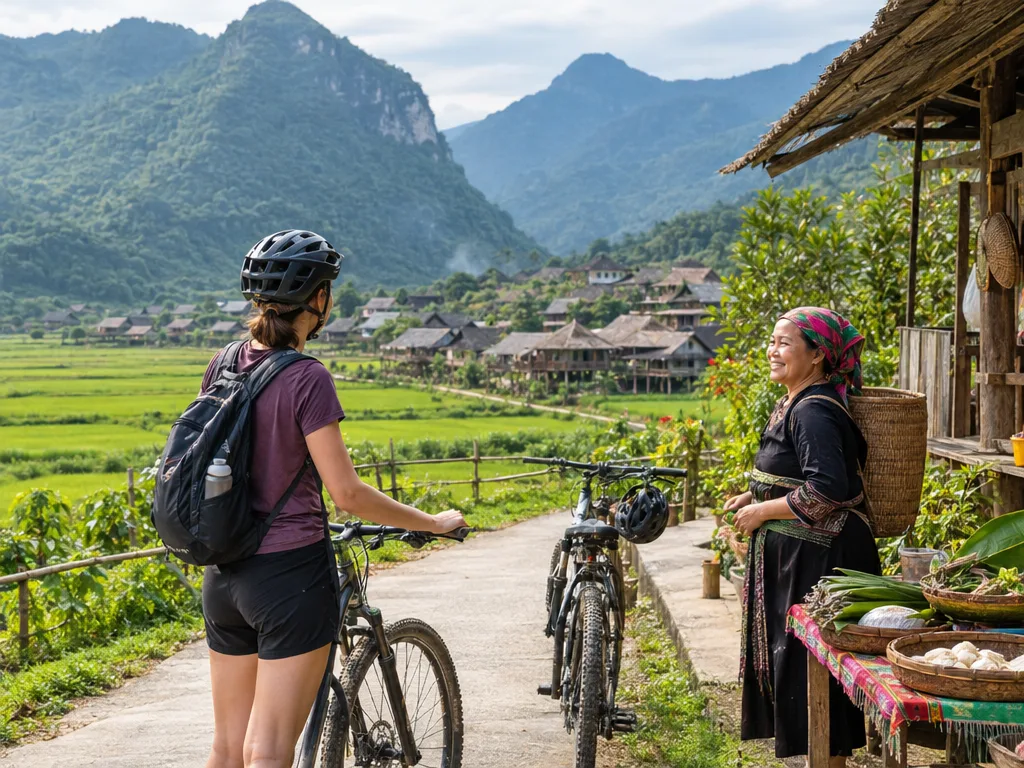
Cycling is one of the clearest answers to what to do in Mai Chau. The official Vietnam Tourism activity guide highlights quiet trails through the valley and notes that hotels can help arrange a cycling tour; it also mentions electric carts as an alternative for visitors who cannot cycle. The point is not distance. A bicycle lets you connect small lanes, rice paddies, gardens, and clusters of stilt houses at a pace that keeps the scenery legible.
Start with a route that matches your confidence and the day’s conditions. Ask where the surface is easiest, whether any section is exposed, and how long a typical loop takes at a relaxed pace. If you are not used to riding in warm weather, leave early, carry water, and avoid treating the hottest part of the day as a test of fitness. A shorter ride with time to stop is more rewarding than an ambitious loop that leaves you watching the clock.
- Check the bicycle before leaving: brakes, tyres, saddle height, and lights if you may return late.
- Keep speed low near homes, animals, pedestrians, and blind bends.
- Pull fully to the side before taking photographs, rather than stopping in the lane.
- Wear clothing suitable for sun, dust, and respectful visits to homes or community spaces.
A guide can add value when you want context rather than simply directions. The official guide says a guide may introduce visitors to a White Thai household, which can turn a scenic ride into a more meaningful cultural encounter. Arrange this through your accommodation or a clearly identified local provider, and ask how the visit works before you agree: who is hosting, what is expected, and whether photography is welcome.
Stay in a stilt house with realistic expectations
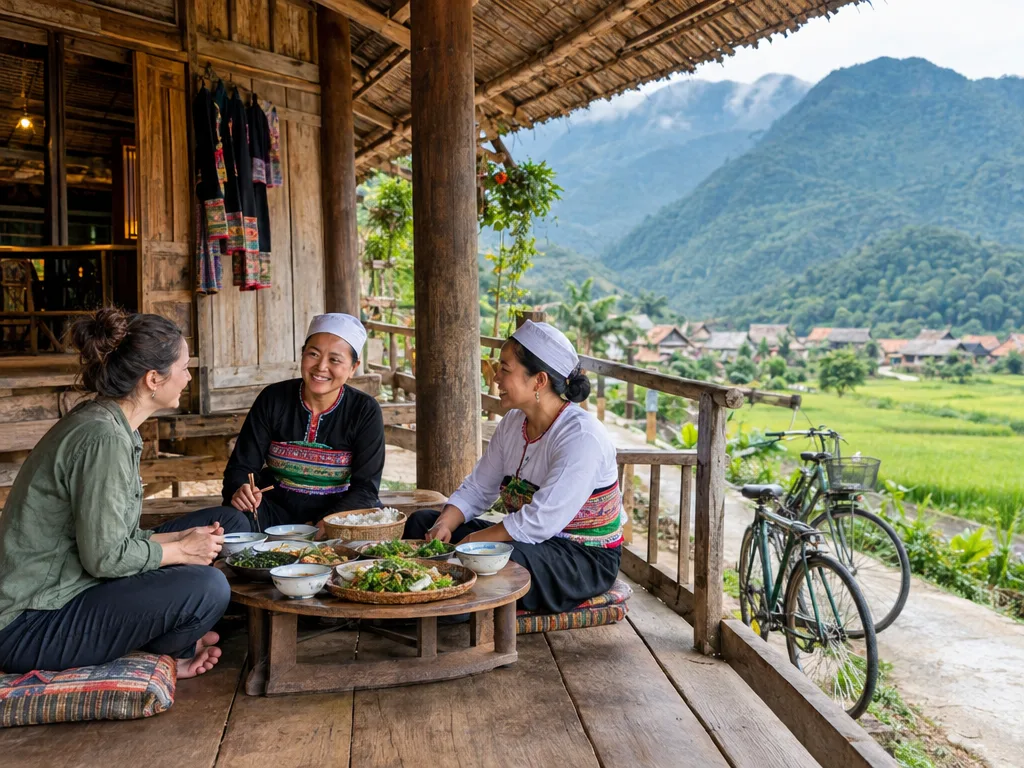
A stilt-house homestay is one of the defining Mai Chau Valley experiences, but it is best approached as a cultural stay rather than a hotel substitute. Official tourism guidance identifies Lac and Pom Coong as established homestay villages and describes simple accommodation in stilt houses. That usually means the atmosphere is part of the appeal: open shared spaces, a connection to the village, and a more social evening than you might have in a private resort.
Before booking, ask practical questions that affect comfort. Is the sleeping area open-plan or private? Are bathrooms shared? Is bedding provided? How is the room cooled, and what happens if the weather changes? These are not criticisms; they help you choose honestly. Travellers who need quiet, privacy, or fully enclosed rooms may prefer a lodge or hotel, while those who enjoy communal settings may find the homestay the most memorable part of the trip.
Be a considerate guest. Keep voices low late at night, follow household guidance about footwear and shared areas, and ask before photographing people or interiors. Buying a meal, craft, or locally arranged activity is more useful than treating a village as a backdrop. If you want more general advice on matching an activity to your group, read Choosing an Outdoor Adventure That Suits Your Group before you commit to a packed itinerary.
Build culture into the day, not just the evening
Look for textiles with a story
Mai Chau is associated with fabrics woven by White Thai artisans. The official activity guide recommends looking for local weaving and notes that some shops make the process visible. Instead of buying the first souvenir you see, take time to notice the work: pattern, texture, finishing, and whether the seller can explain where it was made. A small purchase from a genuine local workshop or social enterprise can be more meaningful than a large, generic haul.
Ask permission before photographing looms, people, or demonstrations. If you are unsure whether an item is handmade locally, ask directly and accept the answer without bargaining aggressively. The official destination guide notes that gentle bargaining is expected in some shopping contexts, but respectful conversation should come before trying to reduce every price.
Eat slowly and ask questions
Meals are part of the experience, especially at a homestay. Vietnam Tourism highlights cơm lam, grilled chicken, pork skewers, greens, and other home-cooked dishes in its Mai Chau guide. Treat the meal as an opportunity to learn rather than a menu to audit. Ask what is seasonal, how a dish is prepared, and which foods are shared by the table. If you have allergies or dietary restrictions, communicate them clearly before food is served and confirm what can be prepared safely.
Enjoy performances with context
Some stays include White Thai music and dance after dinner. Join with attention, not as though you are watching a private show staged solely for visitors. Follow the host’s cues about where to sit, when to applaud, and whether photography or video is appropriate. The most respectful response is simple: watch, listen, and thank the performers without turning the moment into a contest for the best recording.
Add a walk or a gentle nature outing
Walking is the easiest way to make a short Mai Chau trip feel spacious. Take an early stroll through village lanes while the light is softer, or choose a route that links fields and hamlets without demanding a full trek. A walk also lets you notice details that disappear from a vehicle: irrigation channels, garden edges, small workshops, and the changing scale of the mountains around the valley.
For a more active day, ask locally about a route that matches your weather window and experience. Vietnam Tourism lists kayaking on Hoa Binh Reservoir and longer outings toward Pu Luong Nature Reserve among the area’s outdoor possibilities. These should be treated as separate planning choices, not automatic add-ons. Check travel time, weather exposure, return arrangements, and the level of support before booking. If your main goal is a calm valley stay, a longer excursion may dilute the very atmosphere that brought you to Mai Chau.
Travellers comparing nearby landscapes can also browse the Pu Luong Nature Escapes category. It is useful for understanding the difference between a valley-based cultural stay and a more nature-focused itinerary. For a general approach to trails, the site’s A Safer, More Enjoyable Day on a Mountain Trail is a sensible planning read, even if your Mai Chau route remains gentle.
Plan transport and timing without overpromising
Official Vietnam Tourism guidance places Mai Chau at about three hours by road from Hanoi, via Hoa Binh, and describes private cars, shuttle vans, buses, and motorbikes as possible ways to make the journey. The exact choice depends on your starting point, luggage, confidence, and whether you want a driver who can handle the route. Confirm the departure point, pickup arrangement, luggage policy, and expected arrival time directly with the provider before travel; these details can change.
Morning travel is recommended in the official activity guide because it leaves more daylight for the valley and can make the road journey more enjoyable. Even so, do not plan a demanding cycle immediately after arrival if your transport has been tiring. Build in a buffer for traffic, weather, and check-in. If you are riding a motorbike, be honest about your experience and conditions; the site’s Motorbike & Road Trips category can help you think through a wider road-trip plan, but local advice should decide whether a particular day is suitable.
Seasonality changes the feel of the valley. The official destination page identifies September to November as a strong period, when paddies can be golden and days cooler, while March to May is also pleasant. It also notes heavier rain from May to September. Use those broad patterns as planning guidance, then check the forecast close to departure and keep your activity list flexible.
Travel in a way that keeps the valley welcoming
Mai Chau’s appeal depends on ordinary village life continuing around visitors. Stay on established paths, keep away from planted fields unless invited, and avoid flying drones or using loud speakers near homes without clear permission. Carry reusable water and take rubbish back to your accommodation when bins are not available. Small choices matter more in a compact rural destination than in a large urban attraction.
Spend locally where you can: accommodation, food, guiding, transport, and crafts are all ways to support the people who make the experience possible. Keep bargaining proportionate to the item and the effort behind it. Most importantly, remember that a photograph is not the same thing as permission. Ask first, accept no gracefully, and let the valley remain a home rather than turning every encounter into content.
A simple formula for a better Mai Chau stay
Plan one active anchor, one cultural encounter, and one open block of time. For example, cycle in the morning, share a homestay meal or visit a weaving workshop in the afternoon, and leave the next morning for an unhurried walk. That structure gives you enough shape to use your time well without stripping away the calm that distinguishes Mai Chau from a conventional sightseeing stop.
Whether you arrive for one night or two, the best Mai Chau itinerary is measured by how much you notice, not how many stops you collect. Move gently, ask before entering someone’s story, and let the valley set the pace.

JOIN THE CONVERSATION
Comments (0)
No comments yet. Be the first to share a thought.