Mai Chau is at its best when you slow down. Rather than treating the valley as a quick photo stop, plan a few unhurried days around cycling, short walks, local food and time in a stilt-house village. The result is a gentler kind of northern Vietnam adventure: active enough to feel rewarding, but spacious enough to notice the rice fields, mountain edges and everyday life around you.
This Mai Chau itinerary guide is designed for travellers who want practical choices without turning the valley into a checklist. It explains where to base yourself, how to shape a day, what to do when the weather changes, and how to enjoy cultural experiences with care. If this is your first trip north, pair it with this first-timer’s guide to Northern Vietnam adventures for wider planning context.
Why Mai Chau works for a slower adventure
Mai Chau’s appeal comes from the combination of easy access from Hanoi and a landscape that feels distinctly rural. The official Vietnam Tourism destination guide describes a valley of small ethnic minority villages, paddy fields and green mountains, with homestays, cycling and home-cooked meals among the main experiences. That mix makes Mai Chau especially useful for travellers who want several kinds of activity without changing accommodation every night.
Think of the valley as a base rather than a single attraction. A morning can be spent walking along paths between fields, an afternoon cycling through nearby hamlets, and an evening sharing dinner at a homestay. You can also build in a more ambitious outing, such as a trek or a lake excursion, while keeping the overall trip calm.
The best Mai Chau experience is rarely the one with the most stops. Leave room for an unplanned coffee, a conversation with a host, or a return along a quiet lane when the light changes. That flexibility is part of the destination’s character.
Choose the right base and pace
Lac Village and Pom Coong Village
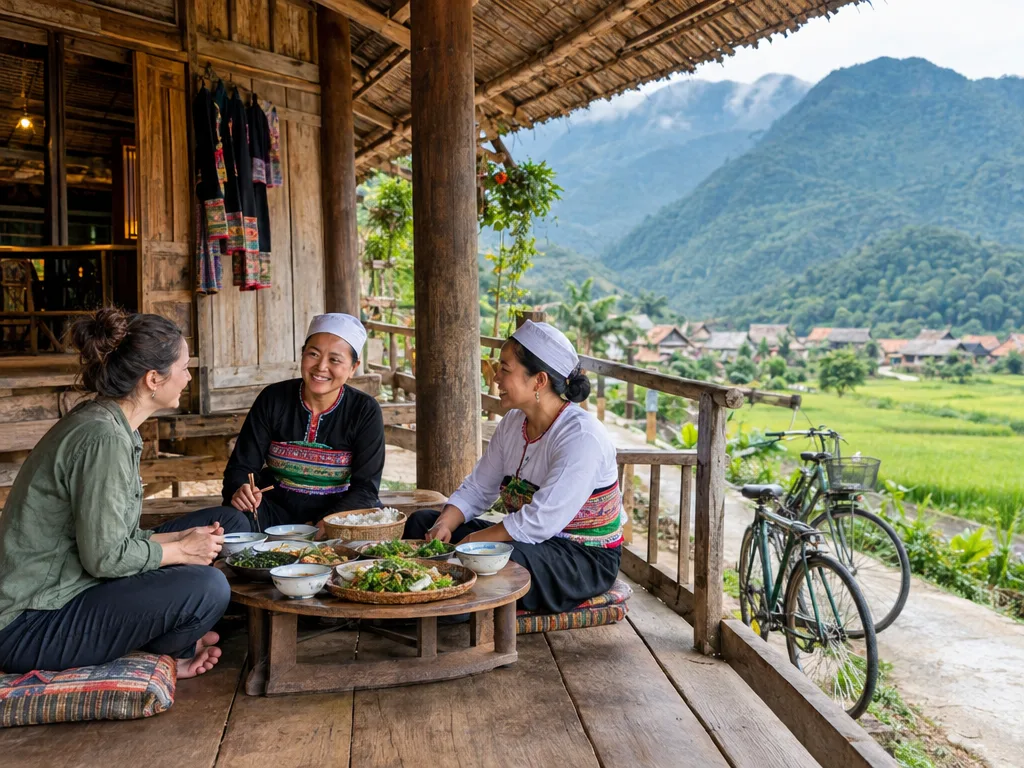
Lac Village and Pom Coong Village are the most useful starting points for a classic Mai Chau stay. Vietnam Tourism identifies both as homestay villages where White Thai families offer simple accommodation in traditional-style stilt houses. Staying in or near a village puts you close to paths, rice fields and evening meals, so you can enjoy the valley without spending the whole day in a vehicle.
Choose a village homestay if you value atmosphere, shared meals and a direct connection with local hosts. Expect a simpler setup than a conventional hotel: sleeping areas may be open-plan and bathrooms may be shared. If you prefer more privacy or a quieter retreat, a lodge or hotel outside the busiest village area may suit you better. Ask what is included before booking, especially regarding meals, transfers, activities and room arrangements.
How many days do you need?
Two nights is a practical minimum for a first visit. It gives you one arrival period, one full valley day and a relaxed departure rather than a rushed overnight. Three nights works better if you want both cycling and a longer outdoor excursion, or if you are travelling with children or a mixed-ability group.
Build your plan around energy, not just distance. A short cycle followed by a long lunch can be more memorable than an ambitious route that leaves no time to look around. For broader ideas about choosing activities for different travellers, see our guide to choosing an outdoor adventure that suits your group.
Plan a Mai Chau cycling day
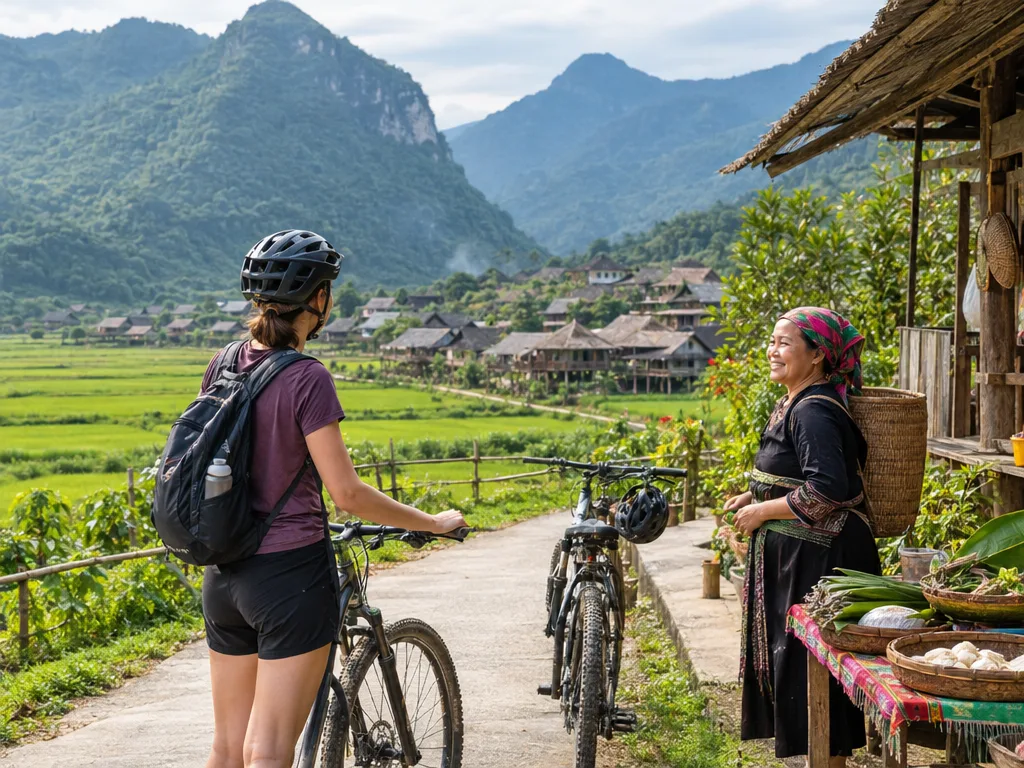
Cycling is one of the most natural ways to experience the valley. The official destination guide highlights quiet paths connecting stilt-house clusters, villages and rice paddies, while its activity guide notes that travellers can ride independently or hire a guide. Cycling lets you cover more ground than walking while keeping the pace slow enough to notice details.
A flexible route structure
- Start after breakfast, when the air is generally more comfortable and the lanes feel unhurried.
- Ride toward smaller hamlets and field paths rather than trying to collect every named viewpoint.
- Stop for a drink, a short walk or a respectful look at local weaving when an opportunity presents itself.
- Return before you are tired enough to lose concentration, especially if the route is unfamiliar.
Your accommodation may be able to arrange bicycles or a guided ride. The official activity guide also suggests that qualified guides can be found through established local hospitality providers, and that electric carts are an alternative for visitors who cannot cycle. Confirm the vehicle, route length, road surface and weather policy before setting out. If you cycle independently, keep the route modest until you understand the terrain and traffic.
Wear clothing that is comfortable for sitting and walking, carry water, and protect yourself from strong sun or sudden rain. More importantly, ride considerately. Slow down near homes, give people space, and avoid turning private courtyards or working fields into photo sets.
Build a cultural experience, not a performance checklist
Mai Chau’s cultural appeal is strongest when it is approached as a living community rather than a backdrop. The official activity guide discusses White Thai textiles, weaving, home cooking, stilt-house stays, and traditional music and dance. These experiences can be meaningful, but the quality depends on how you participate.
Food and shared meals
Ask your host what is being served and whether there are ingredients you should avoid. Local meals may include cơm lam, rice cooked in bamboo, grilled chicken, pork skewers and seasonal greens. The point is not to order a famous dish and leave; it is to understand that food is often part of the welcome and the rhythm of a homestay.
Eat what is offered where it is appropriate, but communicate allergies and dietary needs early. If you are unsure about an unfamiliar ingredient, ask politely instead of guessing. A meal becomes more enjoyable when both guest and host know what to expect.
Textiles, music and photography
Textiles are an important part of the valley’s visitor experience. You may see looms, woven fabrics or small shops connected with local craft traditions. Buy because you value the work, not because you feel pressured. Ask before photographing people, homes, looms or performances, and avoid interrupting someone who is working.
Some homestays arrange evening music or dance. Treat these events as hosted cultural moments: arrive on time, follow the host’s lead, and keep phones from dominating the experience. For more responsible thinking about visiting rural and wild places, read this guide to visiting Northern Vietnam’s wild places with care.
Combine cycling with walking and a longer outing
A good Mai Chau adventure itinerary alternates effort. After a cycling morning, take a short village walk or leave the afternoon open. Quiet paths around hamlets and gardens can be more rewarding than a formal attraction because they show how the valley is used day to day. Keep to public routes and ask before entering any home, farmyard or field.
If you want a bigger day, Vietnam Tourism points to kayaking on Hoa Binh Lake and trekking in neighbouring Pu Luong Nature Reserve as possibilities from Mai Chau. These should be treated as separate excursions rather than casual add-ons. Ask your accommodation or a reputable local operator about transfer time, fitness demands, weather limits, equipment and what is included.
Do not assume a route is suitable simply because it appears in a social-media post. Conditions can change, and a printed or online description may not reflect the day’s weather. For a wider view of walking preparation, use our practical mountain-trail safety guide before choosing a longer hike.
Travellers who want a regional comparison can also browse the Pu Luong Nature Escapes category. It is useful for understanding how a Mai Chau stay can be paired with a more hiking-focused landscape, while keeping the two destinations distinct.
Work with the weather and the seasons
Vietnam Tourism lists September to November as a particularly attractive period for Mai Chau, when rice paddies can turn golden and days are often cooler and clearer. It also identifies March to May as a pleasant window, while noting heavier rain from May to September. These are useful planning patterns, not guarantees. Check the forecast close to departure and keep your daily schedule adjustable.
In wetter periods, plan shorter rides, flexible walks and indoor time around meals or craft experiences. Rain can make paths slippery, reduce visibility and change the comfort of a motorbike or bicycle outing. In drier, busier periods, start activities earlier and make reservations sooner if you want a particular homestay or guide.
Pack for variation: light layers, shoes that can handle uneven ground, rain protection, sun protection and a small day bag. Avoid bringing more equipment than you will use. The valley is easier to enjoy when your hands are free for walking, eating and greeting people.
Getting to Mai Chau without losing the day
The official destination page describes Mai Chau as roughly three hours by car or bus from Hanoi via Hoa Binh, while the activity guide lists private transfers, shuttle vans, buses from My Dinh bus station and motorbikes as options. The exact journey can vary with traffic, stops and weather, so treat the duration as a planning estimate rather than a timetable.
Travel in the morning if you want to arrive with time for a walk or cycle. Confirm the pickup point, luggage space, drop-off location and whether the service goes directly to your accommodation. If you are taking a public bus or shuttle, ask your homestay for current instructions instead of relying on an old blog post.
Motorbiking can be scenic but should be reserved for riders who are properly licensed, confident in changing road conditions and equipped for the route. Vietnam Tourism’s transport guidance advises novice riders to take care, wear a helmet and avoid leaving a motorbike unattended. If that is not your normal riding environment, a driver or shared transfer may be the more enjoyable choice.
A simple two-night Mai Chau itinerary
Day one: arrive and settle in
Travel from Hanoi in the morning, check in, and take a short orientation walk around your village. Have lunch at your accommodation or a nearby local venue, then keep the afternoon light. A sunset stroll, a conversation with your host and a shared dinner are enough for the first day.
Day two: cycle, eat and explore
Cycle after breakfast through village lanes and rice-field paths, stopping respectfully when you find a craft or food experience that interests you. Return for lunch and rest during the warmer part of the day. In the late afternoon, choose either a short walk, a guided cultural visit or an arranged evening performance.
Day three: choose one final experience
Before leaving, take a quiet morning walk or book a longer activity if conditions are good. Keep the departure buffer generous. The goal is to leave with a sense of the valley, not to squeeze in one last rushed stop.
Make your visit useful to the valley
Choose locally owned accommodation and guides where possible, carry reusable essentials, and reduce single-use packaging. Keep noise low in villages, dress appropriately for homes and community spaces, and never remove plants, crops or natural materials as souvenirs. When buying textiles or crafts, ask who made them and whether the price supports the maker.
Mai Chau rewards attention. Stay long enough to notice the pattern of the fields, the sound of a working village and the welcome offered around a shared table. For a broader planning framework, explore the Adventure Travel Guides category, then return to this valley with a plan that leaves room for local knowledge.
Conclusion
The best Mai Chau itinerary is active, flexible and respectful. Base yourself near a village, allow at least two nights, make cycling the centrepiece, and add walking or one carefully chosen longer excursion. Use the seasons as a guide rather than a promise, confirm transport details locally, and let your hosts shape part of the experience. In a valley built around rice fields, mountain views and community life, slowing down is not missing out—it is the way to see more.

JOIN THE CONVERSATION
Comments (0)
No comments yet. Be the first to share a thought.