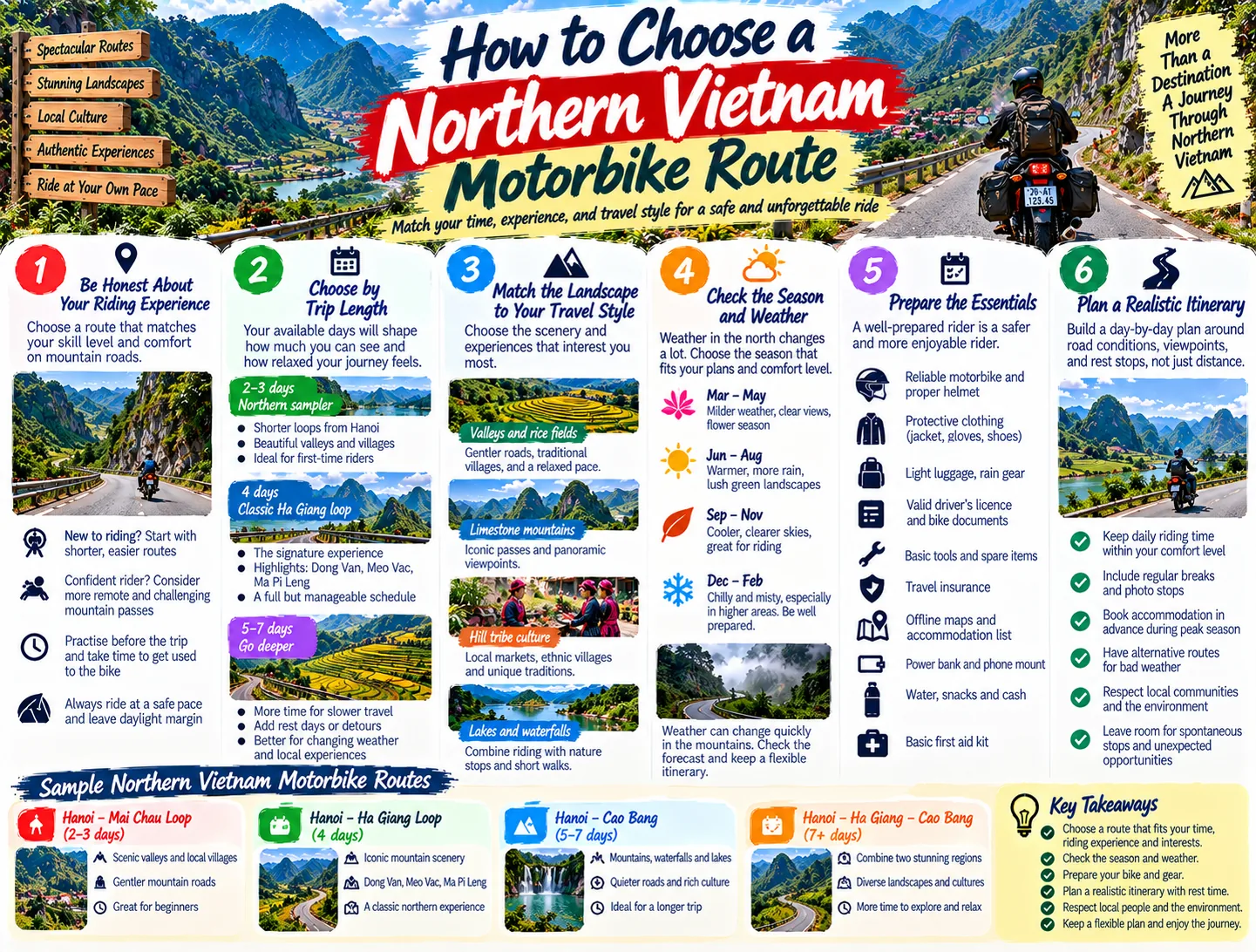
A Northern Vietnam motorbike route can be a brilliant way to see limestone passes, rice valleys and small mountain towns, but the best itinerary is not automatically the longest one. Your available days, riding experience, weather window and comfort with remote roads should decide the route. This guide helps you choose a practical loop before you rent a bike, with a special focus on the difference between a compact northern escape and the more demanding Ha Giang circuit.
Start with the route you can ride well
Before comparing destinations, be honest about what “a day on the road” means for you. Northern Vietnam is not a flat, fast touring environment. Mountain roads combine curves, climbs, changing surfaces, local traffic and frequent reasons to stop. A route that looks short on a map can take much longer once you allow for viewpoints, food, weather and slower sections.
If you are new to riding abroad, choose an itinerary with shorter stages and a reliable overnight base. You will have more time to learn the bike, manage corners and adjust to the rhythm of rural traffic. Experienced riders may prefer a route with more elevation and remoter valleys, but even then, leave daylight margin rather than planning every hour.
The useful question is not “How many kilometres can I cover?” It is “How much attention can I give the road while still enjoying the landscape?” Build your plan around that answer.
Choose by trip length: two, four or seven days
Two to three days: a gentle northern sampler
With only a weekend, avoid forcing the full Ha Giang loop. A shorter ride from Hanoi toward a nearby valley destination can give you mountain scenery, village roads and a slower travel rhythm without turning every day into a transfer. This style suits first-time riders, couples sharing a bike, and travellers who want a motorbike experience alongside other northern activities.
Use one comfortable base and make day rides rather than changing accommodation every night. That makes it easier to respond to rain, fatigue or a late start. For ideas beyond riding, compare this approach with the site’s Adventure Travel Guides category and its practical overview, A Practical First-Timer’s Guide to Northern Vietnam Adventures.
Four days: the classic Ha Giang decision
Four days is the most useful minimum for riders who want the signature Ha Giang experience rather than a quick out-and-back. Vietnam Tourism’s official four-day outline runs from Ha Giang City toward Yen Minh and Dong Van, continues through the Ma Pi Leng area and Meo Vac, then returns via Bao Lam and the QL34. That sequence gives the trip a clear shape: limestone passes first, the northern border landscapes in the middle, and a different return road at the end.
It is still a full schedule. The guide notes that the route has limited resources beyond Ha Giang, so the loop rewards early starts, modest packing and sensible fuel and cash planning. Treat four days as a framework, not a race. If your group includes a very new rider, consider a supported trip or a shorter version rather than simply riding later into the evening.
Five to seven days: add depth, not just distance
Extra days are valuable when they create flexibility. You can add a rest night, wait out poor weather, spend longer in a market town, or take a slower detour without sacrificing the return journey. This is a better use of time than adding distant places solely to make the route look ambitious.
A longer trip also lets you separate demanding riding days. One day can focus on a pass and viewpoints; the next can be a shorter transfer with time for a walk or local meal. If you want a wider menu of outdoor options, the site’s Outdoor Adventure Activities category can help you balance riding with non-motorbike experiences.
Match the landscape to your riding confidence
For newer riders: valleys, bases and daylight
Newer riders should favour roads where you can stop frequently, turn around easily and finish before dark. A base-based itinerary is forgiving: if the morning feels difficult, you can shorten the afternoon without creating a problem at the next guesthouse. It also avoids the pressure of carrying luggage through every corner.
Practise the controls before leaving town. Check that you can brake smoothly, start on an incline and make a controlled U-turn before committing to a mountain route. Ride at a pace that leaves room for unexpected traffic, animals, gravel or a wet bend. Vietnam Tourism’s transport guidance specifically cautions novice motorists to take care on the country’s streets; that advice matters even more when the road narrows and the view becomes distracting.
For confident riders: the Ha Giang highland loop
Confident riders who want dramatic scenery can use the Ha Giang loop as the core of their trip. The official route description highlights Heaven’s Gate, the Dong Van Karst Plateau, Nine Turn Pass, Dong Van, Meo Vac and Ma Pi Leng. These are not separate attractions to tick off quickly; they are connected by a road experience in which viewpoints, weather and surface conditions shape the day.
Do not confuse confidence with speed. On a mountain loop, the strongest rider in a group should not set a pace that forces everyone else to follow. Agree on regrouping points, keep visual contact where possible and let the least experienced person choose the rhythm. The site’s existing guide, Ha Giang by Road: A Thoughtful Loop Through the Mountains, is a useful companion for thinking about the destination as a responsible journey rather than a checklist.
Let the season decide the shape of the trip
Weather can change the right route more than a search ranking can. The official Ha Giang destination page describes a cool mountain climate, with wet and slippery roads from May to August. It also identifies September to November as a particularly attractive period, when rice terraces and buckwheat landscapes add seasonal interest. That does not make other months impossible, but it does mean you should build more flexibility into wetter periods.
Across the north, winter can feel cold, misty and damp, while spring often brings clearer and warmer riding conditions. Summer may bring heat, humidity and storms in northern mountain areas. Autumn tends to be appealing for visibility and landscape colour, but popular accommodation can be busy. Check the forecast close to departure and ask your accommodation about local road conditions before setting out; a general regional forecast cannot describe every pass.
Plan your clothing for stops, not only for the moving bike. A road that feels warm in a valley can feel cool on an exposed pass, and rain protection is useful even when the morning begins clear. If visibility drops or the surface becomes uncomfortable, changing the plan is good riding, not failure.
Build each day around practical stops
A strong northern Vietnam motorbike itinerary has more than a start and finish. Mark likely fuel, food and rest opportunities before departure, especially on a remote loop. The official Ha Giang guide warns that resources are limited outside Ha Giang, and specifically recommends carrying enough cash because ATMs are scarce. Treat that as a planning principle rather than a promise about every town: keep a reserve and do not assume the next machine, shop or open café will be exactly where your map suggests.
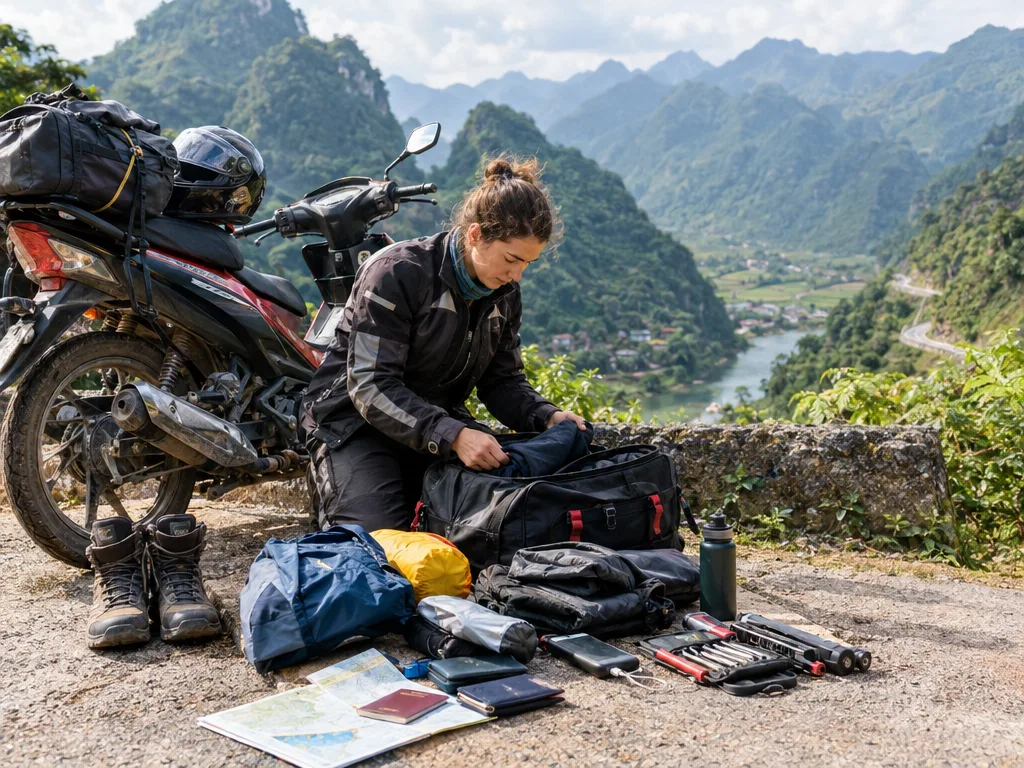
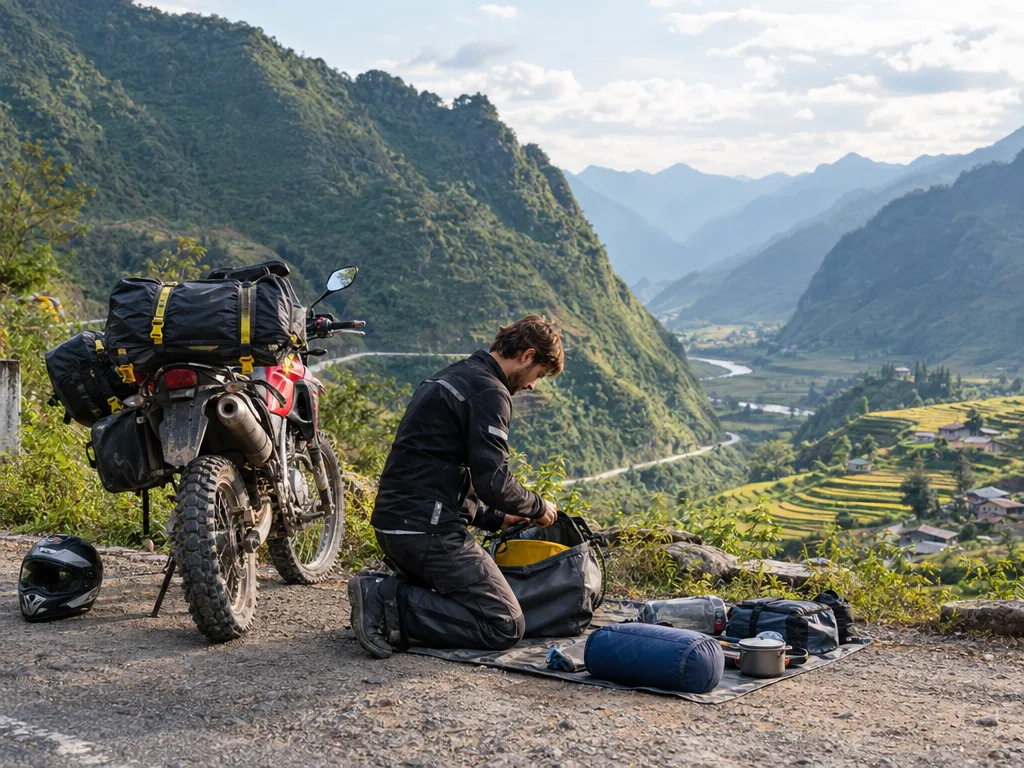
Pack light enough to handle the bike easily. A waterproof layer, basic first-aid items, water, offline route information, a phone power solution and copies of important documents are sensible foundations. Keep valuables secured rather than in an open basket. Vietnam Tourism’s safety guidance also recommends travel insurance, carrying necessary prescription medicine and remembering that rural areas may be far from a pharmacy or hospital.
Choose accommodation before the day becomes urgent, but keep the plan adjustable. In high-demand periods, a well-reviewed homestay or hotel may sell out. A local host can also give better advice about a pass after rain than a route planner frozen several months earlier.
Decide whether to ride independently or use support
Independent riding offers freedom, but it also means you must manage navigation, bike checks, weather decisions, repairs and communication. It works best for riders who are comfortable changing plans and who have enough time to avoid rushing. Before accepting a rental, inspect the tyres, brakes, lights, horn, mirrors and luggage arrangements. Ask what happens if the bike develops a problem away from town, and clarify the deposit and documentation requirements in writing.
A supported trip can be the better choice when you are inexperienced, travelling with mixed abilities, or visiting during a weather window that leaves little spare time. Support does not remove responsibility: you still need to ride within your ability, listen to the guide and confirm what the package actually includes. If you do not feel ready to control a motorbike on steep, curving roads, consider travelling as a passenger or using a car and driver instead. The objective is to enjoy the mountains safely, not to prove a point.
For a broader comparison of active travel styles, see Choosing an Outdoor Adventure That Suits Your Group. The same decision rule applies here: match the activity to the group’s real comfort level, not its most enthusiastic member.
Know when to turn back
Mountain touring rewards flexibility. Turn around or shorten the day when rain makes a bend hard to read, fog removes useful visibility, a rider is tired, or the bike develops a warning sign. Do not let a paid room, a planned photograph or group pride make the decision for you. Stop in a safe place, tell the group what has changed and choose the simplest available alternative. If the only way to reach the next stop is to ride after dark, revise the route and find accommodation earlier. A memorable road trip includes good judgement as well as good views.
Use a simple route-planning checklist
Choose the number of riding days before choosing the farthest destination.
Set a realistic daily finish time and avoid planning after-dark mountain riding.
Check the seasonal forecast and ask locally about rain, fog, construction or surface changes.
Carry enough water, cash and essential medication for stretches with limited services.
Agree on group spacing, regrouping points and what happens if someone feels tired.
Keep the itinerary flexible enough to remove a detour without losing the return day.
Confirm the rental bike’s condition, support arrangements and required documents before leaving.
Keep this checklist beside your route notes, not buried in a booking email. A good plan is one you can still use when the weather, road or energy level changes.
Conclusion: choose the ride you can enjoy
The best Northern Vietnam motorbike route is the one that fits your time, confidence and appetite for uncertainty. Choose a short base-based escape if you want a gentle introduction, allow four days for the classic Ha Giang shape, and use five to seven days to add rest and flexibility rather than unnecessary mileage. Let season and local conditions influence the final decision, protect daylight for the most demanding roads, and treat support as a practical option rather than a compromise. With the right pace, the road becomes more than transport: it becomes the way you understand northern Vietnam.
JOIN THE CONVERSATION
Comments (0)
No comments yet. Be the first to share a thought.