A Northern Vietnam motorbike itinerary is not one fixed loop. The right route depends on how many riding days you have, how comfortable you are with steep curves, and whether you want a dramatic mountain challenge or a gentler journey through valleys and villages. This guide helps you choose a route shape before you rent a bike, then turn it into a safer, more enjoyable plan.
Start with the kind of ride you want
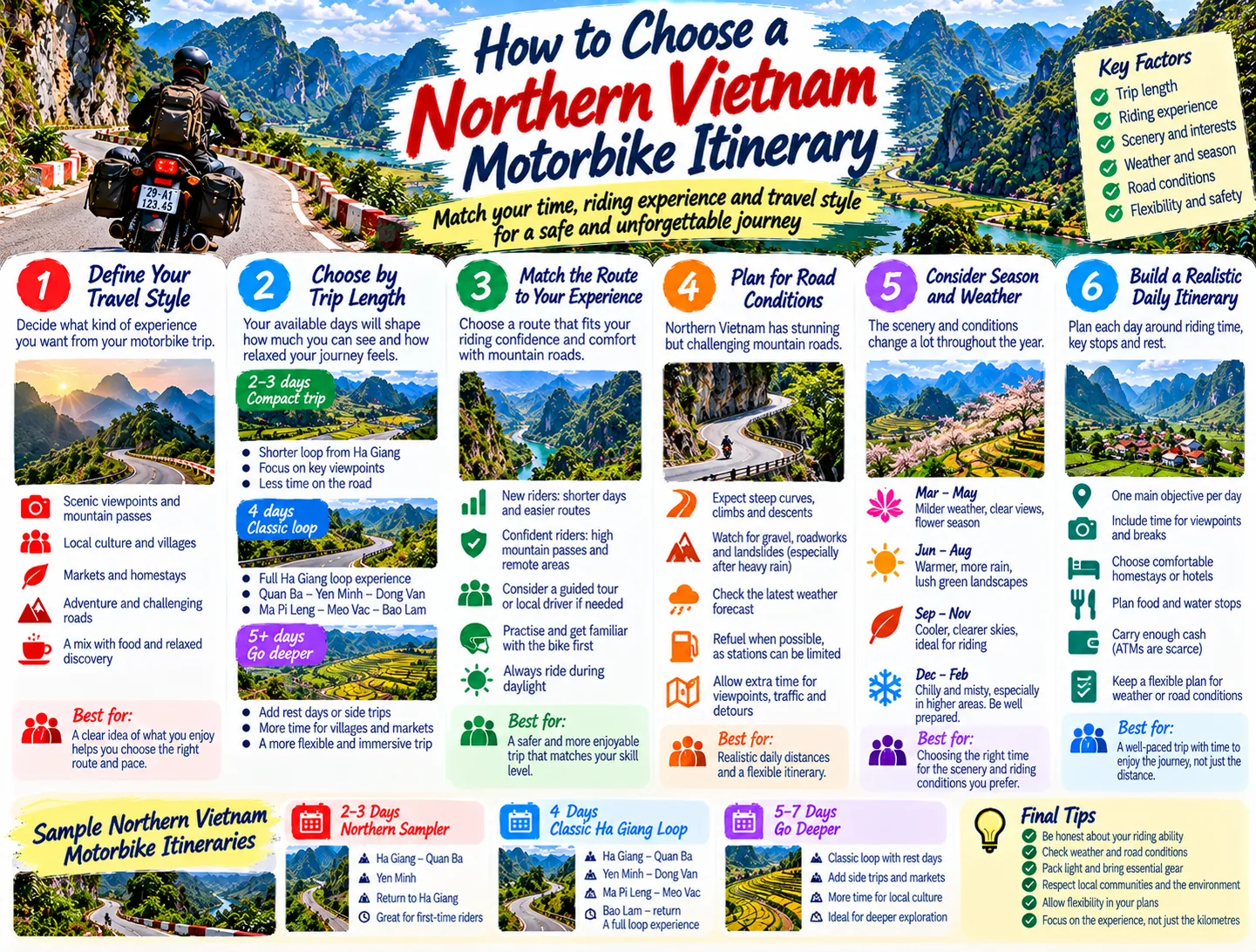
Before choosing roads, decide what you want to remember. A short northern Vietnam motorbike trip can be built around viewpoints and a few memorable passes. A longer journey can slow down for markets, village stays, walks and weather. If your priority is the famous mountain scenery, Ha Giang is the obvious starting point: Vietnam’s official tourism authority describes it as a road-access destination with a loop through Quan Ba, Yen Minh, Dong Van and Meo Vac. The same source also notes that the region’s scenery changes with the seasons, so the landscape—not only the road map—should shape your timing.
For a broader first look at the region, read A Practical First-Timer’s Guide to Northern Vietnam Adventures. It is useful background before you narrow your plans to a motorbike route. You can also browse the Adventure Travel Guides category for ideas that combine riding with other outdoor experiences.
Choose an itinerary by trip length
Two to three days: keep the route compact
With only two or three riding days, resist the temptation to trace every highlight on a map. A compact out-and-back from Ha Giang City gives you more control over stops and weather. You can ride north towards Quan Ba and Yen Minh, spend a night away from the city, and return by a route that leaves time for viewpoints and breaks. This shape is better than forcing the full loop into a schedule that leaves no margin for a late start, a slow climb or a road obstruction.
Use each day for one substantial riding objective rather than a long list of pins. For example, make the first day about reaching the highland scenery, the second about exploring a pass and nearby villages, and the final day about returning in daylight. If a forecast changes, you can shorten the ride without breaking the whole plan.
Four days: the classic loop structure
Four days gives you enough time for the route to feel like a journey rather than a transfer. Vietnam Tourism’s published four-day plan runs from Ha Giang City towards Yen Minh, then through the border highlands and Dong Van, across the Ma Pi Leng area towards Meo Vac and Bao Lam, before returning on QL34. Treat that outline as a planning framework, not a promise that every stop will fit at the same pace.
The guide’s most useful lesson is to allow time for the road itself. Dong Van to Meo Vac is a short distance on paper, yet viewpoints and winding mountain sections can make it a long morning. A sensible northern Vietnam motorbike itinerary measures days by riding effort and daylight, not kilometres alone.
Five days or more: add depth, not just distance
Extra days are valuable when they create flexibility. Add a rest morning, a village walk, a market visit or a weather buffer instead of automatically adding a distant detour. This makes the trip more resilient and gives you time to speak with hosts and travel at a respectful pace.
Match the route to your riding experience
The Ha Giang roads reward confidence but punish rushed decisions. Official tourism guidance describes the loop’s high passes, deep valleys and tight curves, while its detailed route advice recommends approaching bends cautiously, riding during daylight and stopping after dark. Those points should determine who rides independently and who chooses a local driver or guided option.
If you are new to mountain riding
Choose shorter riding days and avoid planning a major pass immediately after a long transfer from Hanoi.
Practice braking, slow cornering and starting on an incline before leaving town.
Keep your luggage light so the bike remains predictable on climbs and descents.
Build in daylight margin; arriving early is part of the itinerary, not wasted time.
A beginner-friendly plan can still be adventurous. The difference is that it leaves room to stop, ask for local advice and change the route when conditions feel beyond your ability.
If you already ride confidently
Experience helps, but it does not remove the need for restraint. Mountain roads combine blind bends, changing surfaces, other road users and distractions from the scenery. Keep your pace within the conditions and avoid treating a quiet stretch as a race course. Your strongest riding skill on a road trip is often the ability to turn around or stop early.
Plan each day around fuel, food and recovery
Remote riding requires more preparation than a city-to-city motorbike day. The official four-day route guide warns that resources become limited outside Ha Giang and recommends carrying enough cash because ATMs are scarce. It also advises stocking up on provisions before the return leg. These are simple details, but they change how far you should plan to ride.
Start with a practical morning routine: check the bike, fill the tank where the opportunity is clear, carry drinking water and confirm where you expect to eat. Ask your accommodation host about the next reliable fuel and food points rather than assuming every settlement will offer the same services. Keep an emergency snack for delays, and avoid beginning a remote section with an almost-empty tank.
Recovery matters too. A long day of curves is tiring even when the distance looks modest. Choose a homestay or guesthouse that lets you arrive before dark, put your gear somewhere secure and sleep properly. The official route guide notes that popular accommodation can sell out in peak periods, so reserve key nights when your plan depends on a particular town; keep one flexible alternative for weather or fatigue.
Build a responsible stop list
A good road trip is more than a chain of viewpoints. In Ha Giang, the official destination page highlights the Dong Van Karst Plateau Geopark, the Vuong Family’s Residence, Lung Cu Flagpole, Ma Pi Leng Pass and local markets among the area’s attractions. Select a small number of meaningful stops and give them time. Stopping everywhere usually means enjoying nowhere.
Markets and villages deserve a considerate approach. Ask before photographing people, especially children, and buy from local vendors when you use their space. Keep your voice and riding behaviour appropriate around homes, schools and religious or cultural places. Do not turn a community into a backdrop for speed or spectacle.
For a trip that combines riding with walking, connect this plan with Mountain Trekking & Hiking. If you want a gentler day away from the bike, Mai Chau Valley at Walking Pace offers a useful contrast in travel rhythm. The goal is not to add destinations for the sake of it, but to balance demanding roads with experiences that let you slow down.
Pack for changing conditions without overpacking
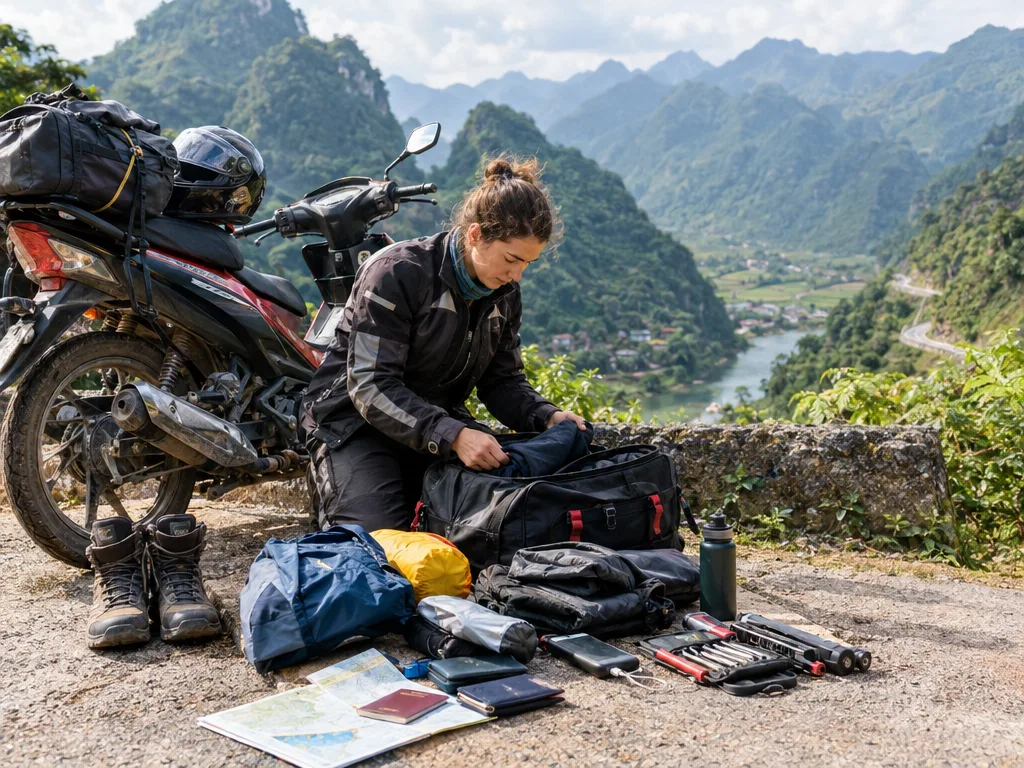
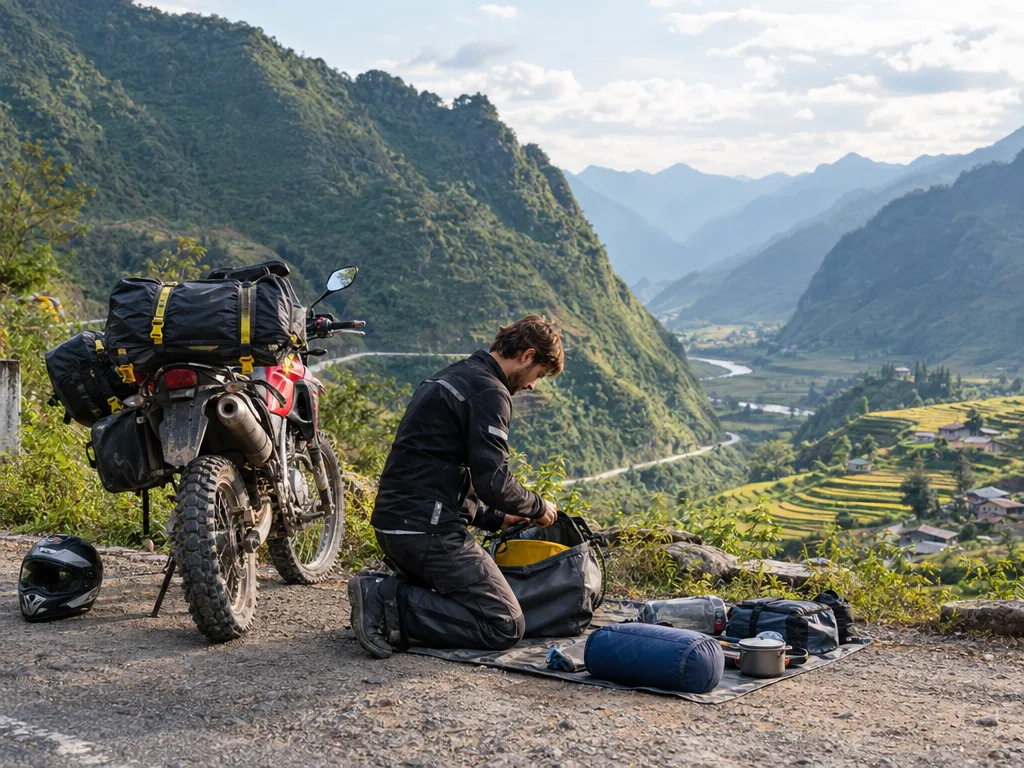
Mountain weather can make the same route feel completely different from one day to the next. Pack a waterproof layer, warm layer, gloves that allow firm control, sun protection and shoes suitable for walking once you park. Use luggage that stays secure and does not interfere with steering or your feet. Keep documents, phone and emergency contacts protected from rain, and carry a small first-aid kit for ordinary scrapes.
Navigation should have a backup. Download the map area before leaving reliable coverage, save your accommodation details offline and keep a paper note of the next overnight town. A phone mount is useful, but do not stare at a screen while riding; pull over fully before checking directions. Share your broad route and expected arrival with someone you trust, then send an update if the plan changes.
Do not assume that a rented bike is ready simply because it starts. Check the tyres, brakes, lights, mirrors, horn, chain, luggage rack and fuel level. Photograph existing damage and ask what support is available if the bike develops a problem. If you are unsure about the controls or the road ahead, pause in town and get advice before committing to a remote section.
Use a simple daily planning template
On the evening before each ride, write down five decisions:
Where will you stop for breakfast and the next fuel opportunity?
What is the one main road or viewpoint you want to experience?
Which stop can be removed if weather or fatigue builds?
What time will you turn back or stop for the night?
Who knows your planned overnight destination?
This template keeps the route flexible while protecting the essentials. It also makes it easier to explain your plan to a host, rental shop or guide. If the answer to the fuel, daylight or overnight question is unclear, shorten the day before you leave.
For a wider comparison of travel styles, see Choosing an Outdoor Adventure That Suits Your Group. Motorbike travel can be social, but groups should agree on pace, regrouping points and what happens if one rider wants to stop. A route is only successful when the least confident rider can complete it comfortably.
Decide when to ride independently and when to get support
Independent riding is only one way to experience a mountain road. If you are inexperienced, travelling with a passenger, or uncomfortable with steep descents, ask a reputable local operator about a driver or guided arrangement. This is not a lesser version of the trip. A local professional can reduce the mental load of navigation and help you focus on scenery, conversations and respectful visits.
Even confident riders may prefer support for a first visit. You can still make the important choices—how long to stay, which places interest you and how slowly you want to travel—while receiving help with local road knowledge and logistics. Ask clearly what is included, who controls the bike, how the group handles separation and what happens if weather changes. Avoid choosing solely on the promise of a packed itinerary; a slower, transparent plan is usually easier to enjoy.
If you ride as a group, set a lead rider and a final rider, agree on safe regrouping points and make sure nobody feels pressured to match the fastest pace. Keep overtaking and photo stops orderly. The group should be able to split temporarily without anyone becoming isolated or unsure of the next overnight town. These small agreements turn a collection of riders into a workable road-trip team.
Conclusion: choose the ride you can enjoy
The best Northern Vietnam motorbike itinerary is not the one with the most roads or the highest number of viewpoints. It is the plan that matches your experience, leaves daylight for the difficult sections and makes space for weather, fuel, food and real encounters. Start with a compact route if you are unsure, use the four-day Ha Giang structure as a realistic reference, and add depth rather than pressure when you have extra time. Ride patiently, stop respectfully and let the mountains set the pace.
JOIN THE CONVERSATION
Comments (0)
No comments yet. Be the first to share a thought.