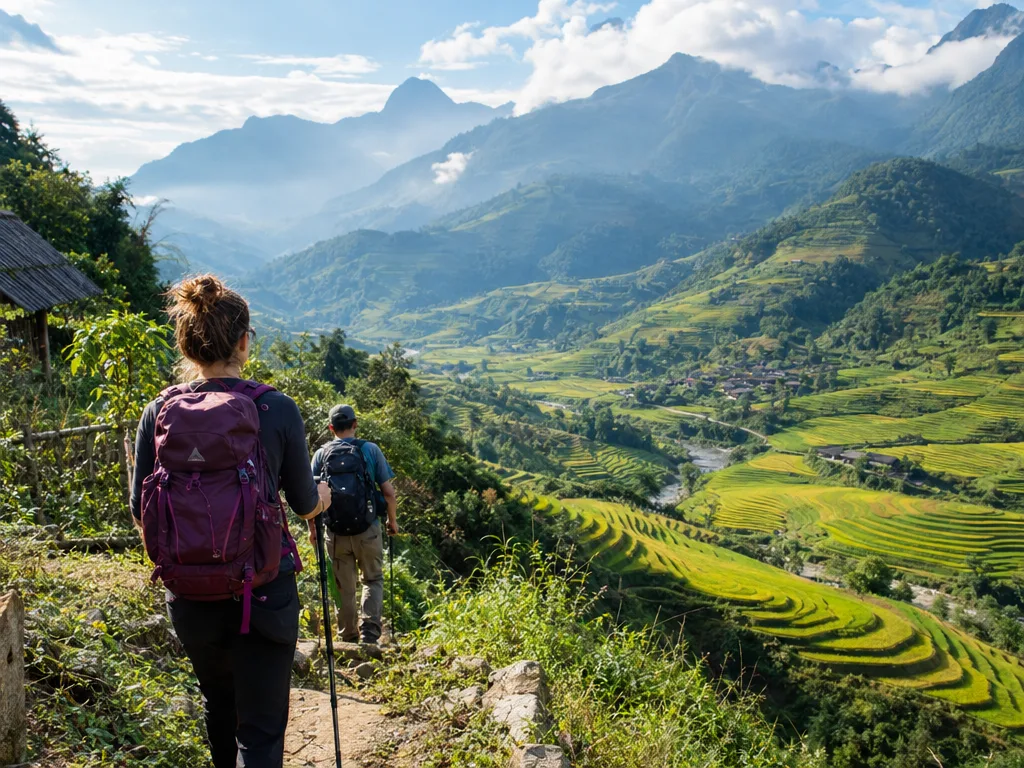
Northern Vietnam adventure travel works best when the route follows the season rather than forcing every destination into one itinerary. Mountain weather can change quickly, rice landscapes look different from month to month, and a plan that is comfortable for a valley cycle may be unsuitable for a high pass road day. The most useful question is not simply “When should I visit Northern Vietnam?” but “What kind of adventure do I want, and which landscape is most likely to deliver it when I go?”
This guide turns that question into a practical planning framework. It compares the broad seasonal patterns that matter to hikers, cyclists, road trippers, and travelers who want active days without racing between stops. Use it as a standalone framework when shaping a wider Northern Vietnam trip.
Why the season changes the shape of an adventure
In Northern Vietnam, season affects more than temperature. It influences trail comfort, visibility, road conditions, clothing, daylight, and the mood of the scenery. A cool, clear period can make a ridge walk feel expansive, while mist can turn the same viewpoint into a quieter, more atmospheric experience. Rain may refresh rice terraces and forests, but it can also make steep paths slippery and complicate a long transfer.
Official Vietnam Tourism guidance describes Northern destinations such as Sa Pa as cooler than much of the country, with chilly, misty conditions from December to March, warmer and clearer weather in spring, stormier and more humid conditions in summer, and cooler, drier weather from September to November. Treat those patterns as planning guidance, not a promise: mountain weather is local, and a flexible day is more valuable than a rigid forecast-based schedule.
- Choose a season for the experience you value most: clear views, green landscapes, golden harvest scenery, or cooler walking temperatures.
- Keep demanding activities earlier in the day when possible, especially in warmer or wetter months.
- Build in a spare half-day before a flight or long onward journey if your plan depends on mountain roads.
- Pack for contrasts: sun, rain, wind, and cool evenings can all occur on one trip.
Spring: a versatile season for mixed itineraries
Spring is often a strong choice for travelers who want to combine several kinds of activity. Vietnam Tourism describes Sa Pa from April to June as warm, clear, and sunny, with flowers in bloom in late April. That combination can suit a route that mixes a moderate trek, a scenic transfer, and a day exploring villages or viewpoints.
Best spring adventures
Use spring for a balanced itinerary rather than an endurance challenge. A two- or three-night mountain stay can include one longer walking day, one shorter cultural or village route, and one flexible morning. Around Mai Chau, the official tourism guide highlights quiet paths between stilt-house villages and paddy fields, making the valley well suited to cycling and walking at an unhurried pace. Spring is also a sensible time to combine Mai Chau with a more strenuous destination, because the valley can provide a lower-intensity reset.
For hiking, choose routes with options to shorten the day. A local guide can help adjust the walk to visibility, trail conditions, and village etiquette. For cycling, start with a short loop before committing to a full day; the goal is to learn the gradients and road rhythm, not to collect kilometers.
Summer: plan around rain, heat, and flexibility
Summer can reward travelers who enjoy lush scenery and do not mind adapting. Official climate guidance describes Sa Pa from June to August as stormy, warm, and humid, while Mai Chau is described as having heavier rain from May to September. Those conditions do not rule out an adventure, but they change what a responsible itinerary looks like.
How to make a wet-season plan work
- Prefer shorter walks with clear turnaround points over exposed ridge routes.
- Schedule outdoor activity for the cooler part of the day and leave room for a weather pause.
- Carry a dry layer, waterproof protection for electronics, and footwear that remains useful on wet ground.
- Ask local accommodation or guides about recent trail and road conditions instead of relying only on a national forecast.
- Use a two-night base when possible, so a rainy afternoon does not cancel the entire destination.
Summer is a good season for travelers who define adventure as being outdoors in changing conditions rather than chasing perfect photographs. It is less suitable for a tightly timed route whose success depends on every pass, trail, or transfer being open and dry. If you are considering a motorbike journey, compare this seasonal framework with a responsible road-trip plan before choosing long riding days.
Autumn: strong conditions for scenery and active days
Autumn is especially appealing when rice landscapes and clearer mountain views are central to the trip. Vietnam Tourism lists September to November as a best-time window for both Sa Pa and Mai Chau, noting golden rice paddies, cooler days, and clearer skies. This makes autumn a natural fit for travelers who want a scenic trek, a valley cycle, or a road journey with frequent photo and rest stops.
Do not confuse favorable conditions with a requirement to fill every day. A good autumn itinerary still alternates effort and recovery. Pair a longer walk with a village afternoon, or place a scenic road day between two shorter hikes. On popular routes, leaving early can make the experience calmer, but exact crowd levels and local access conditions change; confirm details locally rather than treating a general seasonal recommendation as a guarantee.
Choosing between Sa Pa, Mai Chau, and farther mountain routes
Sa Pa suits travelers drawn to highland trekking, rice terraces, and a cooler mountain setting. Mai Chau is a gentler base for cycling, village walks, homestay experiences, and a gradual introduction to rural landscapes. A farther-north road or trekking route can deliver a stronger sense of remoteness, but it asks more of the traveler: longer transfers, more weather exposure, and more careful logistics. Choose Sa Pa when walking is the main purpose, rather than adding it simply because it is famous.
Winter: cooler trails and a different mountain mood
Winter in Northern Vietnam can be rewarding for travelers prepared for cold, mist, and limited visibility. Vietnam Tourism describes Sa Pa from December to March as chilly, misty, and cloudy, with occasional snowfall around Fansipan. The same source notes that Sa Pa remains cool year-round, with cold winters and misty mornings. These conditions favor travelers who enjoy atmosphere and quiet walks, but they require realistic expectations about views.
Choose lower-risk, lower-exposure activities when cold or fog dominates. A village walk, market visit, homestay stay, or short valley route may be more satisfying than an ambitious summit attempt. Pack layers that work when damp, including a warm mid-layer and dry socks. Check whether your accommodation is prepared for cold nights, and avoid assuming that a tropical-country packing list will be enough for mountain elevations.
Winter is also a useful season for a mixed northern itinerary: spend active days in the mountains, then use lower-elevation cultural or food-focused time to balance the trip. If wildlife or protected landscapes are part of your plan, make low-impact behavior and local guidance part of the preparation.
Match the season to your preferred adventure
Rather than choosing dates first, start with the activity that matters most.
- For trekking: favor the clearer and cooler shoulder periods, and choose a route with a shorter alternative.
- For cycling: consider valley destinations such as Mai Chau, where quiet connecting paths can be explored at a flexible pace.
- For motorbike travel: prioritize road confidence, rest days, daylight, and local advice over an ambitious number of stops.
- For photography: accept that mist is part of the mountain experience; schedule enough time for a second viewpoint attempt.
- For families or mixed-ability groups: choose a base with several activity levels, so everyone can participate without forcing one pace.
Walking-focused trips need careful preparation for terrain and changing conditions, while mixed-activity groups benefit from comparing several kinds of outdoor adventure before committing to one route.
Build the route around your available time
A seasonal choice should also fit the length of the trip. With three or four active days, choose one base and give yourself several ways to use the same landscape: a longer walk, a shorter village route, and a weather-proof cultural afternoon. With a week, combine one highland destination with one valley destination, but protect the first and last days from overloading. Longer trips can add a road journey or a more remote trail, provided you keep recovery time and transport uncertainty visible in the plan.
For every itinerary, identify the day that can move without breaking the trip. That might be a viewpoint walk, a cycle, or a long transfer. If rain or fatigue changes the schedule, move that flexible activity rather than sacrificing sleep or safe travel. This approach also makes it easier to support local guides and hosts: you arrive with a plan, but not with demands that leave no room for local judgment.
A practical seasonal planning checklist
Before booking a route, write down the answers to five questions:
- What is the main activity, and what is the easiest acceptable version of it?
- How much rain, mist, heat, or cold is your group comfortable with?
- Which day can move if weather or road conditions change?
- Where will you rest, refuel, dry clothes, and charge devices?
- What local support will you use for navigation, guiding, transport, or riding?
Then leave the itinerary slightly under-filled. Northern Vietnam rewards time spent looking at the landscape, talking with hosts, and adjusting to the day. A plan with one meaningful activity and one flexible window is usually more enjoyable than a checklist that turns every weather change into a crisis.
How to build a better Northern Vietnam adventure
The best seasonal itinerary is not the one with the most destinations. It is the one that matches the weather pattern, the group’s energy, and the kind of contact with the landscape you actually want. Choose one anchor destination, add one complementary area, and keep at least one day adaptable. In spring and autumn, use the clearer conditions for viewpoints and longer walks. In summer, make flexibility part of the design. In winter, trade guaranteed panoramas for atmosphere and preparation.
With that approach, Northern Vietnam adventure travel becomes easier to plan and more resilient in real conditions. You can still pursue trekking, cycling, road trips, and mountain scenery—but with enough space to enjoy the journey when the forecast, the road, or your own energy asks for a different pace.

JOIN THE CONVERSATION
Comments (0)
No comments yet. Be the first to share a thought.