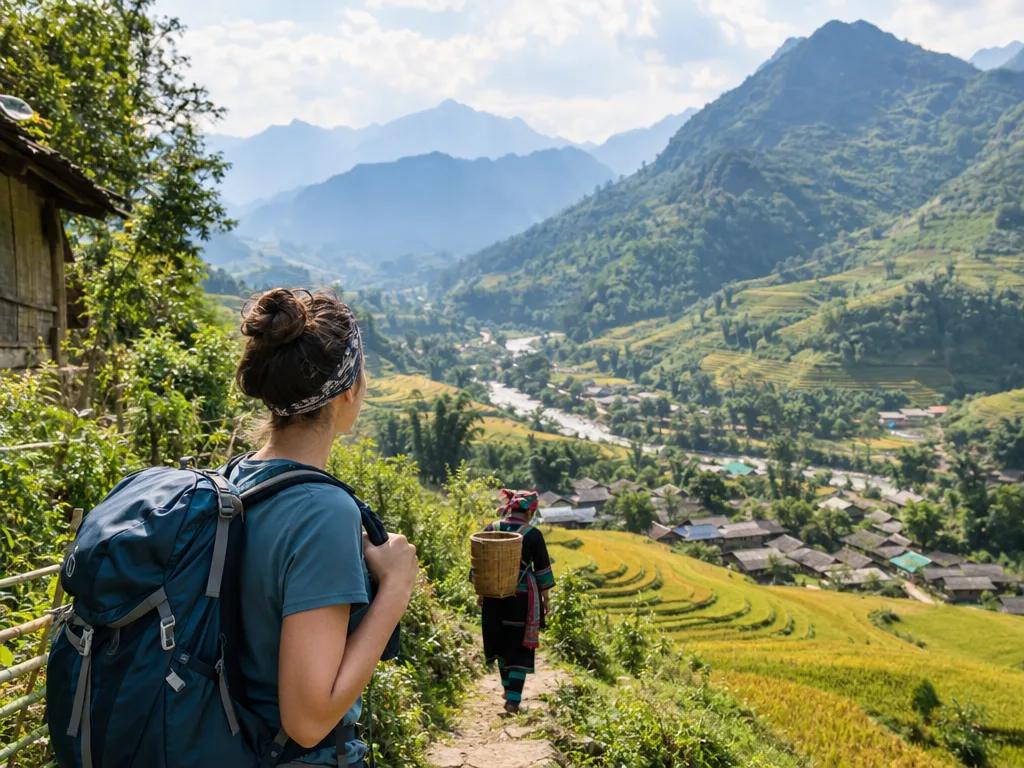
Planning a Northern Vietnam adventure is less about collecting every famous stop and more about choosing a rhythm you can enjoy. A strong itinerary gives you one or two active bases, leaves room for weather and road conditions, and matches each day to the people travelling with you. This guide shows how to build a seven-day route around mountain scenery, village walks, cycling, and responsible local experiences without turning the trip into a race.
Start with one clear adventure style
Before choosing destinations, decide what “adventure” means for your group. Northern Vietnam can support several very different trips: a road journey through dramatic passes, a trekking-focused stay among rice terraces, a gentle cycling and village itinerary, or a mixed route that combines active mornings with slower afternoons. The best plan protects that central idea instead of adding every possible activity.
For a first visit, choose one primary activity and one secondary activity. For example, trekking can be paired with cultural homestays, while cycling can be paired with food and village visits. This creates variety without making every transfer feel like another challenge.
- Walking and trekking: best for travellers who want close contact with slopes, terraces, forests, and villages.
- Road travel: suited to people who value changing landscapes and are comfortable with long, flexible days.
- Cycling: a practical way to explore valley lanes and rural scenery at a human pace.
- Soft adventure: a mix of short walks, viewpoints, local meals, and nature time for groups with different fitness levels.
Choose a route that fits seven days
Seven days is enough for a satisfying northern itinerary, but it is not enough to see every region well. A useful rule is to keep the route to two major bases, or three only when the transfers are straightforward. Build the trip around a logical shape rather than a list of pins on a map.
Option one: mountains and valley culture
Use Sa Pa as the main mountain base, then add a second destination such as Mai Chau or another nearby valley area. This works well for travellers who want trekking, terraces, homestays, and a change of landscape. Sa Pa offers a highland setting, mountain trails, and access to villages, while Mai Chau is known for valley paths, stilt-house communities, cycling, and rural scenery.
Option two: a road-led mountain journey
Choose a northern road route when the journey itself is the priority. Leave generous time for viewpoints, weather changes, rest stops, and local guidance. A road itinerary should not depend on arriving at the next town at the latest possible hour. If the route includes remote or winding roads, shorten the daily distance before adding another stop.
Option three: active scenery with easier logistics
For mixed groups, combine a destination with accessible walks and cycling with one focused trekking day. This can reduce pressure on anyone who does not want a demanding hike every day. It also gives the group time to enjoy markets, meals, and village life instead of treating them as brief breaks between activities.
Build the week around active and recovery days
A common planning mistake is to schedule the hardest activity immediately after a long transfer. Instead, alternate effort. Use the arrival day for orientation and a short walk, place the longest trek or ride after a proper night’s sleep, and follow it with a lighter day.
- Day 1: arrive, settle in, check the weather, and take an easy orientation walk.
- Day 2: complete a moderate activity near your base, such as a valley walk or cycle.
- Day 3: make this the main trekking or road day while energy is high.
- Day 4: slow down with a village visit, local meal, craft experience, or shorter route.
- Day 5: transfer to the second base, treating the journey as part of the experience.
- Day 6: choose the second area’s signature activity, adjusted to conditions.
- Day 7: keep the final morning flexible for a short walk, viewpoint, or relaxed departure.
This pattern is a framework rather than a timetable. Rain, mist, traffic, road works, and group energy can all change the best order. Put the least time-sensitive activities on the days most likely to move.
Match activities to terrain and weather
Official destination guidance describes Sa Pa as a cool highland area with dramatic rice terraces, mountain scenery, and trekking opportunities. It also notes that the region can have misty mornings, cold winters, and occasional frost near Fansipan. That makes layers, grippy footwear, and a willingness to change plans more useful than packing for one imagined forecast.
Mai Chau has a milder highland setting, with valley paths connecting villages and paddy fields. Vietnam Tourism highlights cycling, homestays, local crafts, and day trekking as ways to experience the area. These are valuable options when the group wants activity without committing to a full mountain hike.
Use a simple activity scale
- Easy: flat or gently rolling paths, short viewpoint walks, markets, and village exploration.
- Moderate: several hours on uneven ground, repeated climbs, or a cycle with rolling terrain.
- Demanding: steep or slippery sections, long exposure to weather, or a full day with limited recovery time.
Ask the local guide or activity provider about the actual conditions on the day. A route that looks moderate on paper may feel demanding after rain, and a group that walks regularly may still need a slower pace on steep or muddy ground.
Plan transport without losing the adventure
Transport is part of the itinerary, but it should not consume the whole trip. The official Vietnam Tourism regional guide identifies road access as central to destinations such as Sa Pa and Mai Chau, with Sa Pa commonly reached via Lao Cai and Mai Chau approached by road from Hanoi. Use those broad connections to shape the route, then confirm current transport details close to departure rather than relying on an old schedule.
For any transfer, plan a realistic departure window and a buffer. Keep water, a light layer, snacks, and essential medication accessible rather than packed in the vehicle’s deepest bag. If you are using a motorbike, make an honest decision about experience, licensing, weather, and fatigue. A local driver or guided ride can be the better adventure choice when the route is unfamiliar or conditions are changing.
Do not book an activity for the same narrow time window as a long transfer. Leave space for traffic, stops, and the possibility that the road itself becomes the day’s most memorable part.
Choose stays that improve the experience
A base should make the next day easier, not merely provide a bed. In mountain areas, staying close to the trail or village area can reduce repeated transfers. In a valley destination, a homestay may place you closer to local paths and shared meals. Vietnam Tourism specifically describes Mai Chau’s Lac and Pom Coong villages as homestay areas with stilt-house accommodation, while its Sa Pa guide points to lodges and homestays among the terraces.
Ask practical questions before booking: Is the property easy to reach after dark? Can it help arrange a local guide? Is there a quiet place to dry wet clothing? Are meals available when your activity returns late? These details matter more than a long amenities list on an active trip.
Responsible travel also begins with the stay. Prefer locally run businesses where possible, follow household customs, ask before photographing people, and treat village paths as lived-in places rather than scenery created for visitors.
Pack for flexibility, not for every possibility
A compact kit is easier to carry and easier to keep dry. Start with footwear that has already been worn in, breathable layers, a light waterproof shell, sun protection, a reusable water bottle, and a small day bag. Add a headlamp, basic first-aid items, personal medication, and offline copies of essential details. If you expect rain or cooler evenings, protect electronics and spare clothing in separate waterproof bags.
- Wear shoes with secure traction rather than smooth casual soles.
- Carry one warm layer even when the valley feels mild.
- Keep a dry change of clothes for the journey back to your accommodation.
- Bring cash in a practical amount for places where card payment may not be available, without inventing a fixed budget from outdated advice.
- Save your accommodation address and an emergency contact where you can access them offline.
Make the itinerary better for people and places
Adventure travel is strongest when the landscape and communities are treated as partners rather than backdrops. Stay on established paths, do not enter homes or fields without permission, carry out rubbish, and keep noise low near villages and forests. Use refill options when available and avoid taking plants, rocks, or cultural objects as souvenirs.
Spread spending across local guides, small restaurants, homestays, craft makers, and transport providers instead of concentrating every purchase in one large hub. Learn a few polite local phrases, ask before taking photographs, and accept that a slower interaction may be more meaningful than a rushed checklist stop.
A final checklist before you book
- Can you name the main purpose of the trip in one sentence?
- Does the route use no more than two major bases unless transfers are genuinely easy?
- Is the hardest activity separated from the longest transfer?
- Does every traveller understand the terrain, weather, and expected pace?
- Have you left at least one flexible block for conditions or rest?
- Are your transport, guide, accommodation, and activity arrangements current rather than copied from an old itinerary?
The best Northern Vietnam adventure itinerary is not the one with the most stops. It is the one that leaves you enough time to notice the road, walk respectfully through the landscape, and finish each active day with energy for the next. Choose a clear route, keep the schedule adaptable, and let local conditions shape the details.
JOIN THE CONVERSATION
Comments (0)
No comments yet. Be the first to share a thought.